High-Performance PPA-CF 3D Printing Filament
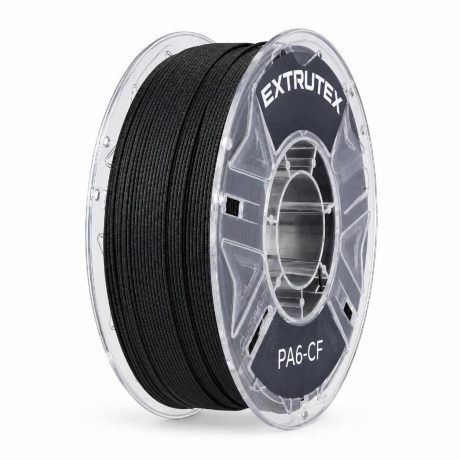
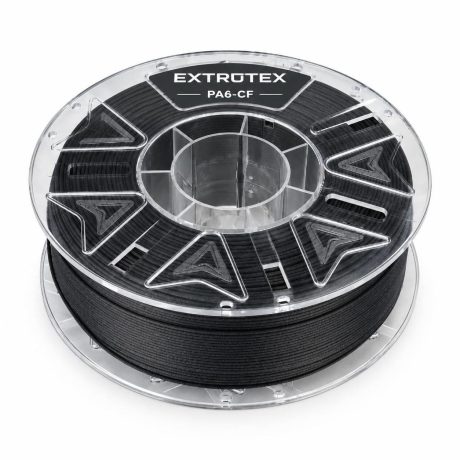
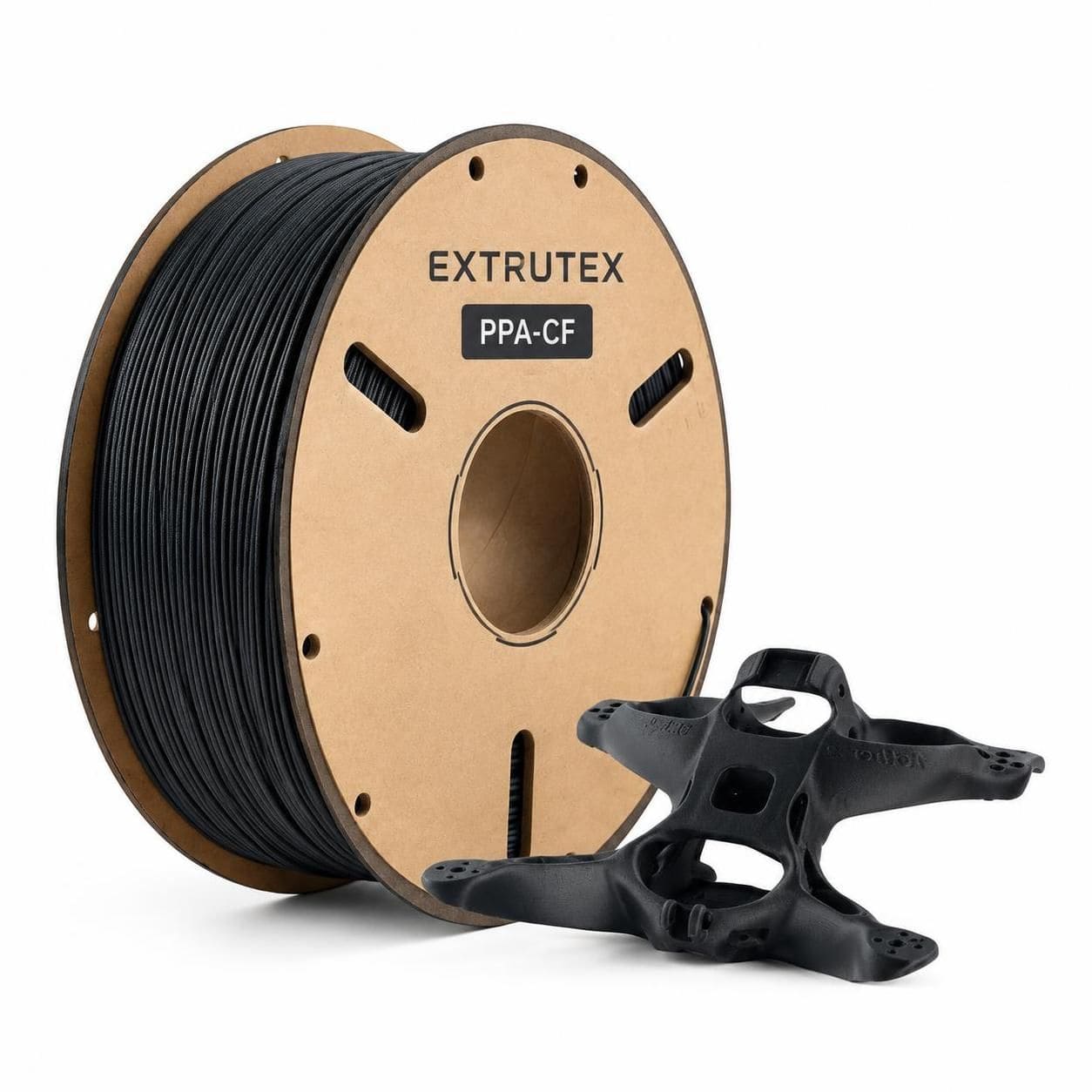
EXTRUTEX PPA-CF is an advanced engineering-grade 3D printing filament made from polyphthalamide (PPA) reinforced with 15% chopped carbon fibers. It combines the thermal performance and chemical resistance of PPA with the increased rigidity and stiffness provided by carbon fiber reinforcement.
Designed for demanding industrial and engineering applications, PPA-CF is suitable for producing functional components that require mechanical strength, dimensional stability and resistance to elevated temperatures. Its relatively low moisture absorption compared with many conventional nylon materials also helps maintain consistent dimensions and dependable printing performance.
With a Vicat softening point of 230°C, EXTRUTEX PPA-CF is intended for applications where ordinary engineering filaments may not provide sufficient thermal performance. It supports both annealed and unannealed printing workflows, giving users flexibility when developing parts for different operating conditions.
Key Features and Advantages
15% Carbon Fiber ReinforcementChopped carbon fibers improve material stiffness and strength, supporting rigid functional components.
230°C Vicat Softening PointHigh Vicat softening point for applications requiring improved resistance to heat-induced softening.
Low Moisture AbsorptionHelps support dimensional stability and more consistent performance in comparison with many conventional nylon materials.
Annealed or Unannealed PrintingSupports different post-printing workflows depending on the component design and application requirements.
Moisture-Resistant PackagingSupplied in moisture-resistant aluminum foil packaging to help protect the filament during storage and transportation.
Engineering-Grade ProcessingDesigned for high-temperature 3D printers equipped with a hardened steel nozzle and suitable heated-bed system.
Why Choose Carbon Fiber Reinforced PPA?
High Rigidity for Functional Components
PPA is a high-performance semi-aromatic polyamide used in demanding engineering applications. Reinforcing it with 15% chopped carbon fibers increases the stiffness of the printed material and helps produce rigid parts with improved resistance to deformation under mechanical loading.
This combination is useful for components that must maintain their shape and geometry during operation. Potential applications include mechanical brackets, equipment housings, structural fixtures, tooling components and other functional parts where stiffness is an important design consideration.
Thermal Performance for Demanding Environments
EXTRUTEX PPA-CF has a stated Vicat softening point of 230°C. Vicat softening point is a standardized material test value that indicates the temperature at which a polymer reaches a specified penetration under defined test conditions. It is a useful indicator when comparing the thermal softening behavior of different materials.
This value should not be interpreted as a continuous operating temperature or a guaranteed maximum service temperature. Actual performance depends on the printed part's geometry, applied load, environment, printing conditions and post-processing.
Dimensional Stability and Moisture Management
Moisture can affect the processing behavior and dimensional consistency of many polyamide-based materials. PPA generally offers lower moisture absorption than several conventional nylon grades. This characteristic can help reduce moisture-related dimensional changes and support more consistent results in engineering applications.
Nevertheless, PPA-CF filament should be stored correctly. Moisture contamination during printing may cause bubbling, surface defects, inconsistent extrusion or reduced print quality. Keep unused filament sealed in its original moisture-resistant packaging with desiccant.
Carbon Fiber Reinforcement and Surface Appearance
The 15% chopped carbon fiber content provides reinforcement throughout the polymer matrix. Carbon fiber-filled filaments are generally selected for their increased rigidity and engineering characteristics rather than flexibility. The final appearance and surface texture will depend on the printer, nozzle, layer height, extrusion settings and part geometry.
Because carbon fibers are abrasive, PPA-CF requires a wear-resistant nozzle. A hardened steel nozzle is recommended to reduce nozzle wear during extended printing.
Technical Specifications
| Product Name | EXTRUTEX PPA-CF Filament |
|---|
| Base Polymer | Polyphthalamide (PPA) |
|---|
| Reinforcement | 15% chopped carbon fiber |
|---|
| Material Type | Carbon fiber reinforced engineering polyamide |
|---|
| Vicat Softening Point | 230°C |
|---|
| Filament Diameter | 1.75 mm |
|---|
| Spool Weight | 1 kg |
|---|
| Printing Temperature | 300–320°C |
|---|
| Heated Bed Temperature | 70–90°C |
|---|
| Recommended Nozzle | Hardened steel, minimum 0.4 mm |
|---|
| Cooling Fan | Off / disabled |
|---|
| Printing Speed | 30–120 mm/s |
|---|
| Retraction Distance | 1–3 mm |
|---|
| Retraction Speed | 1800–3600 mm/min |
|---|
| Drying Temperature | 100°C |
|---|
| Drying Time | 4–6 hours when moisture contamination is suspected |
|---|
| Packaging | Moisture-resistant aluminum foil bag |
|---|
| Printing Options | Annealed and unannealed workflows |
|---|
Technical note: The 230°C value is the Vicat softening point, not a continuous service temperature. Mechanical properties, heat deflection temperature, tensile strength, flexural strength and chemical resistance values should be confirmed against the relevant technical data sheet before final engineering selection.
Recommended 3D Printing Settings
PPA-CF is a high-temperature engineering filament. It requires a printer capable of maintaining stable extrusion temperatures, a suitable heated bed and a wear-resistant nozzle. The following settings provide a starting point for process development. Actual settings may need adjustment according to the printer, component geometry and environmental conditions.
| Parameter | Recommended Setting |
|---|
| Nozzle Temperature | 300–320°C |
| Nozzle Material | Hardened steel |
| Minimum Nozzle Diameter | 0.4 mm |
| Build Plate Temperature | 70–90°C |
| Cooling Fan | Off |
| Printing Speed | 30–120 mm/s |
| Retraction Distance | 1–3 mm |
| Retraction Speed | 1800–3600 mm/min |
Nozzle Selection
Use a hardened steel nozzle when printing PPA-CF. Carbon fiber reinforcement is abrasive and can accelerate wear in standard brass nozzles. Nozzle wear can gradually change the effective orifice diameter and affect extrusion consistency, dimensional accuracy and surface quality.
A nozzle diameter of at least 0.4 mm is recommended. Check that the printer's hotend is rated for the required 300–320°C operating range and can maintain the selected temperature consistently.
Temperature and Layer Bonding
Set the nozzle temperature within the recommended 300–320°C range. The appropriate point within this range depends on the printer and the part being produced. A stable heated bed between 70°C and 90°C helps establish the first layer and supports reliable printing.
The recommended cooling fan setting is off. Excessive cooling can interfere with layer bonding, particularly when printing functional components with thicker walls or demanding geometries. However, users should validate settings on representative parts before beginning production.
Speed and Retraction
The suggested printing speed is 30–120 mm/s. Lower speeds can be useful when developing initial profiles, printing detailed geometries or troubleshooting extrusion consistency. Higher speeds should be validated against the hotend's melt capacity and the printer's ability to maintain stable material flow.
Retraction settings can be adjusted between 1–3 mm distance and 1800–3600 mm/min speed to help minimize stringing. The ideal combination depends on the extruder design, filament path and temperature. Avoid excessive retraction, which may cause inconsistent extrusion or other print defects.
Annealed and Unannealed Printing
EXTRUTEX PPA-CF supports both annealed and unannealed printing workflows. The choice depends on the intended component, dimensional requirements and application conditions.
Unannealed Parts
Unannealed parts are used directly after printing and normal cooling. This approach can be suitable for prototypes, fixtures and components where the as-printed properties meet the design requirements. It also avoids the additional time and equipment required for a separate heat-treatment process.
Annealed Parts
Annealing is a controlled post-printing heat-treatment process that may be used to modify the material structure and performance of certain polymers. The result depends on the polymer formulation, printed geometry, temperature, duration and cooling procedure.
Because no specific annealing temperature or duration has been provided for this grade, users should not assume a generic nylon annealing schedule is suitable. Confirm the recommended procedure with EXTRUTEX before applying annealing to production parts. Dimensional changes should be evaluated using representative test specimens.
Industrial and Engineering Applications
Automotive Components
PPA-CF can be considered for selected automotive development and production-support components where rigidity, thermal performance and dimensional stability are important. Potential uses include brackets, mounting fixtures, housings, prototype components and tooling aids. Suitability must be validated for the actual temperature, load, vibration and chemical exposure conditions.
Industrial Machinery Parts
Industrial equipment often requires custom components that maintain their geometry under mechanical stress. PPA-CF may be used to manufacture rigid brackets, protective housings, machine fixtures, equipment supports and functional prototypes.
Jigs, Fixtures and Manufacturing Tools
Manufacturing environments use jigs and fixtures to position, hold and inspect components. Carbon fiber reinforced PPA can be a candidate material for rigid tooling aids, assembly fixtures and custom production accessories where a high-performance polymer is preferred.
Engineering Prototypes
Engineers can use PPA-CF to produce functional prototypes for evaluating component fit, assembly, geometry and mechanical design. Its combination of a high-performance polymer base and carbon fiber reinforcement makes it suitable for selected demanding prototype applications.
Electrical and Equipment Housings
Rigid housings and structural covers may be considered for PPA-CF printing when their temperature and mechanical requirements are compatible with the material. Electrical insulation, flame resistance and regulatory compliance must be independently confirmed where these properties are essential.
Storage and Drying Instructions
Although PPA generally absorbs less moisture than many conventional nylon materials, moisture management remains important for reliable 3D printing. Filament exposed to humid air may absorb moisture over time, potentially causing bubbling, surface imperfections and inconsistent extrusion.
Proper Storage
- Keep the filament in its resealable aluminum foil packaging when not in use.
- Store the filament together with suitable desiccants.
- Reseal the packaging promptly after opening.
- Avoid leaving the spool exposed to humid workshop or production environments.
- For longer storage periods, use a suitable sealed filament container with moisture control.
Drying Procedure
If moisture contamination is suspected, dry the filament at 100°C for 4–6 hours before printing. Signs of possible moisture contamination include bubbling during extrusion, unusual popping sounds, rough surfaces and inconsistent material flow.
Use a controlled filament dryer that can maintain the required temperature. Confirm that the spool itself is suitable for the drying temperature, and avoid exceeding the recommended conditions. After drying, transfer the spool to a dry storage environment or print directly from a suitable dry box.
Important Processing Considerations
- Printer capability: Confirm that the hotend can safely and consistently operate at 300–320°C.
- Nozzle wear: Use hardened steel or another suitable wear-resistant nozzle.
- Moisture control: Keep the filament dry before and during printing.
- Bed adhesion: Maintain the recommended 70–90°C bed temperature and validate the build-surface solution.
- Cooling: Start with the cooling fan disabled and evaluate layer bonding.
- Annealing: Obtain a grade-specific procedure before applying post-print heat treatment.
- Application validation: Test printed parts under their intended mechanical, thermal and environmental conditions.
Why Choose EXTRUTEX PPA-CF Filament?
EXTRUTEX supplies advanced polymer materials and 3D printing solutions for engineering, industrial and professional applications. Our material development approach combines polymer knowledge, application requirements and practical processing considerations.
EXTRUTEX products are manufactured in China, supported by design, laboratory and research and development capabilities in Austria. This structure connects manufacturing capabilities with material development and technical application support.
For PPA-CF filament, the objective is to provide a carbon fiber reinforced engineering material for users who need more than standard-purpose 3D printing plastics. From functional prototypes to custom fixtures and industrial components, material selection should always be based on the actual performance requirements of the finished part.
Frequently Asked Questions
1. What is EXTRUTEX PPA-CF filament?
EXTRUTEX PPA-CF is a high-performance 3D printing filament made from polyphthalamide (PPA) reinforced with 15% chopped carbon fibers. It is designed for engineering and industrial applications that require rigidity, thermal performance and dimensional stability.
2. What does PPA-CF stand for?
PPA-CF stands for carbon fiber reinforced polyphthalamide. PPA is the base polymer, while CF refers to the carbon fiber reinforcement incorporated into the material.
3. How much carbon fiber does this filament contain?
EXTRUTEX PPA-CF contains 15% chopped carbon fiber reinforcement. The fibers improve stiffness and rigidity compared with the unreinforced polymer formulation.
4. What is the Vicat softening point of PPA-CF?
The stated Vicat softening point is 230°C. This is a material test value and should not be interpreted as a continuous operating temperature or maximum service temperature.
5. What nozzle temperature is recommended?
The recommended nozzle temperature is 300–320°C. The exact setting should be optimized according to the printer, hotend performance, part geometry and print profile.
6. Can I print PPA-CF with a brass nozzle?
A hardened steel nozzle is recommended. Carbon fiber is abrasive and can wear standard brass nozzles, potentially affecting extrusion consistency and dimensional accuracy.
7. What nozzle diameter should I use?
A hardened steel nozzle with a minimum diameter of 0.4 mm is recommended for this filament. Confirm compatibility with the printer and the geometry of the parts being produced.
8. What is the recommended bed temperature?
The recommended heated-bed temperature is 70–90°C. Bed adhesion should be validated with the selected build surface and the geometry of the printed component.
9. Should I use a cooling fan?
The recommended starting setting is to turn the cooling fan off. This helps promote layer bonding. Any changes should be tested carefully on representative parts.
10. What printing speed is recommended?
The suggested printing speed is 30–120 mm/s. Start with a conservative speed and increase it only after confirming stable extrusion, adequate layer bonding and consistent print quality.
11. Does PPA-CF absorb moisture?
PPA has relatively low moisture absorption compared with many conventional nylon materials. However, the filament can still be affected by moisture exposure, so proper storage and drying practices remain important.
12. How should I dry PPA-CF filament?
If moisture contamination is suspected, the recommended drying condition is 100°C for 4–6 hours. Use a controlled dryer and confirm that the spool is suitable for the drying temperature.
13. How should I store the filament?
Store the spool in its resealable moisture-resistant aluminum foil bag with desiccants. After opening, reseal the packaging or transfer the spool to a suitable dry filament storage container.
14. What are the signs of wet PPA-CF filament?
Possible signs include bubbling, popping sounds during extrusion, rough surface finish and inconsistent material flow. These symptoms can have other causes too, so check the printer and material conditions before deciding that moisture is responsible.
15. Can PPA-CF be annealed?
Yes. This filament supports both annealed and unannealed workflows. However, the correct annealing temperature, duration and cooling procedure should be confirmed for the specific grade and printed component.
16. Is PPA-CF suitable for automotive applications?
It can be considered for selected automotive prototypes, fixtures, brackets and functional components. Final suitability depends on the part's mechanical loading, operating temperature, environmental exposure and applicable industry requirements.
17. Is PPA-CF suitable for industrial machinery parts?
PPA-CF may be used for selected industrial machine components, equipment housings, supports and tooling aids. The finished part should be tested under its intended operating conditions before being used in service.
18. Is PPA-CF stronger than standard PPA?
Carbon fiber reinforcement generally increases stiffness and rigidity compared with an unreinforced polymer. The exact improvement in tensile strength, flexural strength and other mechanical properties depends on the formulation and test conditions.
19. Is PPA-CF electrically conductive?
Carbon fiber can influence the electrical behavior of a polymer composite, but electrical conductivity is not specified for this grade. Do not use it for electrically sensitive applications without obtaining and validating the relevant electrical property data.
20. Is PPA-CF chemically resistant?
PPA is selected for demanding engineering environments and can offer useful chemical resistance. However, resistance varies depending on the chemical, concentration, exposure time and temperature. Confirm compatibility with the specific substance before use.
21. What is the filament diameter?
The supplied filament diameter is 1.75 mm. Confirm that your printer's filament feeding system and slicer profile are configured for this diameter.
22. What is the spool weight?
Each spool contains 1 kg of filament. This provides a practical format for engineering prototyping, workshop use and professional 3D printing applications.
23. Can PPA-CF be used for functional prototypes?
Yes. PPA-CF is intended for demanding engineering applications and can be considered for functional prototypes, mechanical fixtures and components requiring high stiffness and thermal performance.
24. Is PPA-CF suitable for beginners?
PPA-CF is better suited to users with experience in engineering-grade 3D printing. Its high nozzle temperature, abrasive reinforcement and moisture-management requirements make it more demanding than standard PLA or PETG.
25. What printer is required for PPA-CF?
Use a high-temperature 3D printer with a hotend capable of 300–320°C, a heated bed capable of 70–90°C and a hardened steel nozzle. The printer should also provide stable material feeding and suitable temperature control.
26. Can PPA-CF be used for production parts?
It can be evaluated for low-volume production and custom engineering components. Before production use, validate dimensional accuracy, mechanical performance, thermal behavior and long-term durability under the intended service conditions.
Request EXTRUTEX PPA-CF Filament Information
Looking for a high-performance carbon fiber reinforced PPA filament for engineering prototypes, industrial fixtures or demanding functional components?
Contact EXTRUTEX for product information, technical data and material selection support.
Contact EXTRUTEX | Visit extruder.co







-
(0 customer reviews)