EXTRUTEX PAHT-CF Carbon Fiber Reinforced PA12 Filament
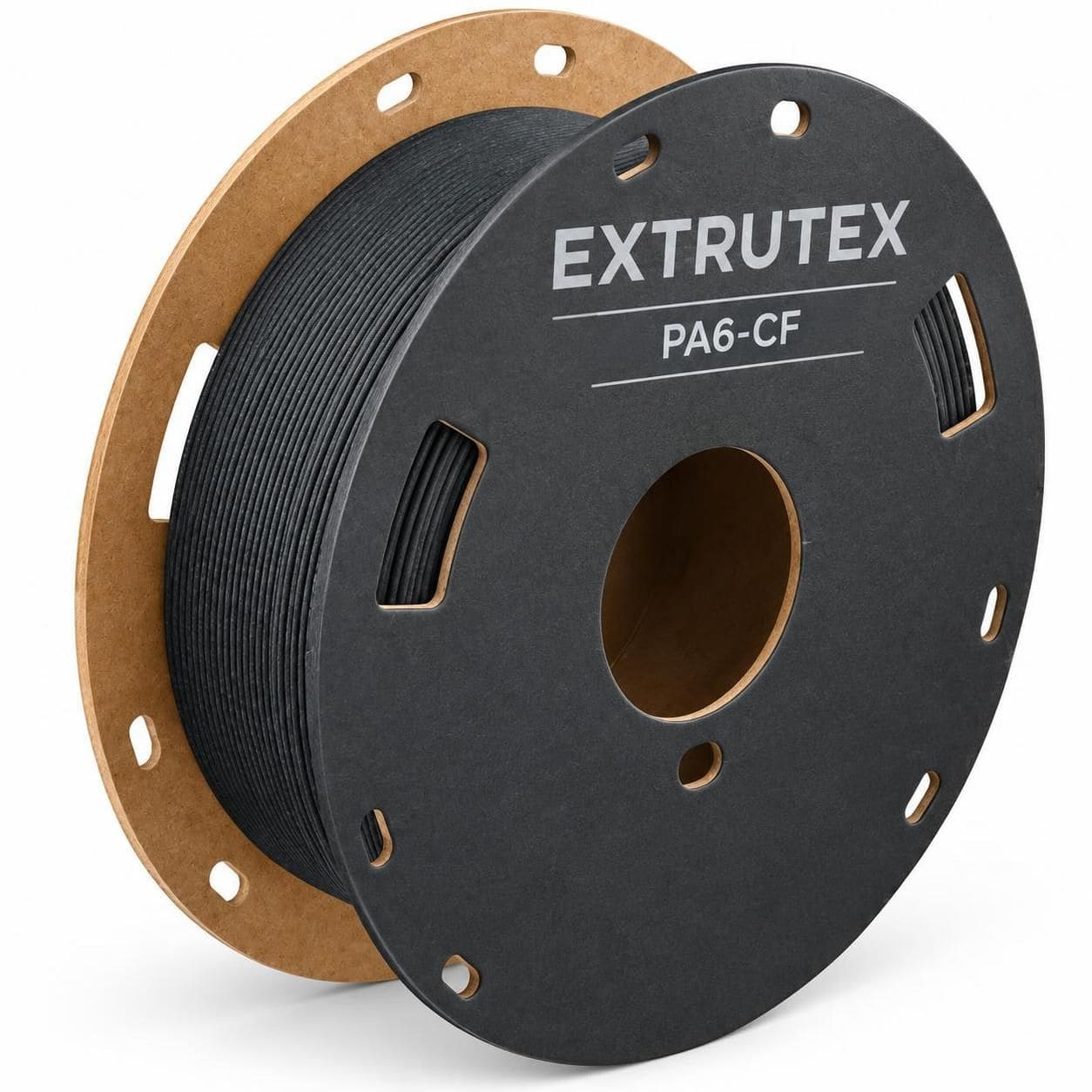
EXTRUTEX PAHT-CF is a high-performance carbon fiber reinforced nylon filament based on PA12 (Polyamide 12). Developed for demanding engineering and industrial 3D printing applications, it combines the relatively low moisture absorption characteristics of PA12 with the stiffness and mechanical performance of carbon fiber reinforcement.
Compared with conventional nylon carbon fiber materials, PAHT-CF is designed to maintain useful mechanical properties and dimensional stability under humid conditions. Its enhanced Z-layer adhesion also makes it suitable for functional components that require reliable interlayer bonding and resistance to mechanical stress.
With a specified heat deflection temperature of up to 194°C at 0.45 MPa, EXTRUTEX PAHT-CF is suitable for applications requiring high-temperature performance, including functional prototypes, machining fixtures, jigs, injection mold components and low-volume production parts.
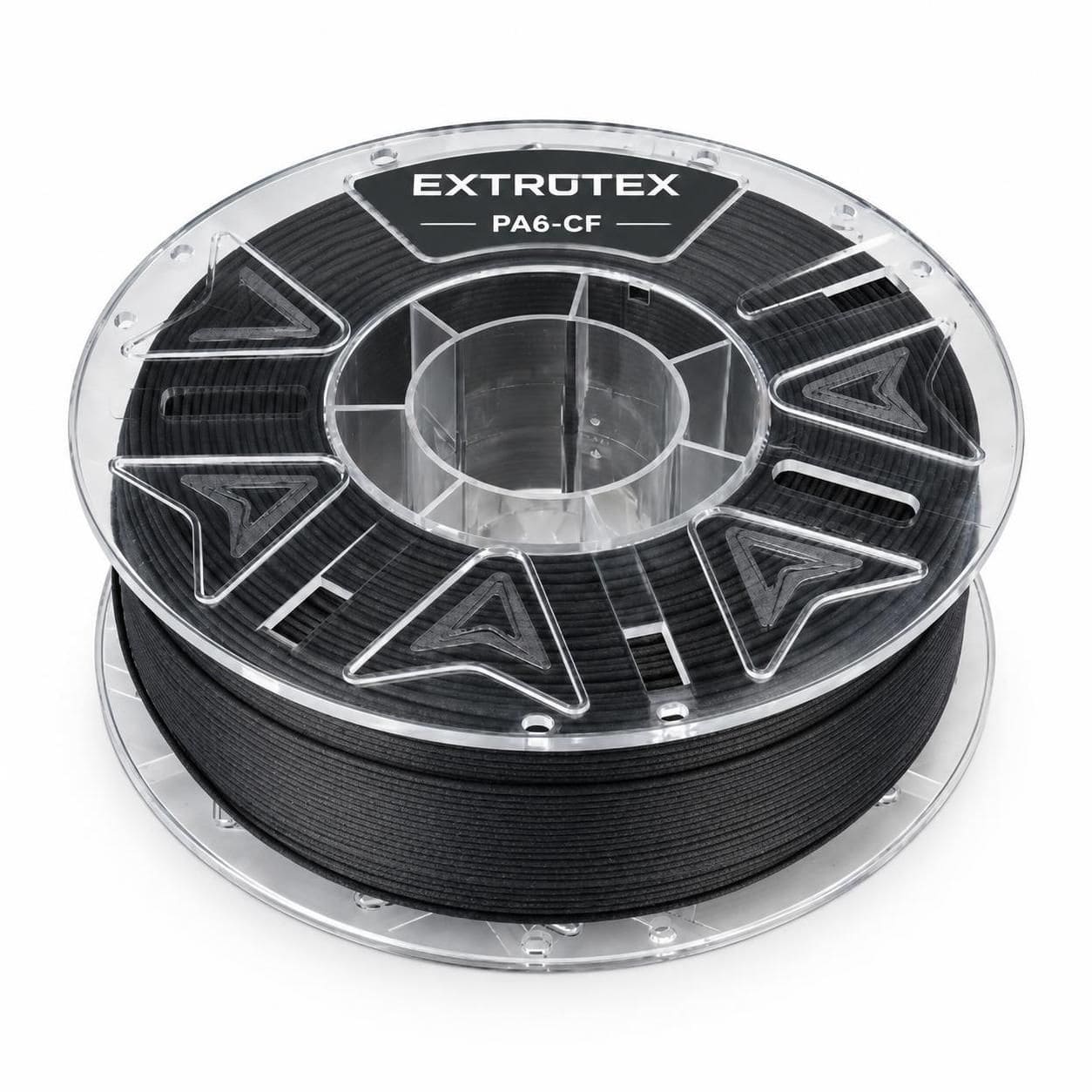
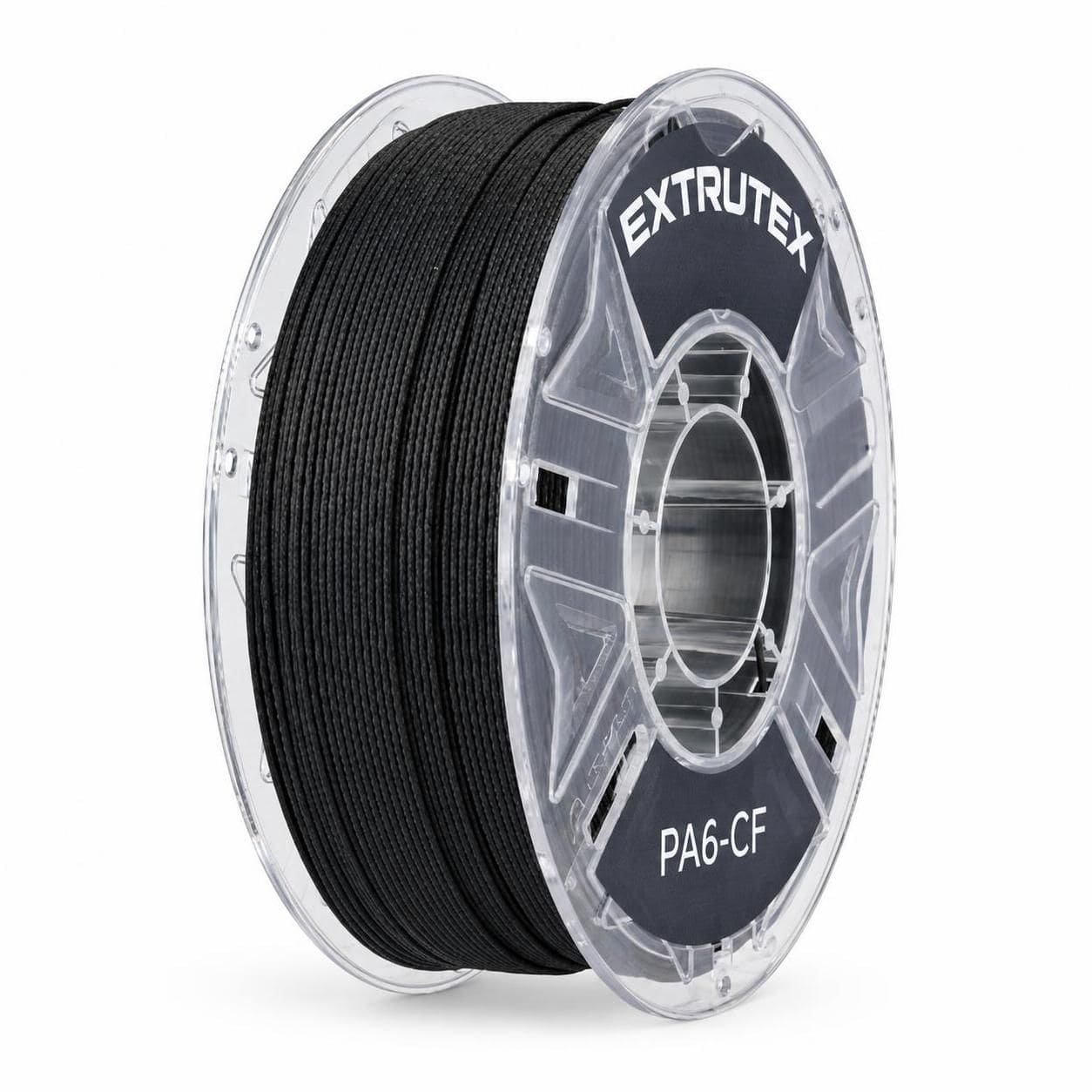
The filament is supplied in a 1.75 mm diameter and 1 kg spool, with a specified diameter tolerance of ±0.03 mm.
Key Features of EXTRUTEX PAHT-CF Filament
Low Moisture Absorption
PA12-based material technology provides relatively low water absorption compared with many other nylon grades, helping preserve dimensional stability and mechanical performance in humid environments.
Exceptional Mechanical Properties
Carbon fiber reinforcement improves stiffness and supports demanding engineering applications requiring strong, rigid and durable printed components.
Improved Z-Layer Adhesion
Designed for stronger interlayer bonding than conventional PA-CF materials, helping printed parts withstand mechanical stress across the build direction.
High Tensile Strength
Combines a PA12 polymer matrix with carbon fiber reinforcement for functional components requiring strength and structural performance.
High Temperature Resistance
Specified heat deflection temperature reaches up to 194°C at 0.45 MPa, making it suitable for selected high-temperature engineering applications.
Precise Filament Diameter
Manufactured in 1.75 mm diameter with a stated tolerance of ±0.03 mm for consistent feeding in compatible FDM and FFF printers.
Why Choose PAHT-CF Carbon Fiber Reinforced PA12?
Engineering 3D printing materials must do more than produce a good-looking model. Functional parts may be exposed to mechanical loads, temperature changes, humidity and repeated handling. Material selection therefore has a direct impact on dimensional accuracy, service performance and the reliability of the finished component.
PAHT-CF combines PA12 nylon with carbon fiber reinforcement to address several of these requirements. The PA12 base contributes relatively low moisture absorption compared with many other nylon materials, while carbon fiber reinforcement increases stiffness and supports dimensional stability.
This combination makes PAHT-CF a useful material option for professional users producing fixtures, tooling, functional prototypes and selected low-volume production components.
1. Low Moisture Absorption
One of the important characteristics of PA12 is its relatively low moisture absorption compared with many conventional nylon grades. This is particularly relevant for 3D printed components used in environments where humidity may change over time.
Moisture absorption can influence the dimensions and mechanical behaviour of nylon materials. By using a PA12-based formulation, PAHT-CF is designed to reduce these effects and help printed components maintain more consistent performance.
The supplied product information indicates approximately 50% lower water absorption compared with conventional PA-CF. The exact comparison depends on the reference material, test conditions and measurement method, so this figure should be verified against the product datasheet before being used as a guaranteed comparative claim.
2. Exceptional Mechanical Properties and Layer Adhesion
In FDM and FFF printing, components are built layer by layer. The bonding between individual layers is therefore an important factor in determining the mechanical performance of the finished part.
PAHT-CF is designed to provide improved Z-direction layer adhesion compared with conventional PA-CF materials. Stronger interlayer bonding can help reduce the risk of separation when components experience impact, bending or mechanical stress across the printed layers.
This characteristic is particularly useful for engineering parts, functional prototypes and tooling where the direction of applied force must be considered during product design.
3. High Tensile Strength
Carbon fiber reinforcement contributes to the stiffness and mechanical performance of the PA12 composite. This makes PAHT-CF suitable for parts that need to withstand tensile forces and maintain their structural shape during use.
Potential applications include machine fixtures, positioning tools, brackets, production aids and functional components. Actual tensile strength depends on the carbon fiber content, printing parameters, part geometry and test direction.
4. High Temperature Resistance
EXTRUTEX PAHT-CF has a specified heat deflection temperature of up to 194°C at 0.45 MPa. Heat deflection temperature, or HDT, measures the temperature at which a material deforms by a specified amount under a defined mechanical load.
This thermal performance makes PAHT-CF a candidate for selected applications involving elevated temperatures, including tooling and components used in industrial environments.
HDT is not the same as continuous operating temperature. The actual service temperature of a printed component depends on its geometry, mechanical load, exposure time, environment and safety requirements.
5. Dimensional Stability in Humid Environments
Dimensional stability is important when producing components with precise mounting points, holes, slots and functional interfaces. Changes in moisture content can affect the dimensions of some nylon materials.
The PA12-based composition of PAHT-CF is designed to reduce moisture-related dimensional changes. Carbon fiber reinforcement also supports stiffness and dimensional consistency, helping produce reliable engineering components when printing and storage conditions are properly controlled.
6. Flexible Engineering Applications
PAHT-CF combines high stiffness with useful interlayer adhesion and the mechanical characteristics of reinforced PA12. This balance makes it suitable for a broad range of professional 3D printing applications, from functional prototypes to tooling and low-volume production parts.
Technical Specifications
| Product Name | EXTRUTEX PAHT-CF Carbon Fiber Reinforced Filament |
|---|
| Base Polymer | PA12 (Polyamide 12) |
|---|
| Reinforcement | Carbon fiber |
|---|
| Filament Diameter | 1.75 mm |
|---|
| Diameter Tolerance | ±0.03 mm |
|---|
| Spool Weight | 1 kg |
|---|
| Heat Deflection Temperature | Up to 194°C at 0.45 MPa |
|---|
| Moisture Absorption | Approximately 50% lower than the stated conventional PA-CF reference; confirmation of test conditions recommended |
|---|
| Drying Temperature | 80°C |
|---|
| Drying Time | 8–12 hours |
|---|
| Recommended Storage Humidity | Below 20% RH in a sealed container with desiccant |
|---|
| Nozzle Temperature | 260–290°C |
|---|
| Bed Temperature | 80–100°C with glue |
|---|
| Printing Speed | Below 100 mm/s |
|---|
| Printing Technology | FDM / FFF |
|---|
| Typical Applications | Functional prototypes, machining fixtures, injection mold components, jigs and low-volume production parts |
|---|
Technical clarification: The 194°C figure is specified as HDT at 0.45 MPa, not as a guaranteed continuous operating temperature. The carbon fiber percentage, tensile strength, flexural strength, density and exact moisture absorption test conditions were not supplied. These values should be confirmed before publication in a formal technical datasheet.
Recommended Applications of PAHT-CF
Functional Prototypes
Produce engineering prototypes that require improved stiffness, mechanical strength and dimensional stability for practical evaluation and testing.
Machining Fixtures
Create positioning fixtures, workholding accessories and machining aids designed for selected industrial environments.
Injection Mold Components
Manufacture selected prototype mold components and tooling elements where the thermal and mechanical performance of the material is suitable for the intended process.
Industrial Jigs
Produce assembly jigs, inspection fixtures, positioning tools and production aids for manufacturing operations.
Low-Volume Production
Use reinforced PA12 filament to manufacture selected functional parts in small production quantities without requiring conventional tooling for every component.
Engineering Components
Develop brackets, housings, equipment accessories and other mechanical parts requiring a combination of stiffness and dimensional stability.
Recommended Printing Settings
PAHT-CF is an engineering-grade composite filament designed for compatible professional FDM and FFF printers. Correct material preparation and stable printing conditions are essential for achieving reliable results.
1. Filament Drying
Dry the filament at 80°C for 8–12 hours before printing, according to the supplied product recommendations. Nylon-based filaments can absorb moisture during storage and handling. Printing with moisture-affected filament may result in bubbles, inconsistent extrusion, surface defects and reduced mechanical performance.
2. Moisture-Controlled Storage
After drying, keep the filament in a sealed container with desiccant. The recommended storage or printing-container humidity is below 20% RH. Maintaining a dry environment helps prevent the filament from absorbing moisture again before and during printing.
3. Nozzle Temperature
The recommended nozzle temperature range is 260–290°C. The ideal setting depends on the printer, hotend, extrusion speed, part geometry and cooling conditions. Begin within the recommended range and adjust according to print quality and material behaviour.
4. Build Plate Temperature
The recommended bed temperature is 80–100°C with glue. Use a suitable build surface and adhesive system compatible with the printer and material. Proper first-layer adhesion is important for reducing warping and maintaining dimensional accuracy.
5. Printing Speed
The recommended printing speed is below 100 mm/s. Actual performance depends on the printer's hotend capacity, extrusion system, cooling configuration and model complexity. For demanding engineering components, prioritize consistent extrusion and reliable layer bonding over maximum printing speed.
6. Wear-Resistant Nozzle
Because carbon fiber is abrasive, a hardened steel or other suitable wear-resistant nozzle is strongly recommended. Standard brass nozzles may wear more quickly during extended printing with fiber-reinforced materials. Nozzle wear can affect extrusion consistency and dimensional accuracy.
Printing Settings Summary
| Parameter | Recommended Setting |
|---|
| Drying Temperature | 80°C |
| Drying Time | 8–12 hours |
| Storage Humidity | Below 20% RH |
| Storage Method | Sealed container with desiccant |
| Nozzle Temperature | 260–290°C |
| Bed Temperature | 80–100°C with glue |
| Printing Speed | Below 100 mm/s |
| Nozzle Type | Hardened steel or other wear-resistant nozzle recommended |
PAHT-CF Compared with Conventional PA-CF
Both PAHT-CF and conventional PA-CF are carbon fiber reinforced nylon materials. However, the polymer base and formulation can significantly influence moisture absorption, dimensional stability, interlayer adhesion and thermal performance.
| Property | PAHT-CF | Conventional PA-CF |
|---|
| Polymer Base | PA12-based composite | Depends on the specific nylon grade, commonly PA6 or PA12 |
| Moisture Absorption | Designed for relatively low moisture absorption | Varies according to the nylon base and formulation |
| Z-Layer Adhesion | Designed for improved interlayer bonding | Varies by material grade and printing conditions |
| Mechanical Performance | High-performance reinforced nylon composite | Depends on polymer base and fiber formulation |
| Thermal Performance | Specified HDT up to 194°C at 0.45 MPa | Varies by material grade and test conditions |
| Typical Applications | Engineering fixtures, tooling, prototypes and low-volume production | Functional components, structural parts and engineering prototypes |
Storage and Material Handling
Although PA12 generally absorbs less moisture than some other nylon grades, PAHT-CF should still be treated as a moisture-sensitive engineering filament. Proper handling helps maintain print quality and material consistency.
- Dry the filament at 80°C for 8–12 hours before printing, following the supplied recommendation.
- Store the spool in a sealed moisture-protective container.
- Use desiccant to help maintain humidity below 20% RH.
- Avoid leaving the filament exposed to humid ambient air for extended periods.
- Keep the filament dry during long printing jobs.
- Use a suitable wear-resistant nozzle to reduce abrasive wear.
- Follow the printer manufacturer's safety and temperature limitations.
Why Choose EXTRUTEX PAHT-CF Filament?
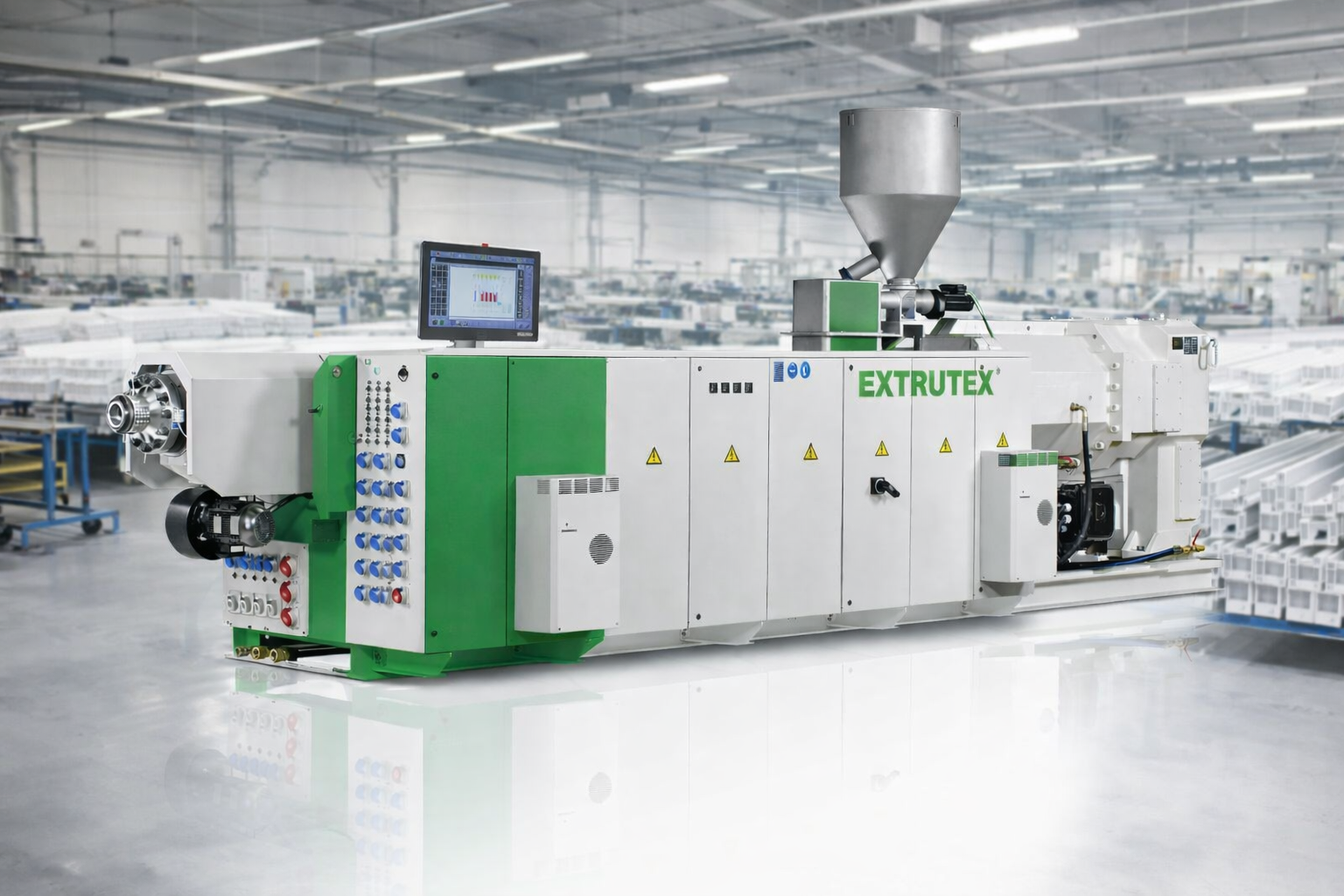
EXTRUTEX supplies advanced polymer materials and solutions for industrial plastics processing, engineering applications and professional 3D printing. Our product range includes engineering polymers, reinforced materials, specialty compounds and extrusion technologies.
EXTRUTEX combines design, laboratory and R&D activities in Austria with manufacturing in China. This structure supports the development of material solutions for customers across international markets.
Our PAHT-CF filament is designed for professional users who need a carbon fiber reinforced PA12 material with low moisture absorption, strong interlayer adhesion and high-temperature performance.
Frequently Asked Questions About PAHT-CF Filament
1. What is PAHT-CF 3D printing filament?
PAHT-CF is a high-performance carbon fiber reinforced nylon filament based on PA12. It is designed for professional FDM and FFF printing applications requiring mechanical strength, stiffness, dimensional stability and thermal performance. Its relatively low moisture absorption and improved interlayer adhesion make it useful for functional engineering parts, fixtures and tooling.
2. What does PAHT-CF stand for?
PAHT-CF refers to a high-temperature polyamide carbon fiber reinforced material. In this product, the polymer base is PA12, also known as Nylon 12, while CF refers to carbon fiber reinforcement. The exact formulation and fiber percentage should be confirmed in the technical datasheet.
3. What is the base material of EXTRUTEX PAHT-CF?
The base polymer is PA12, or Polyamide 12. PA12 is an engineering nylon known for relatively low moisture absorption compared with several other polyamide grades. Carbon fiber reinforcement is added to improve stiffness and support the mechanical performance required in demanding 3D printing applications.
4. What is the filament diameter?
EXTRUTEX PAHT-CF is supplied in a 1.75 mm diameter. The stated diameter tolerance is ±0.03 mm. This specification is intended to support consistent filament feeding and extrusion in compatible 1.75 mm FDM and FFF printers.
5. What is the spool weight?
The specified spool weight is 1 kg. This format is suitable for professional prototyping, engineering projects, tooling production and other functional 3D printing applications.
6. What is the heat deflection temperature of PAHT-CF?
The specified heat deflection temperature is up to 194°C at 0.45 MPa. This is a measured thermal performance value under a defined load and test method. It should not be interpreted as a guaranteed continuous operating temperature for every printed component.
7. Does PAHT-CF absorb moisture?
PAHT-CF is based on PA12, which generally has lower moisture absorption than several other nylon grades. The supplied product information indicates approximately 50% lower water absorption compared with a conventional PA-CF reference. Actual results depend on the comparison material, conditioning procedure and test method.
8. Does moisture affect PAHT-CF printing?
Yes. Although PA12 has relatively low moisture absorption, the filament can still absorb moisture from the surrounding environment. Excessive moisture may cause inconsistent extrusion, bubbles, surface defects and reduced print quality. Drying and moisture-controlled storage are recommended.
9. How should PAHT-CF filament be dried?
The supplied drying recommendation is 80°C for 8–12 hours. Use a suitable filament dryer and follow the material manufacturer's instructions. After drying, keep the spool in a sealed container with desiccant to prevent moisture reabsorption.
10. What nozzle temperature is recommended?
The recommended nozzle temperature is 260–290°C. The best setting depends on the printer, hotend, extrusion speed and model geometry. Check the printer's temperature capabilities and follow the material-specific processing recommendations.
11. What bed temperature is recommended?
The recommended bed temperature is 80–100°C with glue. Correct build-surface preparation and first-layer adhesion are important for reducing warping and maintaining dimensional accuracy during printing.
12. What printing speed should I use?
The recommended printing speed is below 100 mm/s. The appropriate speed depends on the hotend's extrusion capacity, the printer configuration and the complexity of the model. For functional engineering components, stable extrusion and reliable layer bonding should take priority over maximum speed.
13. Does PAHT-CF require a hardened nozzle?
A hardened steel or another suitable wear-resistant nozzle is strongly recommended. Carbon fiber reinforcement is abrasive and can wear standard brass nozzles during printing. Using a wear-resistant nozzle helps maintain consistent extrusion and dimensional accuracy over time.
14. What makes PAHT-CF suitable for engineering parts?
PAHT-CF combines the PA12 polymer base with carbon fiber reinforcement. This provides a useful balance of stiffness, mechanical performance, moisture resistance and thermal capability. These characteristics make it suitable for selected engineering prototypes, machine fixtures, jigs and functional production components.
15. Is PAHT-CF suitable for machining fixtures?
Yes. Machining fixtures are one of the intended application areas. The material's stiffness and mechanical properties can be useful for producing positioning tools, workholding accessories and other production aids. The design should account for cutting forces, temperature, vibration and the intended service life.
16. Can PAHT-CF be used for injection mold components?
PAHT-CF can be considered for selected prototype mold components and tooling applications. Its specified HDT of 194°C at 0.45 MPa may be useful where elevated temperatures are involved. However, the suitability of a printed mold depends on injection pressure, material temperature, cycle time, surface requirements and the actual load conditions.
17. Is PAHT-CF suitable for low-volume production?
Yes. PAHT-CF can be used to manufacture selected low-volume production components, especially when complex geometry, customization or short production lead times are important. It can also be useful for replacement parts, functional prototypes and specialized industrial components.
18. What is the advantage of better Z-layer adhesion?
Z-layer adhesion describes the bonding between successive printed layers along the vertical build direction. Better interlayer bonding can help reduce the risk of layer separation when a component experiences stress across its printed layers. This is important for functional parts where mechanical loads act in multiple directions.
19. Is PAHT-CF stronger than ordinary PA-CF?
The answer depends on the exact material grades being compared. PAHT-CF is designed to offer improved Z-layer adhesion, low moisture absorption and high thermal performance. However, tensile strength, flexural strength, impact resistance and stiffness must be compared using measured datasheet values under the same test conditions.
20. Can PAHT-CF maintain performance in humid environments?
PAHT-CF is designed to maintain useful mechanical properties and dimensional stability better under humid conditions than some conventional nylon carbon fiber materials. Its PA12 base contributes relatively low moisture absorption. Nevertheless, the filament should still be stored and handled in a dry environment, and the finished component should be evaluated under its actual operating conditions.
21. Is PAHT-CF suitable for high-temperature industrial applications?
PAHT-CF may be suitable for selected high-temperature applications based on its specified HDT of up to 194°C at 0.45 MPa. The actual operating limit depends on the mechanical load, exposure duration, part design and environmental conditions. Always evaluate the material against the requirements of the final application.
22. What is the difference between PAHT-CF and PA6-CF?
PAHT-CF in this product is based on PA12, while PA6-CF uses PA6 nylon. These polymer bases have different moisture absorption, thermal and mechanical characteristics. PA12 generally offers lower moisture absorption, while PA6 has its own strength and processing advantages. The right material depends on the application and the verified specifications of each grade.
23. Can PAHT-CF be used for functional prototypes?
Yes. Functional prototypes are a key application for PAHT-CF. Its reinforced structure, dimensional stability and thermal performance can help engineers evaluate components under more demanding conditions than those typically used for basic visual prototypes.
24. Is PAHT-CF suitable for industrial jigs and fixtures?
Yes. PAHT-CF can be used for selected industrial jigs, assembly fixtures, positioning tools and production aids. Its stiffness and mechanical performance can help create useful workshop components, provided the design and printing orientation are appropriate for the expected loads.
25. How should PAHT-CF be stored after opening?
After opening, keep the filament in a sealed container with desiccant. The supplied recommendation is to maintain humidity below 20% RH. Avoid leaving the spool exposed to humid air, especially between printing jobs. If the filament has absorbed moisture, dry it according to the recommended conditions before use.
26. Is PAHT-CF suitable for professional FDM and FFF printers?
Yes. PAHT-CF is designed for professional FDM and FFF 3D printing systems capable of reaching the recommended nozzle and bed temperatures. The printer should also have a suitable extrusion system, wear-resistant nozzle and appropriate build-surface configuration.
Choose EXTRUTEX PAHT-CF for High-Performance Engineering 3D Printing
Improve your professional 3D printing capabilities with a PA12 carbon fiber reinforced filament designed for low moisture absorption, strong interlayer adhesion, high mechanical performance and elevated-temperature applications.
Contact EXTRUTEX for product details, technical specifications, customized material solutions and supply inquiries.
Website: www.extruder.co







-
(0 customer reviews)