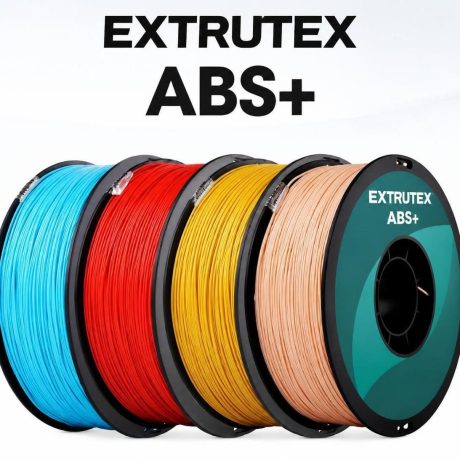
EXTRUTEX ASA-GF Glass Fiber Reinforced ASA Filament
EXTRUTEX ASA-GF is a high-performance engineering filament developed for 3D printed components that require mechanical strength, stiffness, dimensional stability and resistance to outdoor weather conditions. Based on acrylonitrile styrene acrylate (ASA) and reinforced with 10% chopped glass fiber, this composite material combines the weather-resistant characteristics of ASA with the enhanced mechanical properties of glass fiber reinforcement.
Designed for demanding FDM 3D printing applications, ASA-GF is suitable for automotive components, industrial equipment parts, outdoor fixtures, functional prototypes and custom mechanical components. Its thermal performance, UV resistance and dimensional stability make it a practical material for projects where conventional unreinforced ASA may not provide the required rigidity or structural performance.
Key Features of EXTRUTEX ASA-GF
10% Glass Fiber ReinforcementChopped glass fiber reinforcement improves stiffness and mechanical performance compared with standard unreinforced ASA.
UV and Weather ResistanceThe ASA polymer base provides resistance to sunlight and outdoor weather exposure, making it suitable for many exterior applications.
High Thermal PerformanceGlass transition temperature of approximately 106°C and reported HDT of 92–97°C under specified test loads.
Dimensional StabilityGlass fiber reinforcement helps reduce dimensional changes and warping when the material is printed under suitable conditions.
Mechanical Strength and StiffnessDesigned for functional components that require rigidity and resistance to mechanical stress.
FDM 3D Printing CompatibilityOptimized for FDM printing with defined nozzle, bed and enclosure temperature recommendations.
Technical Specifications
| Product Name | EXTRUTEX ASA-GF Glass Fiber Reinforced ASA Filament |
|---|
| Base Material | ASA (Acrylonitrile Styrene Acrylate) |
|---|
| Reinforcement | 10% chopped glass fiber |
|---|
| Printing Technology | FDM / FFF 3D printing |
|---|
| Glass Transition Temperature (Tg) | Approximately 106°C |
|---|
| Heat Deflection Temperature (HDT) | 92–97°C (reported at 1.8–0.45 MPa) |
|---|
| Recommended Nozzle Temperature | 250–270°C |
|---|
| Recommended Bed Temperature | 100–110°C |
|---|
| Recommended Bed Surface | Glass, PEI or PC film |
|---|
| Recommended Enclosure Temperature | 60–80°C |
|---|
| Retraction Distance | 1–5 mm |
|---|
| Retraction Speed | 1800–3600 mm/min (30–60 mm/s) |
|---|
| Drying Temperature | 70–80°C |
|---|
| Drying Time | 4–6 hours after long-term storage, as recommended |
|---|
| Outdoor Suitability | Suitable for many UV- and weather-exposed applications |
|---|
Note: The values above are supplied product specifications and recommended starting settings. Actual results depend on test standards, printer configuration, part geometry and processing conditions. Confirm the exact HDT test load associated with each value before making critical engineering comparisons.
What Is ASA-GF Glass Fiber Reinforced Filament?
ASA-GF is a composite 3D printing material that combines ASA polymer with chopped glass fiber. ASA is widely used in applications where resistance to ultraviolet radiation and outdoor weathering is important. It is commonly selected for functional parts that may be exposed to sunlight, temperature changes and environmental conditions.
Adding glass fiber modifies the mechanical characteristics of the base polymer. The reinforcement increases rigidity and helps printed parts maintain their shape under suitable operating conditions. This makes glass fiber reinforced ASA a useful option for components where dimensional stability and stiffness are important design requirements.
EXTRUTEX ASA-GF contains 10% chopped glass fiber. It is developed for functional printing applications in which users need more than a conventional general-purpose filament. Its combination of ASA weather resistance and glass fiber reinforcement makes it suitable for selected industrial, automotive and outdoor applications.
Enhanced Mechanical Properties
The incorporation of 10% chopped glass fiber improves the stiffness and mechanical performance of ASA. Compared with unreinforced ASA, the composite material is designed to provide greater rigidity and better resistance to deformation in suitable applications.
These characteristics are useful when manufacturing brackets, mounting components, equipment housings, protective covers, industrial fixtures and other functional parts. Components that must retain their shape under mechanical loads can benefit from the increased stiffness provided by glass fiber reinforcement.
Glass fiber reinforcement also influences impact behavior. The supplied product information describes improved impact resistance, although the actual result depends on the test method, print orientation, layer adhesion, wall thickness and component geometry. For parts exposed to repeated impacts or significant mechanical loads, testing with representative printed samples is recommended.
Superior Thermal Stability
Thermal performance is an important consideration when selecting materials for automotive, industrial and outdoor applications. EXTRUTEX ASA-GF has a reported glass transition temperature (Tg) of approximately 106°C and a heat deflection temperature (HDT) range of 92–97°C under the stated test loads.
The glass transition temperature describes the temperature region where the polymer transitions from a more rigid glassy state toward a softer, more flexible state. Heat deflection temperature measures how a test specimen deforms under a specified load while being heated. These are different measurements and should not be treated as interchangeable.
The reported thermal characteristics make ASA-GF a candidate for components exposed to elevated temperatures. Applications may include selected automotive accessories, equipment housings, machine components and functional industrial parts.
Actual operating performance depends on applied load, exposure time, part geometry, print orientation and the surrounding environment. For parts that operate close to the stated temperature limits, application-specific testing is essential.
UV Resistance and Outdoor Durability
Outdoor components are exposed to sunlight, moisture, temperature fluctuations and changing weather conditions. Materials used in these environments need to maintain their functional properties during exposure to environmental stress.
The ASA base polymer provides the weather and UV resistance that makes this material suitable for many outdoor applications. Combined with glass fiber reinforcement, EXTRUTEX ASA-GF is designed for components that require both environmental resistance and improved rigidity.
Typical applications include outdoor equipment covers, mounting brackets, protective housings, exterior fixtures and selected automotive accessories. The suitability of a finished part depends on its design, printing quality, environmental exposure and mechanical requirements.
UV resistance does not mean that a printed component is immune to long-term aging. For products intended for continuous outdoor service, evaluate the complete part under representative sunlight, temperature and moisture conditions.
Dimensional Stability and Reduced Warping
Dimensional accuracy is particularly important when producing mechanical components, fixtures, enclosures and parts that must fit together with other assemblies. Warping and shrinkage during printing can affect dimensions, assembly accuracy and the final appearance of a component.
Glass fiber reinforcement helps improve dimensional stability by reducing the extent of dimensional changes compared with unreinforced polymer in suitable printing conditions. This makes ASA-GF useful for components that require consistent geometry and a stable finished shape.
However, dimensional stability does not eliminate the need for correct printer calibration. Bed adhesion, enclosure temperature, cooling, layer height, extrusion settings and model geometry all influence the final dimensions.
Optimized for FDM 3D Printing
EXTRUTEX ASA-GF is designed for FDM and FFF 3D printing. Its recommended processing settings provide a starting point for users who need to balance extrusion quality, layer adhesion and dimensional stability.
Recommended Printing Parameters
- Nozzle temperature: 250–270°C.
- Build plate temperature: 100–110°C.
- Bed surface: Glass, PEI or PC film.
- Enclosure temperature: 60–80°C.
- Retraction distance: 1–5 mm.
- Retraction speed: 1800–3600 mm/min, equivalent to 30–60 mm/s.
- Drying temperature: 70–80°C.
- Drying time: 4–6 hours after long-term storage, according to the supplied recommendation.
These parameters should be treated as starting settings rather than universal values for every printer. The ideal configuration depends on the hotend, nozzle, extruder type, build plate, slicer, model geometry and surrounding environment.
Nozzle Selection for Glass Fiber Filament
Glass fiber is abrasive and can cause wear when printed through ordinary brass nozzles. As the nozzle wears, its opening may gradually change, affecting extrusion consistency, dimensional accuracy and surface quality.
A hardened steel nozzle or another suitable wear-resistant nozzle is recommended for regular ASA-GF printing. Ensure that the selected nozzle is compatible with the printer and suitable for the required printing temperatures.
For production applications, inspect the nozzle periodically and replace it when wear begins to affect print quality. A suitable nozzle diameter should also be selected according to the printer manufacturer's recommendations and the required level of detail.
Why Use a Heated Enclosure?
ASA-based materials can experience uneven cooling during printing, particularly when producing large parts or models with thick sections. Temperature differences between the printed material and surrounding air can contribute to warping, internal stress or cracking.
The recommended enclosure temperature for EXTRUTEX ASA-GF is 60–80°C. A controlled chamber environment helps maintain more consistent temperatures around the printed part and can improve dimensional consistency.
Always check that the printer, electronics, hotend, motors and other components are rated for the intended chamber temperature. Do not operate equipment outside its manufacturer's specified limits.
Filament Drying and Storage
Moisture can affect the processing behavior and surface quality of engineering filaments. Filament that has absorbed moisture may produce inconsistent extrusion, visible surface defects or other printing problems.
For ASA-GF, the supplied drying recommendation is 70–80°C for 4–6 hours after long-term storage. The actual drying procedure should also account for the spool material and its temperature tolerance.
Recommended Handling Practices
- Store filament in a dry, sealed environment when not in use.
- Minimize unnecessary exposure to humid air.
- Use a suitable filament dryer when drying is required.
- Check that the spool can safely withstand the selected drying temperature.
- Allow the filament to reach a suitable handling temperature before loading it into the printer.
- Keep the material protected from dust and contamination during storage and printing.
Suitable Applications of ASA-GF
EXTRUTEX ASA-GF is intended for applications where weather resistance, rigidity, dimensional stability and thermal performance are important. Its properties make it suitable for a variety of functional and industrial 3D printing projects.
Automotive Components
ASA-GF can be considered for selected automotive accessories, brackets, protective covers, mounting components and functional prototypes. Its stiffness and weather-resistant ASA base make it useful for parts that need to maintain their shape under suitable operating conditions.
Industrial Machinery and Equipment
Industrial applications may include equipment housings, protective covers, mounting brackets, machine accessories and custom mechanical components. The material's rigidity and thermal performance can be useful when designing parts for equipment environments.
Outdoor Fixtures and Accessories
Outdoor fixtures, equipment covers, mounting systems and protective structures can benefit from the weather-resistant properties of ASA. Glass fiber reinforcement provides additional rigidity for suitable designs.
Jigs, Fixtures and Production Aids
Custom jigs, positioning fixtures, assembly aids and workholding components are common applications for engineering filaments. ASA-GF can be evaluated for fixtures that require dimensional stability and mechanical rigidity.
Functional Prototypes
Product developers and engineers can use ASA-GF to produce functional prototypes for fit checks, assembly evaluation and preliminary performance testing. It is particularly relevant when the final design is intended for outdoor or mechanically demanding environments.
ASA-GF Compared with Standard ASA
Standard ASA and ASA-GF share the same base polymer, but glass fiber reinforcement changes the mechanical and processing characteristics of the material.
| Property | Standard ASA | EXTRUTEX ASA-GF |
|---|
| Base Polymer | ASA | ASA |
| Glass Fiber Reinforcement | Not reinforced | 10% chopped glass fiber |
| Rigidity | Standard ASA characteristics | Enhanced stiffness from reinforcement |
| Dimensional Stability | Depends on printing conditions | Improved stability from glass fiber reinforcement |
| UV Resistance | Suitable for outdoor applications | ASA-based UV and weather resistance |
| Thermal Performance | Depends on the specific ASA grade | Tg approximately 106°C; reported HDT 92–97°C |
| Nozzle Selection | Standard compatible nozzle | Wear-resistant nozzle recommended |
| Printing Environment | Temperature control recommended | Heated enclosure recommended |
Standard ASA may be appropriate for general outdoor printing when additional reinforcement is not required. ASA-GF is worth considering when greater stiffness, dimensional stability and thermal performance are important design priorities.
Important Considerations Before Printing
Although glass fiber reinforced ASA offers useful mechanical and thermal properties, successful results depend on selecting the correct printer setup and designing parts for the characteristics of FDM printing.
- Use a wear-resistant nozzle to handle the abrasive glass fiber reinforcement.
- Maintain stable bed and chamber temperatures during printing.
- Dry filament when required, following the recommended procedure.
- Check the first layer carefully to ensure reliable bed adhesion.
- Consider print orientation when designing components exposed to mechanical loads.
- Evaluate layer bonding and mechanical performance using representative printed samples.
- Confirm the thermal limits of the finished component under its actual operating conditions.
Frequently Asked Questions
1. What is EXTRUTEX ASA-GF filament?
EXTRUTEX ASA-GF is a glass fiber reinforced ASA filament designed for FDM 3D printing. It contains 10% chopped glass fiber and is intended for components requiring stiffness, dimensional stability, weather resistance and thermal performance.
2. What does GF mean in ASA-GF?
GF stands for glass fiber. In ASA-GF, chopped glass fibers are incorporated into the ASA polymer to improve rigidity and mechanical performance compared with unreinforced ASA.
3. What is the glass fiber content?
The stated glass fiber reinforcement content is 10%. This reinforcement contributes to the material's stiffness and dimensional stability.
4. Is ASA-GF suitable for outdoor applications?
Yes. Its ASA base provides UV and weather resistance, making it suitable for many outdoor components. Actual service life depends on exposure conditions, part design and printing quality.
5. What is the glass transition temperature of ASA-GF?
The reported glass transition temperature (Tg) is approximately 106°C. This describes the temperature region where the polymer begins transitioning from a rigid glassy state toward a softer state.
6. What is the heat deflection temperature of ASA-GF?
The reported HDT range is 92–97°C under the stated test loads of 1.8–0.45 MPa. HDT is a load-dependent measurement and is different from glass transition temperature.
7. What nozzle temperature is recommended?
The recommended nozzle temperature is 250–270°C. The best setting depends on the printer, hotend, nozzle and model geometry.
8. What bed temperature should I use?
The recommended build plate temperature is 100–110°C. Suitable bed surfaces include glass, PEI and PC film, provided they are compatible with the printer and the material.
9. What enclosure temperature is recommended?
The recommended enclosure temperature is 60–80°C. A stable chamber environment can help reduce uneven cooling and improve dimensional consistency. Ensure the printer is rated for the intended chamber temperature.
10. Does ASA-GF reduce warping?
Glass fiber reinforcement improves dimensional stability and can help reduce warping compared with unreinforced material. Correct bed adhesion, chamber temperature and cooling settings are still important.
11. Can I print ASA-GF with a brass nozzle?
A brass nozzle is not recommended for regular printing with glass fiber reinforced filament because the fibers are abrasive. A hardened steel or other wear-resistant nozzle is recommended to reduce nozzle wear.
12. Does ASA-GF require an enclosed printer?
An enclosed printer with controlled chamber temperature is recommended. It helps maintain a stable printing environment and can reduce cooling-related problems, particularly when printing larger components.
13. How should I dry ASA-GF filament?
The supplied drying recommendation is 70–80°C for 4–6 hours after long-term storage. Check the spool's temperature tolerance and follow the filament manufacturer's handling recommendations.
14. Is ASA-GF suitable for automotive applications?
It can be considered for selected automotive accessories, brackets, covers and prototypes that require rigidity and weather resistance. Critical automotive components need application-specific testing and validation.
15. Can ASA-GF be used for industrial machinery parts?
Yes. Potential applications include equipment housings, protective covers, brackets, fixtures and custom machine accessories. The suitability depends on the mechanical and thermal requirements of the component.
16. Is ASA-GF stronger than standard ASA?
Glass fiber reinforcement is intended to improve stiffness and mechanical performance. The actual tensile strength, flexural strength and impact resistance depend on the test method and printing conditions. Compare verified test data when selecting material for a critical component.
17. Is ASA-GF suitable for functional prototypes?
Yes. Its combination of rigidity, dimensional stability and weather resistance makes it useful for functional prototypes, fit checks, mounting components and preliminary engineering evaluations.
18. What retraction settings are recommended?
The supplied starting recommendation is a retraction distance of 1–5 mm and a retraction speed of 1800–3600 mm/min, equivalent to 30–60 mm/s. Adjust these settings according to the extruder design and printer configuration.
19. Is ASA-GF suitable for high-temperature environments?
It has a reported Tg of approximately 106°C and HDT of 92–97°C under the stated test loads. It may be suitable for selected elevated-temperature applications, but actual performance depends on continuous load, exposure time and component geometry.
20. Who should consider using EXTRUTEX ASA-GF?
Engineers, product developers, automotive accessory manufacturers and industrial 3D printing users may consider ASA-GF when they need a glass fiber reinforced ASA material for rigid, dimensionally stable and weather-resistant functional components.
Why Choose EXTRUTEX 3D Printing Materials?
EXTRUTEX supplies materials and solutions for the plastics processing and 3D printing industries. Our development approach combines Austrian design, laboratory and R&D capabilities with manufacturing in China.
We focus on practical material selection, technical product development and solutions for different industrial applications. Whether you are developing automotive accessories, outdoor fixtures, industrial components or functional prototypes, selecting the right filament is an important step toward achieving reliable printing results.
EXTRUTEX works with customers to understand application requirements and identify suitable material solutions for their projects.
Request Information About EXTRUTEX ASA-GF Filament
Looking for a glass fiber reinforced ASA filament for industrial 3D printing, automotive components or outdoor applications? Contact EXTRUTEX to discuss ASA-GF specifications, processing requirements and material selection.
Website: www.extruder.co
Contact our team for product information and technical assistance.




-
(0 customer reviews)