No products in the cart.

All rights of this website are reserved for EXTRUTEX Austria and its partner companies, © 2026

Multiple Payment Methods

Discount for advance payments over 50%

Free Shipping Coordination Services
Payment methods:


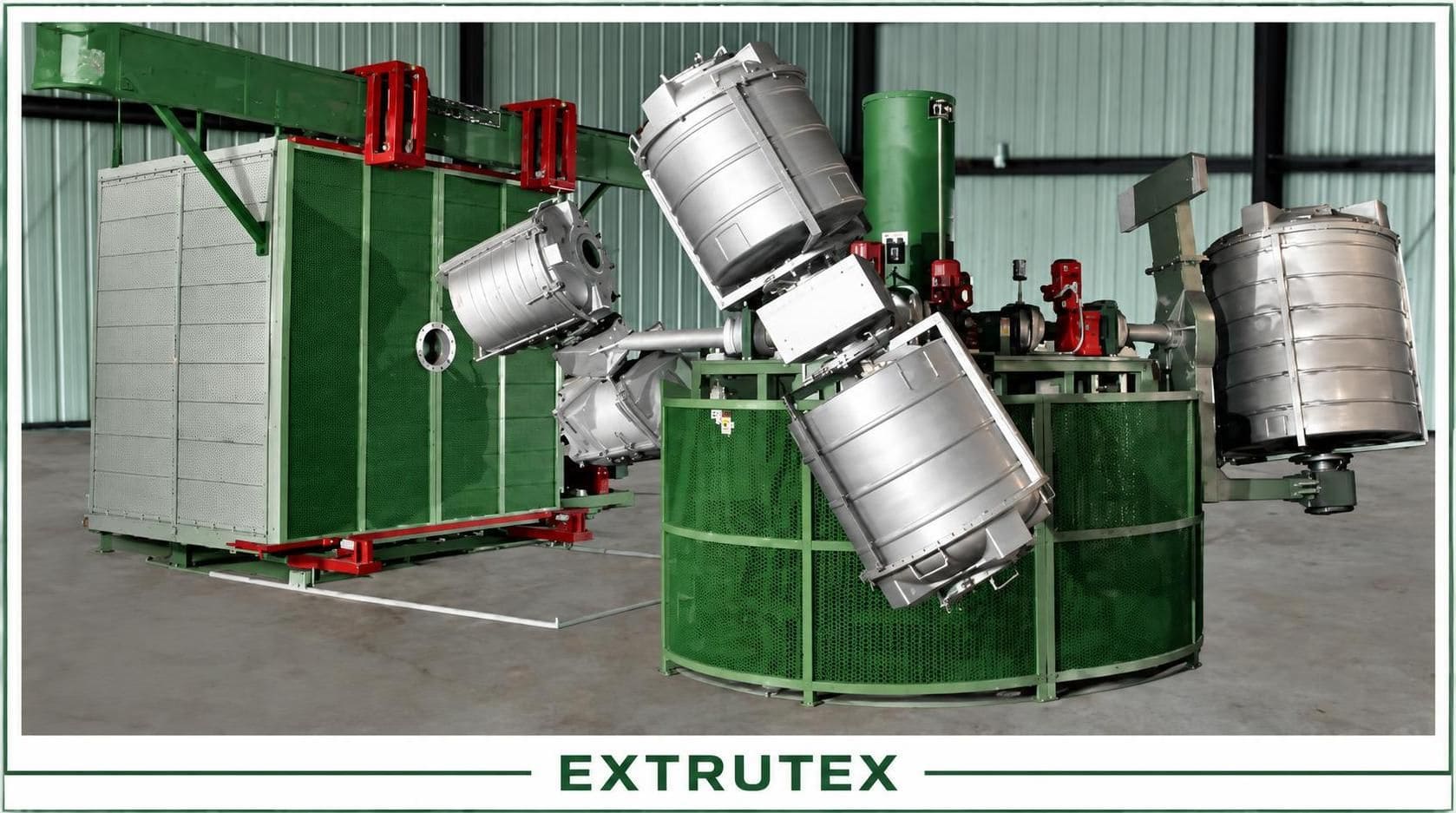
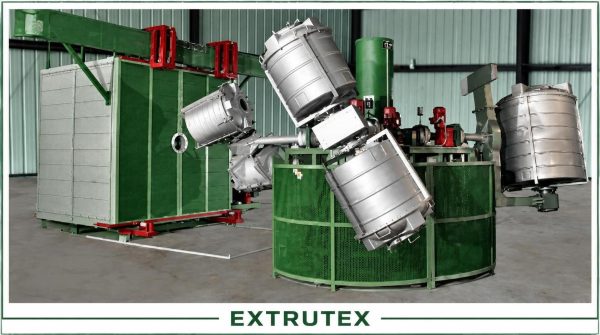
Multi-arm rotational molding technology for flexible production, controlled heating, efficient cooling and reliable manufacturing of hollow plastic products. Available in three-arm and four-arm configurations, with model sizes designed for different factory layouts and production requirements.
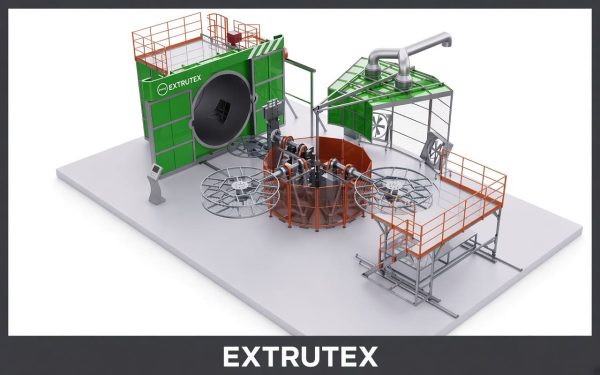
The EXTRUTEX Carousel Rotomolding Machine is developed for manufacturers seeking a more organized, productive and adaptable approach to rotational molding. Its carousel arrangement moves independently controlled arm and carriage assemblies through dedicated processing areas, allowing heating, cooling, loading and unloading operations to be coordinated as part of a continuous production cycle.
Unlike a machine arrangement in which every operation depends on a single shared working position, the carousel concept separates important production activities into designated stations. This allows operators to prepare molds, remove finished products and load new material while other arms continue their assigned molding cycles. The result is a more flexible manufacturing workflow, particularly for factories producing several hollow plastic products with similar molding requirements.
EXTRUTEX offers three-arm and four-arm carousel configurations. The appropriate arrangement depends on product dimensions, mold weight, heating time, cooling requirements, production targets, available factory space and the preferred operating sequence. A range of machine models is available, from compact installations to larger production systems.
Rotational molding, also known as rotomolding, is a plastic processing method used to manufacture hollow products by heating polymer material inside a rotating mold. During the heating stage, the mold rotates around two axes so that the material gradually distributes over the internal mold surfaces. After the required heating cycle, the mold moves into a cooling stage, allowing the formed plastic layer to solidify before the product is removed.
The carousel machine is designed around this production sequence. Its central rotating arrangement carries multiple arm and carriage assemblies between dedicated work areas. Depending on the machine configuration, the system can include three or four arms and a multi-position working arrangement. The layout is intended to reduce unnecessary waiting between operations and make better use of available production time.
A key characteristic of the EXTRUTEX system is the independent control of the carriages and arms. Production settings can be adjusted for individual arms, allowing different molds and product requirements to be managed within the machine's operating capabilities. When one arm is being unloaded or prepared for a new cycle, other arms can continue their assigned production operations.
The three-arm arrangement provides a practical balance between machine footprint, station organization and production flexibility. It is suitable for manufacturers who need a coordinated heating and cooling process with a dedicated loading and unloading workflow.
This configuration is available in models from EX3-1000 through EX3-5500, covering a broad range of installation dimensions.
The four-arm configuration offers an additional arm position for production planning. It is designed for operations that benefit from more working positions and a flexible sequence of mold preparation, heating, cooling and product handling.
The EX4 series ranges from EX4-1600 to EX4-5500, with larger floor-space requirements according to model size.
Each arm and carriage is designed to operate independently within the machine control system. This arrangement gives production teams greater freedom when organizing different tasks. Mold preparation, product removal and the heating cycle do not always need to happen at the same time or in the same position. Operators can coordinate activities according to the actual production schedule and product requirements.
A fixed loading and unloading position helps establish a consistent handling routine. Operators can access molds at a designated station rather than adapting to a constantly changing work area. This can simplify material loading, mold opening, product removal, inspection and preparation for the next cycle. Wireless remote operation can also be configured for the relevant handling functions.
The carousel arrangement supports separate heating and cooling operations. A dedicated cooling area helps move hot molds away from the heating chamber and into a controlled cooling process. Separating these activities can improve the organization of the factory floor and reduce interference between heating and handling work.
The heating chamber is developed with attention to hot-air circulation, chamber insulation and heat utilization. Engineering analysis, including CAE-based thermal simulation, is used in the design process to evaluate heat distribution and support efficient heating performance. Actual energy consumption depends on the polymer, mold construction, product wall thickness, cycle time, burner configuration and operating conditions.
Independent arm settings make the carousel concept suitable for production environments where several products have comparable molding cycles. The operator can establish recipes for different molds and coordinate the work sequence according to the required processing conditions. Products with significantly different heating or cooling requirements should be evaluated before being scheduled together.
By reducing idle periods between mold handling and processing operations, the carousel layout can improve equipment utilization. The productivity advantage depends on the machine configuration, number of working positions, operator organization, product cycle and level of automation. Production planning should be based on actual product trials and the required quality standards rather than on machine configuration alone.
The heating chamber is one of the most important assemblies in a rotational molding machine. Stable temperature conditions are essential for consistent material distribution, suitable wall formation and repeatable product quality. EXTRUTEX carousel systems use a hot-air circulation concept designed to distribute heat throughout the working chamber and support efficient use of the available thermal energy.
Circulation fans move heated air through the chamber and around the mold assembly. The airflow arrangement is designed to maintain useful circulation rather than allowing heated air to remain concentrated in one area. Where the system design permits, residual hot air is recirculated for further thermal use. This approach supports more effective energy utilization and helps establish a consistent heating environment.
Stainless steel is used for the interior surfaces of the heating chamber. This construction is selected for its durability in a high-temperature industrial environment and its suitability for repeated heating cycles. The chamber structure is designed to withstand normal operating conditions while supporting routine inspection and maintenance.
Temperature monitoring allows the operator to observe chamber conditions during production. The control system can use programmed temperature and time settings to manage the heating stages. Monitoring helps operators identify deviations from the selected process recipe and make adjustments when required.
The oven assembly uses a modular mechanical design. Its cylindrical chamber arrangement is intended to make effective use of the available internal space. The door structure incorporates deformation-resistant design considerations to support reliable operation during repeated heating cycles. Correct door alignment, sealing, inspection and maintenance remain important parts of safe machine operation.
The rotating arms transfer the molds through the machine's working positions and provide the required rotational movement during molding. Their construction is therefore important to the overall stability and repeatability of the production process. EXTRUTEX designs the arm assemblies with attention to mechanical strength, load conditions and long-term operating reliability.
Mechanical CAE analysis can be used to evaluate the rotating arm structure under defined loading conditions. This engineering approach helps assess stress distribution, deformation and structural behavior during operation. Arm capacity must be selected according to the combined weight of the mold, material charge and associated tooling. The permitted load should always be confirmed for the specific machine model and configuration.
The arm and head assemblies use enclosed structural arrangements, with casting and forging processes applied to relevant components. Heat treatment is used where specified to support the required mechanical properties. The design objective is to provide a stable assembly for repeated rotation and industrial production.
The control system allows the main and secondary rotational movements to be configured according to the selected recipe. Appropriate speed settings help determine how polymer material moves and distributes inside the mold. The correct settings depend on mold geometry, product design, material characteristics and the desired wall-thickness distribution.
The burner system supplies the thermal energy required by the heating chamber. EXTRUTEX can configure the machine with burner options from recognized industrial suppliers, subject to the selected machine specification and project requirements.
Available burner brand options include:
The burner selection should be based on the required heating capacity, fuel availability, local regulations, maintenance arrangements and factory utilities. The final burner model and configuration are confirmed during technical quotation and engineering review.
Fuel supply pressure, consumption, burner capacity, exhaust arrangement and safety equipment must be matched to the selected installation. The factory should provide the required utility information before machine commissioning.
The EXTRUTEX carousel rotomolding machine uses a PLC-based control architecture for managing machine movements and production parameters. A Siemens PLC option is available, with Ethernet-based data communication and a standardized electrical control arrangement.
Each arm can be configured with a multi-stage heating program. Up to three heating stages can be established, with individual settings for temperature and duration. Main-axis speed, secondary-axis speed and circulation fan speed can also be configured according to the selected process recipe and machine capabilities.
Cooling programs can be divided into as many as three stages. Each stage can use its own cooling duration and delay settings. The system supports air cooling and water-mist cooling arrangements, allowing the cooling sequence to be adapted to product requirements.
The recipe function allows production parameters to be stored for individual products or mold configurations. Once a process has been established and validated, the operator can retrieve the corresponding settings for subsequent production runs. This reduces repeated manual parameter entry and helps maintain a more consistent production routine.
Wireless remote control can be provided for designated loading and unloading operations. This gives operators convenient control over supported handling functions while working around the fixed service position. The available remote functions and safety interlocks should be confirmed in the final electrical specification.
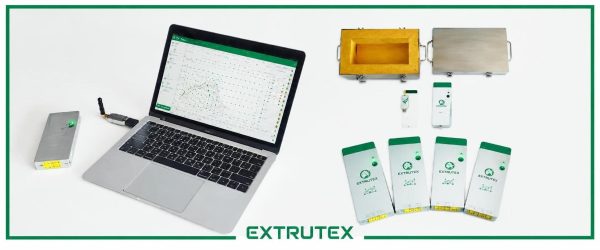
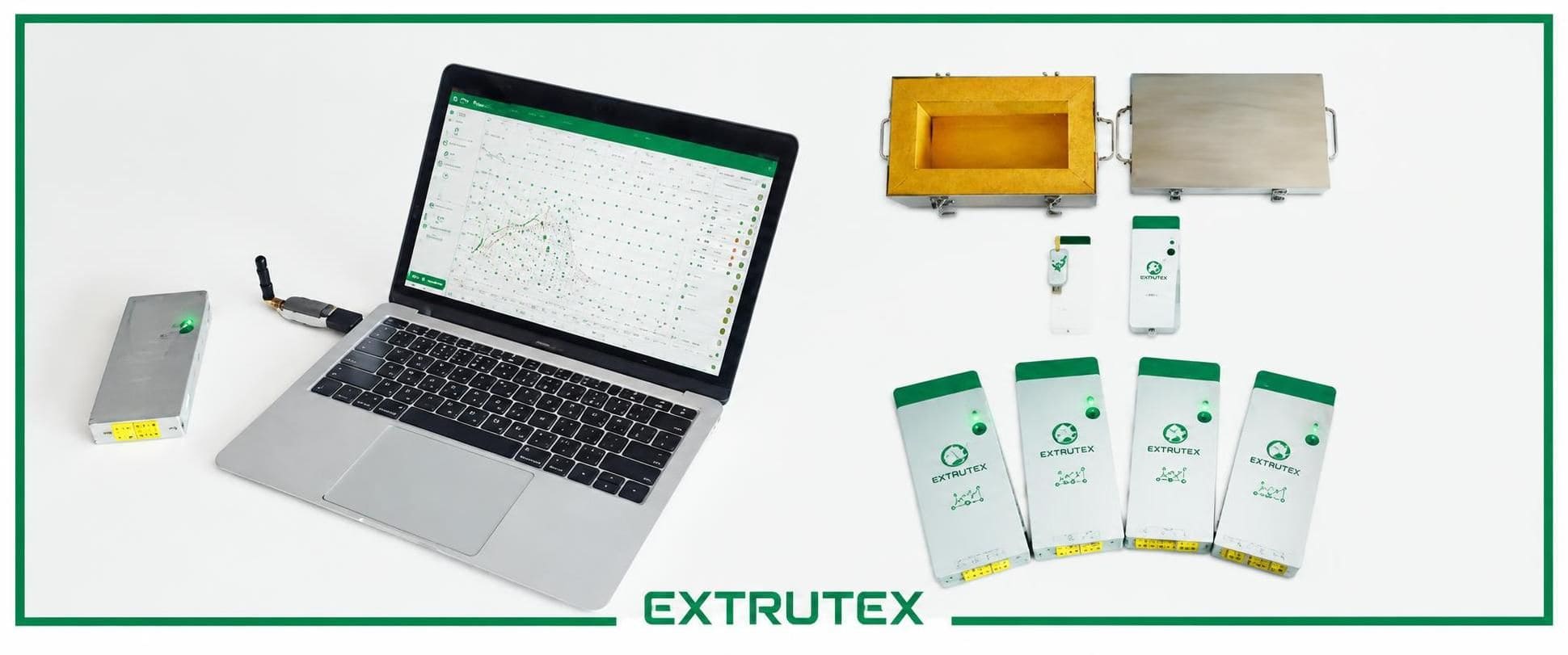
The RSTC wireless temperature measurement option provides additional information about temperature changes inside the mold during the heating and cooling process. Instead of relying only on the chamber temperature, operators can monitor selected points associated with the mold and product.
This option can be useful when developing new products, optimizing cycle times or investigating differences in wall formation. Sensor quantity, measurement range and communication configuration should be confirmed for each project.
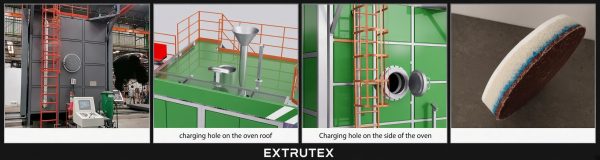
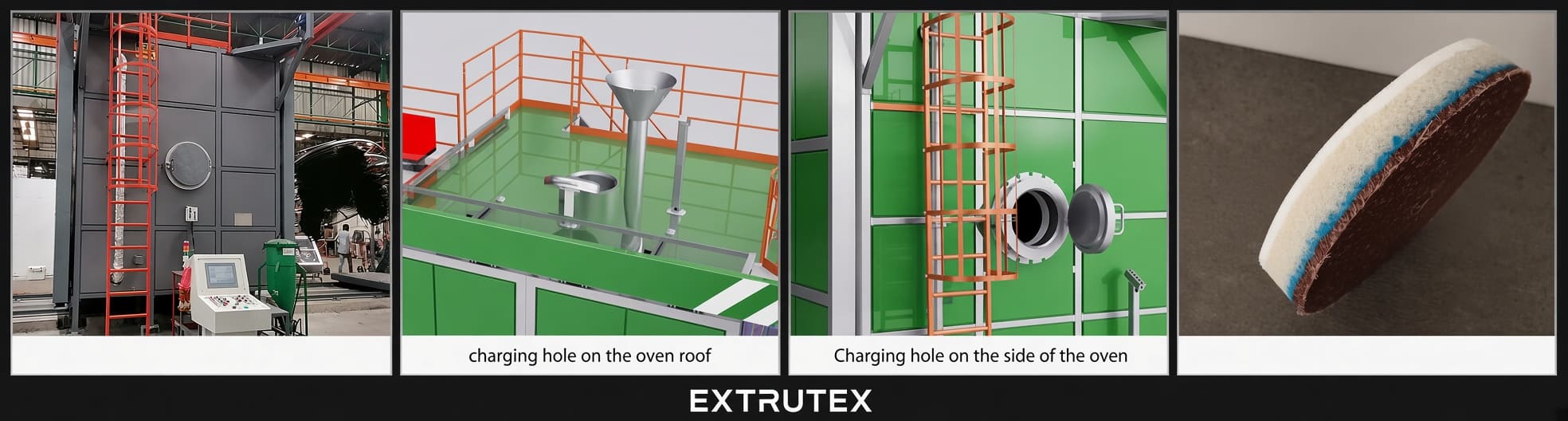
The secondary charging system provides additional flexibility for products that require more than one material loading stage. It can support the development of multilayer rotationally molded products and selected visual or structural effects.
The final process depends on mold access, material compatibility, charging sequence and product construction. Multilayer and foamed products should be evaluated through mold and material trials before production approval.
An encoder option can provide additional control information for the rotating mechanism. Depending on the configured system, encoder feedback can be used to coordinate rotational movement and support special process requirements. This can be relevant to products with deep cavities or local wall-thickness adjustment requirements.
The Load Ranger automatic feeding and weighing option is designed to improve control over the quantity of material supplied to the mold. Accurate charging is important for managing product weight, material consumption and repeatability between production batches.
The appropriate weighing range, feeding arrangement and integration method depend on the selected polymer, material form and production workflow.
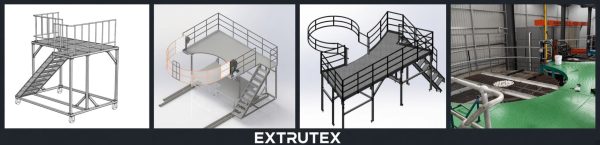
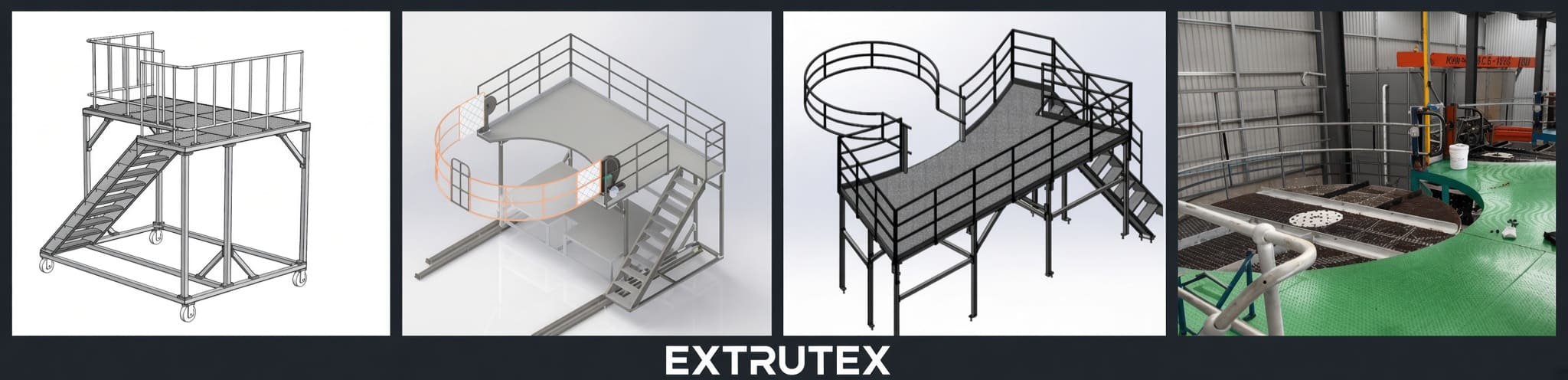
Safety protection can be added around the demolding area to help manage operator access during product removal and mold handling. The protection arrangement should be designed according to the machine layout, access requirements and applicable factory safety standards.
EXTRUTEX carousel rotomolding systems can be configured for a range of thermoplastic materials. Material suitability depends on the grade, powder or compound characteristics, processing window, mold design and required finished-product performance.
Commonly used for hollow molded products where impact performance, chemical resistance and design flexibility are important. The correct PE grade and powder characteristics should be selected for the intended application.
Can be considered for applications requiring a cross-linked material structure. Processing conditions and the cross-linking system must be evaluated for the specific formulation.
Suitable grades may be used for selected rotational molding applications. Material formulation and process conditions require careful evaluation.
PA, PA6 and PA12 are included among the material options for suitable applications. Moisture control, thermal processing and material-specific handling are important considerations.
Selected PVC formulations may be considered for compatible rotational molding processes. Formulation stability and thermal processing limits should be checked before production.
ETFE is a specialty fluoropolymer option for applications with demanding chemical or performance requirements. Equipment configuration and processing feasibility must be reviewed for the intended grade.
The listed polymers represent potential material options, not a guarantee that every grade can run on every machine configuration. EXTRUTEX recommends confirming material specifications, processing temperatures, mold design and product requirements before selecting the final machine.
The following tables show the installation floor-space dimensions for the three-arm and four-arm carousel machine series. The model numbers use the EXTRUTEX EX3 and EX4 naming format. Dimensions are expressed in metres and represent the listed machine layout envelope.
| Model | Length L (m) | Width W (m) | Height H (m) |
|---|---|---|---|
| EX3-1000 | 6.5 | 5 | 2.5 |
| EX3-1600 | 8.5 | 7 | 3.2 |
| EX3-2000 | 10 | 8 | 3.6 |
| EX3-2500 | 14.5 | 9 | 4.3 |
| EX3-3000 | 16.5 | 10.5 | 4.8 |
| EX3-3500 | 18 | 12 | 5.2 |
| EX3-4000 | 18.5 | 13.5 | 5.8 |
| EX3-4500 | 22.5 | 15.5 | 6.5 |
| EX3-5000 | 26.5 | 20 | 7.2 |
| EX3-5500 | 28.5 | 20 | 7.9 |
| Model | Length L (m) | Width W (m) | Height H (m) |
|---|---|---|---|
| EX4-1600 | 11 | 8 | 3.2 |
| EX4-2000 | 13 | 9 | 3.6 |
| EX4-2500 | 17.5 | 10 | 4.3 |
| EX4-3000 | 19.5 | 11.5 | 4.8 |
| EX4-3500 | 21 | 13 | 5.2 |
| EX4-4000 | 21.5 | 14.5 | 5.8 |
| EX4-4500 | 25.5 | 16.5 | 6.5 |
| EX4-5000 | 29.5 | 21 | 7.2 |
| EX4-5500 | 33.5 | 26 | 7.9 |
Important: These are the floor-space dimensions provided for the machine layouts. They are not product dimensions, mold dimensions or guaranteed building-clearance requirements. Allow additional space for operator access, mold movement, maintenance, utilities, ventilation, safety barriers and material handling. Final installation drawings should be approved before factory construction or equipment positioning.
Selecting a carousel machine requires more than comparing the model number or the external dimensions. The correct configuration should be determined by the products to be manufactured, the mold arrangement, the material, the cycle time and the factory's production objectives.
Begin with the maximum product size and the complete mold dimensions. Consider mold opening direction, mounting position, total mold weight and the clearance needed during rotation. Large or irregular molds may require a different arm arrangement from smaller, regularly shaped products.
Different polymers require different processing conditions. The selected heating system must be suitable for the material grade and the thermal requirements of the product. Powder quality, material charge, mold material and wall thickness all influence the heating cycle.
Cooling time can influence the overall production cycle just as much as heating time. Products with thick sections or complex shapes may need a longer cooling period. The required cooling method and handling sequence should therefore be considered when choosing between three-arm and four-arm configurations.
Check the available floor area, building height, access doors, floor loading, fuel supply, electrical capacity, ventilation and exhaust requirements. The installation plan should also include safe operator access and space for mold storage and finished-product handling.
Carousel rotational molding equipment is used in manufacturing environments where hollow plastic components are produced in different sizes and geometries. Depending on the mold, polymer and machine configuration, potential applications include:
The final application range depends on product geometry, material properties, mold construction, required wall thickness and production volume. EXTRUTEX can review the intended product and manufacturing process to help determine a suitable machine configuration.
Proper installation and maintenance are essential for safe and stable rotomolding production. Before commissioning, the machine should be positioned according to the approved layout and connected to the specified electrical, fuel, ventilation and cooling services. The installation area should provide sufficient clearance around moving arms, carriages, the heating chamber and loading and unloading positions.
Regular inspection should cover bearings, rotating assemblies, drive components, electrical connections, fans, burners, chamber surfaces and cooling equipment. Maintenance intervals should follow the machine documentation and actual operating conditions. Any work on electrical, fuel or moving mechanical systems must be performed by qualified personnel using the appropriate isolation and safety procedures.
A carousel rotomolding machine is a rotational molding system in which multiple arm and carriage assemblies move through different production positions. These positions are arranged to coordinate heating, cooling, mold preparation and product handling. This layout helps reduce waiting between operations and provides a more organized production workflow.
The main difference is the number of rotating arms and the production arrangement they provide. A three-arm system offers a practical multi-position layout, while a four-arm system provides an additional arm position for production planning. The best choice depends on product cycle time, mold requirements, available floor space and production targets.
Yes, different products may be produced using suitable molds and validated process recipes. The products should have compatible processing requirements and fit within the machine's permitted mold dimensions and load capacity. Products with very different heating or cooling cycles may require separate scheduling.
Potential material options include PE, XLPE, PP, PA, PA6, PA12, PVC and ETFE. Material suitability depends on the specific grade, formulation, processing window and machine configuration. EXTRUTEX recommends reviewing the material data and conducting process trials before confirming a production application.
The combustion system can be configured for natural gas, liquefied petroleum gas and diesel, subject to the selected burner and project requirements. The final fuel arrangement should be confirmed during engineering review, including the required supply pressure, capacity, exhaust and safety provisions.
Yes. The PLC control system supports multi-stage heating and cooling programs. Heating stages can be configured with different temperatures and durations, while cooling stages can use separate timing and delay settings. Rotational speeds and circulation fan settings can also be included in the production recipe where supported.
The optional RSTC system provides temperature information from selected positions inside or around the mold. It helps operators understand how the mold temperature changes during heating and cooling. This information can assist with process development, troubleshooting and recipe optimization.
A secondary charging system can be configured for selected multilayer applications. It can also support certain camouflage color effects and PE foaming processes. The feasibility depends on the mold design, material compatibility, charging sequence and required product structure.
The dimensions in the EX3 and EX4 tables provide the listed machine floor-space envelope. They should not be treated as the complete building-clearance requirement. Additional space is needed for maintenance, operators, mold handling, utilities, ventilation and safety access. Final installation drawings should be used for factory planning.
Provide the product dimensions, mold dimensions and weight, polymer type, expected production volume, heating and cooling requirements, and available factory space. EXTRUTEX can use this information to evaluate the required arm configuration, model size, burner arrangement and optional equipment.
EXTRUTEX develops and supplies industrial plastic processing equipment for manufacturers working across extrusion, compounding, recycling and rotational molding applications. Our approach combines engineering development, process understanding and practical manufacturing experience to address the requirements of industrial customers.
EXTRUTEX design, laboratory work and research and development are based in Austria, while manufacturing is carried out in China. This structure supports engineering development alongside industrial production capabilities. Machine configuration is considered according to the customer's product, material, factory layout and operating objectives.
For carousel rotomolding projects, our team can review the required machine size, three-arm or four-arm configuration, heating system, burner selection, PLC functions, cooling arrangement and optional process-monitoring equipment. The objective is to specify a system that fits the actual manufacturing process rather than simply selecting equipment by model number.
Share your product drawings, mold dimensions, material requirements, target production capacity and factory layout. Our team can help evaluate the suitable EX3 or EX4 carousel configuration and identify the optional equipment required for your production process.
Contact EXTRUTEX 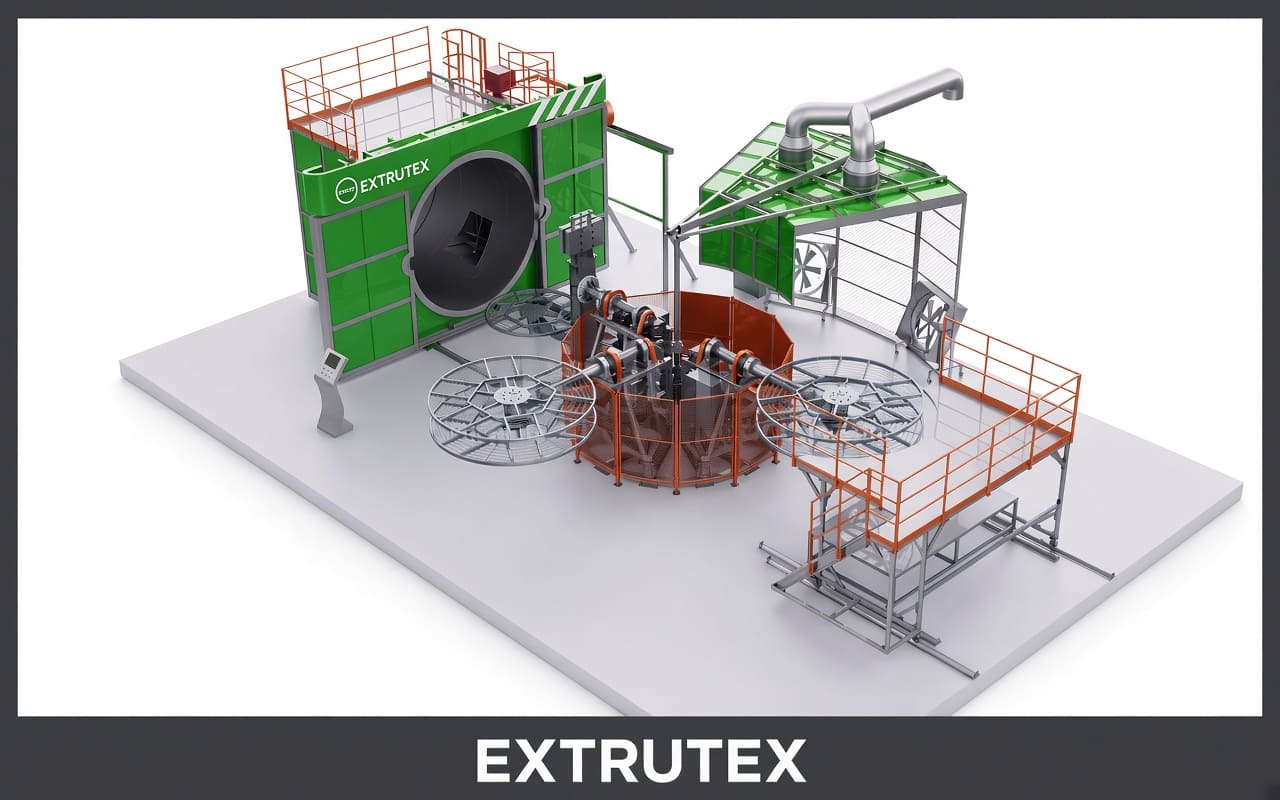
There are no reviews yet.
By submitting your email, you agree to our company’s terms and conditions.
We are not looking to sell; we are here to provide you with the best support and service.
Contact available 24/7
Please do not contact us for advertising or sales inquiries
All rights of this website are reserved for EXTRUTEX Austria and its partner companies, © 2026
-
(0 customer reviews)