
No products in the cart.

Filament Questions
General 3D Printer Filament Questions
3D Printer Filament – Frequently Asked Questions
Discover answers to common questions about 3D printer filament, including material selection, filament diameter, printing temperatures, material properties, storage, manufacturing and quality control. EXTRUTEX provides 3D printing filament solutions and filament extrusion technology for different production requirements.
Showing 25 questions
3D printer filament is a continuous thermoplastic material supplied on a spool and used by FDM or FFF 3D printers to manufacture three-dimensional objects. During printing, the filament passes through a feeding mechanism into a heated hot end, where it softens and is pushed through a nozzle. The printer deposits the material in controlled paths, building an object layer by layer according to a digital model. Common materials include PLA, PETG, ABS, ASA and TPU. Each material has different mechanical, thermal and processing properties. Filament diameter, dimensional consistency, moisture content, formulation and winding quality all influence printing performance. EXTRUTEX supplies filament products and manufacturing technology designed around consistent material processing and controlled product specifications.
PLA is generally the easiest filament for beginners because it prints at relatively moderate temperatures, normally requires less complicated bed preparation and has lower warping tendencies than ABS or ASA. It is suitable for decorative objects, prototypes, models, educational projects and many everyday indoor applications. PLA is also available in numerous colors and specialty finishes. PETG is another good option for beginners who need stronger functional parts, better impact resistance or improved moisture resistance. TPU is suitable when flexibility is required, although feeding it correctly can take practice. The best material depends on the intended application, printer configuration and required mechanical properties. Beginners should start with the material recommended by their printer manufacturer and follow the filament manufacturer's temperature and speed recommendations.
The difference is the nominal diameter of the filament. Both 1.75 mm and 2.85 mm formats are used in FDM 3D printing, but they are designed for different printer feeding systems and cannot normally be exchanged without changing compatible components. Most modern desktop printers use 1.75 mm filament because it is widely supported and offers compatibility with a large range of hot ends and extruders. Some professional and older systems use 2.85 mm filament. The correct choice must always follow the printer manufacturer's specification. For manufacturers, both formats require accurate diameter control, stable cooling and reliable pulling equipment. EXTRUTEX filament extrusion technology can be configured for different product diameters, with the appropriate die, calibration and downstream equipment selected for the required specification.
PLA is a thermoplastic commonly used for desktop 3D printing. PLA+ and PLA Pro are commercial product descriptions rather than universally standardized polymer grades. Manufacturers generally use modified formulations, additives, impact modifiers, processing adjustments or other ingredients to change properties such as toughness, flexibility, flow behavior and surface appearance. Consequently, two PLA+ products from different suppliers may perform differently even when their labels look similar. Buyers should compare technical data, dimensional tolerance, recommended printing conditions, mechanical properties and actual print results rather than relying on the name alone. For filament producers, consistent raw material selection and formulation control are essential when developing a repeatable PLA+ product. The extrusion process must maintain stable melt temperature, output and cooling conditions throughout production.
PLA and PETG are two popular thermoplastic materials used in FDM 3D printing, but they serve different purposes. PLA is generally easier to print and is commonly selected for models, prototypes, decorative objects and indoor applications. PETG usually provides greater toughness and better resistance to moisture and many chemicals, making it useful for functional components, brackets, containers and protective housings. PETG often requires higher nozzle and bed temperatures than standard PLA and can produce stringing if the material is wet or the printing profile is poorly adjusted. Neither material should be selected using strength claims alone. Consider temperature exposure, impact, chemical contact, UV exposure and mechanical loading. The correct formulation and printer settings should be evaluated for the intended application before selecting a production material.
PETG is often tougher and more impact-resistant than standard PLA, but saying that one material is always stronger would be misleading. Strength depends on the specific formulation, print orientation, layer adhesion, infill percentage, wall thickness, nozzle temperature and printing speed. PLA can perform very well in applications requiring stiffness and dimensional stability at normal indoor temperatures. PETG is often preferred when a component needs to withstand impacts, moderate flexing or exposure to moisture. Both materials have limitations under elevated temperatures, and neither should automatically be treated as suitable for every engineering application. Buyers should request mechanical test data for the specific grade and evaluate printed specimens under realistic conditions. Correct filament quality and stable printing conditions are just as important as the polymer name.
TPU stands for thermoplastic polyurethane, a flexible thermoplastic elastomer widely used in applications that require elasticity, impact absorption and resistance to repeated bending. TPU filament is commonly used to manufacture phone cases, protective covers, flexible connectors, gaskets, seals, vibration-damping components, footwear prototypes and wearable accessories. Different TPU grades have different hardness levels, often described using Shore A measurements. A softer grade can provide greater flexibility but may be more difficult to feed through a desktop printer. TPU generally requires careful control of feeding tension, printing speed and retraction. Moisture control is also important because absorbed water can cause bubbles, surface defects and inconsistent extrusion. EXTRUTEX RF242 filament products include TPU applications for flexible consumer and industrial products.
ABS, or acrylonitrile butadiene styrene, is an engineering thermoplastic known for its impact resistance, toughness and ability to withstand higher service temperatures than ordinary PLA. It is used for functional housings, equipment enclosures, automotive prototypes, mechanical components and various industrial applications. ABS normally requires a heated print bed and benefits significantly from a stable enclosed printing environment. Without proper temperature management, large ABS prints may warp, lift from the build surface or develop cracks between layers. Printing ABS also requires appropriate ventilation and consideration of emissions. The exact printing temperature depends on the grade and printer. Filament manufacturers should maintain consistent material composition, drying, extrusion and cooling to produce reliable ABS filament with repeatable diameter and printing behavior.
ASA stands for acrylonitrile styrene acrylate. It is an engineering thermoplastic that offers properties similar to ABS while generally providing better resistance to ultraviolet radiation and outdoor weathering. This makes ASA useful for exterior automotive components, outdoor equipment housings, mounting brackets, garden accessories and parts exposed to sunlight. ABS is widely used for indoor engineering applications, while ASA is often selected when outdoor exposure is an important design requirement. Both materials can experience warping and benefit from an enclosed printer with controlled temperatures. The exact performance depends on the polymer grade, additives, color and printing conditions. Buyers should request relevant weathering and mechanical data rather than assume all ASA formulations perform identically. Proper filament drying and stable extrusion also help maintain consistent printing quality.
ASA is frequently a good choice for outdoor 3D printed components because it offers better UV and weathering resistance than ordinary ABS and standard PLA grades. PETG can also be useful for outdoor parts that require toughness and moisture resistance, although long-term UV performance depends on its formulation and stabilizer package. Specialized UV-stabilized materials may be preferable for demanding applications. Material selection should consider sunlight exposure, operating temperature, rain, humidity, chemical contact and mechanical loading. A filament that performs well in an indoor strength test may deteriorate when exposed to years of outdoor weather. Color can also affect heat absorption and appearance retention. For critical components, request the manufacturer's UV weathering and thermal performance data and validate printed samples under the actual service conditions.
The best filament for a durable component depends on what type of mechanical stress it must withstand. PETG is a practical option for many general-purpose functional parts because it combines toughness with relatively accessible printing requirements. ABS and ASA can be suitable for engineering housings and parts requiring improved temperature performance. Nylon materials are commonly considered for wear-resistant components, gears and mechanical applications, while reinforced grades can offer higher stiffness. TPU is more appropriate when flexibility and impact absorption are required. However, polymer selection is only one factor. Layer adhesion, print orientation, wall thickness, print design, drying and nozzle settings strongly influence final performance. Always compare material data sheets and test finished parts under realistic operating conditions instead of choosing a filament based only on marketing descriptions.
Functional engineering parts require material selection based on temperature, mechanical loading, wear, chemical exposure and dimensional requirements. PETG is commonly used for brackets, housings, fixtures and general functional prototypes. ABS and ASA offer alternative choices where higher temperature performance or outdoor weather resistance is needed. Nylon can be suitable for components exposed to repeated friction and mechanical stress, while polycarbonate and specialized high-performance polymers may be considered for more demanding environments when the printer supports them. TPU is appropriate for flexible engineering parts such as seals and shock-absorbing components. The correct material must also be printable on the available machine. Enclosure requirements, nozzle temperature, drying equipment and build surface compatibility should be considered before choosing a grade. Test finished components before using them in safety-critical systems.
A filament specification of 1.75 mm ±0.02 mm means that the nominal diameter is 1.75 mm and the permitted diameter deviation is 0.02 mm in either direction. Under this specification, measured diameter should normally remain between 1.73 mm and 1.77 mm. Diameter consistency is important because the printer feeds filament according to its assumed cross-sectional dimensions. Significant variations can change the amount of material entering the hot end, potentially causing inconsistent extrusion, dimensional differences and surface defects. However, diameter tolerance alone does not describe all aspects of filament quality. Roundness, ovality, surface condition, moisture and material consistency also matter. EXTRUTEX RF242 is specified at 1.75 ±0.02 mm, providing a clear dimensional target for customers who require controlled filament specifications.
Filament diameter consistency determines how much thermoplastic enters the printer's hot end for a given feeding distance. If the filament becomes thicker or thinner than expected, the actual material volume delivered may change even when the printer follows exactly the same movement instructions. This can contribute to over-extrusion, under-extrusion, rough surfaces, gaps and inconsistent layer formation. Diameter variation can also create feeding resistance or problems with tightly controlled extruder systems. Manufacturers therefore need reliable diameter measurement, stable pulling speed, controlled cooling and consistent melt output. Measurements should be taken at multiple points along the filament and in different directions to identify diameter variation and ovality. A reliable quality-control process should record the results rather than rely on occasional manual measurements.
The amount of filament required depends on the model's size, geometry, wall thickness, infill density, support structures and printing settings. Small decorative objects may consume only a few grams, while large functional components can require several hundred grams or more. Slicer software normally estimates material consumption before printing and can provide approximate weight, filament length and printing time. A standard 1 kg spool is commonly used for desktop filament products because it offers a convenient balance between capacity and handling. Professional users may prefer larger spools when their printer supports them. Buyers should consider expected monthly consumption, storage conditions and spool compatibility when selecting packaging sizes. For production planning, it is useful to calculate material consumption together with expected support waste, failed prints and quality-control losses.
Standard PLA commonly prints within an approximate nozzle temperature range of 190–220°C, although the correct setting depends on the polymer formulation, printer, nozzle design, speed and cooling system. Specialty PLA products, including silk, matte, reinforced and modified grades, may require different conditions. Printing too cold can cause poor layer bonding, under-extrusion and inconsistent material flow. Excessive temperature can increase stringing, oozing, discoloration or other surface defects. The best starting point is the temperature range printed on the filament packaging or supplied in its technical data sheet. Users should perform a temperature tower or another controlled test when introducing a new material. EXTRUTEX RF242 lists 220°C as a reference printing temperature, not a universal setting for every PLA, PETG, TPU or other filament formulation.
Suitable printing speed depends on the filament's melt-flow behavior, printer motion system, hot-end capacity, nozzle size, layer height and cooling performance. A standard PLA profile may work at moderate speeds, while modern high-flow formulations can support faster printing when the printer can maintain sufficient material delivery. PETG often requires a more controlled approach to manage stringing and surface quality. Flexible TPU generally benefits from slower and more stable feeding to prevent deformation inside the extruder. EXTRUTEX RF242 includes a reference printing speed of up to 300 mm/s. This figure should be interpreted as a product-specific reference rather than a guarantee for every printer and model. Actual results should be validated using the manufacturer's recommended profile and the printer's maximum volumetric flow capability.
Filament breakage can result from moisture absorption, material aging, excessive bending, poor winding, formulation problems or mechanical stress in the feeding path. PLA may become brittle after prolonged exposure to unsuitable storage conditions, while moisture-sensitive materials can develop processing problems after absorbing water. A sharp feeding angle, tight spool path or damaged extruder mechanism can also cause repeated bending and snapping. First, inspect the filament for cracks and unusual brittleness. Check whether the spool rotates freely and whether the filament passes through the guide without sharp bends. For materials sensitive to humidity, drying may improve performance when performed according to the manufacturer's instructions. If the filament repeatedly breaks directly from a newly opened, properly stored spool, investigate product quality, formulation consistency and dimensional control rather than assuming the printer is responsible.
Stringing occurs when small strands of molten material remain attached to the nozzle as the printer travels between separate parts of a model. It is particularly noticeable with PETG and can also occur with PLA, TPU and other materials. Common causes include excessive nozzle temperature, incorrect retraction settings, slow travel movement, moisture in the filament or an unclean nozzle. The best troubleshooting approach is to check the filament condition before making large changes to printer settings. Dry the material if moisture is suspected and follow the manufacturer's recommended temperature range. Then adjust retraction distance and speed in small increments, considering whether the printer uses direct drive or Bowden feeding. Excessive retraction can create additional problems, especially with flexible TPU. A controlled test print helps identify which adjustment actually improves the result.
Poor first-layer adhesion can be caused by an incorrectly leveled build plate, unsuitable bed temperature, contaminated printing surface, incorrect nozzle height or inappropriate material settings. Different filament types behave differently on glass, PEI, textured plates and other build surfaces. PLA normally has relatively accessible adhesion requirements, while ABS and ASA often need higher bed temperatures and a stable enclosure to reduce shrinkage and warping. PETG can adhere very strongly to certain smooth surfaces, so the recommended build surface and release method should be checked. Clean the plate using a method approved by its manufacturer and verify first-layer calibration. Avoid compensating for every adhesion issue by simply increasing temperature, because excessive heat or nozzle compression can create other defects. Always test material-specific settings with a small first-layer calibration print.
Many thermoplastic materials used in 3D printing are hygroscopic, meaning they absorb water from the surrounding air. The amount and speed of moisture absorption vary considerably between polymers and formulations. Nylon, TPU and certain engineering materials are particularly sensitive, while standard PLA generally absorbs moisture more slowly. When wet filament enters a hot nozzle, absorbed water can vaporize and create bubbles, popping sounds, rough surfaces, inconsistent extrusion and weaker printed layers. Humidity, temperature, exposure time and packaging conditions influence the problem. Filament should be stored in sealed bags or airtight containers with suitable desiccant. Moisture-sensitive grades may also need active drying before printing and dry-box feeding during longer printing jobs. Always follow the drying instructions for the exact product and spool material.
Opened filament should be protected from moisture, dust, direct sunlight and excessive heat. A practical method is to place the spool in a sealed vacuum storage bag or airtight container with fresh desiccant. Reseal the original packaging when possible and keep different material types clearly identified. Highly hygroscopic materials such as nylon and TPU deserve particular attention because they can absorb enough moisture to affect printing quality during storage or even during a long printing session. Desiccant should be replaced or regenerated when its moisture absorption capacity is exhausted. For frequent users, a dry box that feeds filament directly into the printer can reduce exposure. Proper storage helps maintain consistent extrusion, reduces material waste and protects the investment in each spool. Always follow the material supplier's storage recommendations for specialty formulations.
Wet filament can often be identified through changes in printing behavior and surface appearance. Common warning signs include popping or crackling sounds from the nozzle, bubbles in the extruded material, unusual stringing, rough surfaces, small pits and inconsistent extrusion. Some materials may also become brittle or produce weaker layer bonding. However, these symptoms can have other causes, including incorrect nozzle temperature, damaged filament, poor retraction settings or a partially blocked nozzle. Compare the spool with its previous printing performance and check its storage history. A controlled drying test using the correct material temperature can help determine whether moisture is contributing to the problem. Use a suitable filament dryer with reliable temperature control. Do not assume that one universal drying temperature works for all polymer families or specialty grades.
Most desktop FDM printers can use common materials such as PLA, provided the filament diameter and spool arrangement match the machine. However, not every printer supports every thermoplastic. Printer compatibility depends on hot-end temperature limits, heated bed capacity, extruder design, build chamber, nozzle material, feeding system and firmware settings. Flexible TPU may require a direct-drive extruder or a carefully constrained filament path. ABS and ASA generally benefit from an enclosure, while nylon, polycarbonate and other engineering materials may require higher temperatures and effective moisture control. Abrasive carbon-fiber or glass-fiber reinforced filaments can wear ordinary brass nozzles quickly. Before purchasing filament, check the manufacturer's supported materials and diameter specifications. Correct material selection protects print quality and helps avoid unnecessary equipment problems.
Before buying filament, check whether the material is suitable for the intended application and compatible with your printer. Review nominal diameter and tolerance, material grade, recommended nozzle and bed temperatures, spool dimensions, net material weight and packaging conditions. Buyers should also consider color consistency, surface quality, dimensional stability, moisture protection and winding quality. For functional or industrial parts, request technical data covering mechanical properties, thermal behavior and relevant chemical resistance. If buying from a supplier for repeated production, ask about batch consistency, quality-control methods, available documentation and supply continuity. EXTRUTEX offers filament products including RF242 and filament manufacturing equipment such as EX-45 and the compact 3DEX system. Matching the product specification to the application is more valuable than choosing a spool based on price or appearance alone.
No matching questions found. Try another search term.
PLA, PLA+, PLA Pro and Specialty PLA Filament
PLA, PLA+ and Specialty PLA 3D Printer Filament FAQs
Learn about standard PLA, PLA Plus, PLA Pro and specialty PLA filament formulations. Explore material properties, printing temperatures, high-speed printing, colors, additives, surface finishes, manufacturing and quality control. EXTRUTEX provides 3D printer filament solutions and extrusion technology for different PLA production requirements.
Showing 25 questions
PLA, or polylactic acid, is a thermoplastic polyester produced from lactic acid. Industrial PLA is commonly manufactured using lactic acid derived from renewable carbohydrate sources such as corn starch, sugarcane and other agricultural feedstocks. The lactic acid is converted into polymer through controlled chemical processes, producing a material that can be processed into filament, films, fibers and molded products. PLA is popular in 3D printing because it offers relatively easy processing, good dimensional stability and a wide range of available colors and formulations. However, not all PLA products have identical properties. Molecular weight, crystallinity, additives, pigments and processing history can influence melt flow, toughness and thermal performance. For filament manufacturers, selecting consistent raw materials and controlling extrusion conditions are essential for producing reliable PLA filament with stable diameter and printing behavior.
PLA is often described as a bio-based and biodegradable polymer, but these terms need to be understood correctly. Bio-based means that the polymer is made partly or entirely from renewable biological feedstocks rather than exclusively from fossil resources. Biodegradation depends on the material formulation and environmental conditions. Many industrial PLA products are designed for composting under controlled industrial composting conditions, which provide regulated temperature, moisture and microbial activity. Ordinary home composting or natural outdoor environments may not provide the conditions needed for effective degradation within a reasonable period. Pigments, modifiers and blended polymers can also affect end-of-life performance. PLA should therefore not automatically be treated as suitable for disposal in every composting system. Manufacturers and buyers should check the product's certifications and local waste-management requirements before making environmental claims.
PLA+ is a commercial description commonly used for modified PLA filament developed to improve one or more properties of standard PLA. Depending on the manufacturer, the formulation may include impact modifiers, plasticizers, processing aids or other polymer additives. These modifications can improve toughness, reduce brittleness, change flexibility or provide different printing characteristics. PLA+ is popular because it attempts to retain the accessible printing behavior of ordinary PLA while offering improved performance for functional parts and everyday objects. However, there is no single universal PLA+ formulation or standardized performance level. A PLA+ product from one supplier may behave differently from another supplier's product. Buyers should compare technical data, mechanical testing, dimensional tolerance and recommended printing settings rather than relying only on the PLA+ label.
PLA+ and PLA Pro are both commercial product names used for enhanced PLA filament, but neither term defines one universally standardized polymer composition. PLA+ is frequently marketed as a tougher or less brittle alternative to standard PLA. PLA Pro may be positioned as a higher-performance product for professional printing, functional prototypes or improved processing stability. In practice, the actual differences depend entirely on the supplier's formulation and testing results. Some products may offer improved impact resistance, while others focus on higher printing speeds, reduced warping or improved surface appearance. Buyers should request measurable properties such as tensile strength, elongation, impact resistance, heat deflection temperature and melt flow characteristics where available. For manufacturers, developing a consistent PLA Pro grade requires controlled additive selection, mixing, extrusion temperature and cooling conditions.
PLA+ can be tougher than standard PLA when its formulation includes suitable impact modifiers or other performance-enhancing ingredients. However, the word stronger can refer to different properties, including tensile strength, bending resistance, impact resistance and layer adhesion. A PLA+ filament may resist sudden impacts better than ordinary PLA while having a similar or even lower tensile strength. Printed-part performance also depends on orientation, wall thickness, infill, nozzle temperature and the quality of layer bonding. Consequently, buyers should avoid assuming that every PLA+ product is automatically stronger than every standard PLA grade. For applications involving mechanical loads, compare the supplier's technical data and test printed samples under realistic conditions. A consistent polymer formulation and stable filament diameter are important for achieving repeatable mechanical performance between different production batches.
High-speed PLA is a filament formulation designed to support faster material delivery during FDM printing. It generally uses a polymer formulation and processing characteristics intended to provide suitable melt flow at higher extrusion rates. Modern high-speed printers can move rapidly, but printing speed alone does not determine how quickly a part can be manufactured. The hot end must melt sufficient material, the extruder must feed filament consistently and the cooling system must solidify each deposited layer effectively. High-speed PLA can be useful for rapid prototyping, production printing and applications where shorter manufacturing cycles are important. The appropriate temperature and maximum volumetric flow depend on the particular filament and printer. Manufacturers must carefully control formulation, melt stability, diameter and cooling during production to achieve consistent high-speed printing performance.
Standard PLA can be used in many high-speed 3D printers, but its maximum practical printing speed depends on the hot-end capacity, filament melt behavior, nozzle size and cooling performance. A printer may advertise a high movement speed without being able to melt enough standard PLA to maintain the required material flow. This can lead to under-extrusion, weak layer bonding or inconsistent surfaces when the system is pushed beyond its limits. High-flow PLA formulations are developed to support higher volumetric extrusion rates under suitable conditions. However, not every high-speed PLA grade is compatible with every machine at its maximum advertised speed. Users should begin with the filament manufacturer's recommended settings and gradually test higher speeds. Correct temperature calibration and cooling are important for maintaining dimensional accuracy and print quality.
Silk PLA is a specialty PLA filament designed to create a glossy surface appearance that resembles silk or polished decorative materials. Its visual effect is normally achieved through a modified polymer formulation and carefully selected additives that influence surface appearance and light reflection. Silk PLA is widely used for decorative models, display objects, ornaments, figures, artistic products and presentation pieces. It is available in metallic-style colors, multicolor combinations and other attractive finishes. However, the additives used to create the appearance can influence mechanical properties, layer bonding and printing behavior. Some silk formulations may be more sensitive to printing temperature and speed than ordinary PLA. Users should follow the specific product settings and test the material before printing large models. Consistent formulation and extrusion conditions are essential for maintaining uniform color and glossy appearance.
Matte PLA is a specialty filament formulated to produce a low-gloss or non-reflective surface finish. It is popular for architectural models, product prototypes, interior decorations, sculptures, display pieces and professional presentation models. The matte appearance is normally achieved through selected additives and formulation adjustments that change the way light reflects from the printed surface. Matte PLA can help hide some visible layer lines and create a more uniform appearance compared with highly glossy filament. However, the exact finish depends on the polymer composition, pigment system, printing temperature, layer height and cooling settings. Some matte formulations may have different strength or brittleness characteristics from standard PLA. Buyers should evaluate both visual appearance and mechanical requirements when selecting the material for a specific application.
Wood PLA is a composite filament that combines a PLA-based polymer matrix with wood-derived particles or fibers to produce a natural-looking surface. It is used for decorative objects, miniature furniture, architectural models, artistic sculptures and products that benefit from a wood-like appearance. Depending on the formulation, the printed surface may resemble different types of wood and can sometimes be sanded or finished after printing. The actual appearance and processing characteristics depend on the particle content, particle size, polymer grade and additives. Wood-filled filament can be more abrasive or more likely to clog small nozzles than ordinary PLA, particularly when larger particles are used. Users should follow the supplier's nozzle recommendations and avoid unsuitable small nozzle openings. Manufacturers must control filler dispersion, melt flow and diameter consistency to maintain stable extrusion and surface quality.
Carbon fiber PLA is a composite filament made by incorporating short carbon fibers into a PLA-based polymer matrix. The carbon fibers can increase stiffness and influence dimensional behavior, making the material useful for brackets, fixtures, housings, lightweight prototypes and components that require a rigid appearance. The exact performance depends on the carbon fiber content, fiber length, orientation during printing and polymer formulation. Carbon fiber reinforcement does not automatically make every printed part stronger in every direction. These materials are abrasive and can rapidly wear standard brass nozzles, so hardened or otherwise abrasion-resistant nozzle materials are generally recommended. Users should also check nozzle diameter and printer compatibility. For filament producers, uniform fiber dispersion, controlled feeding, appropriate screw configuration and reliable diameter measurement are important for achieving consistent composite filament quality.
Glow-in-the-dark PLA is a specialty filament containing photoluminescent pigments that absorb light energy and release it gradually as visible light after the light source is removed. It is commonly used for decorative objects, signs, toys, artistic models, safety-related visual markers and novelty products. The brightness and duration of the glow depend on the pigment chemistry, concentration, charging light source, exposure time and surrounding conditions. Many products use phosphorescent pigments, including strontium aluminate-based materials. These additives can make the filament more abrasive than ordinary PLA and may require an abrasion-resistant nozzle. Pigment concentration also influences melt flow, surface appearance and processing requirements. Manufacturers need suitable dispersion and filtration to reduce pigment agglomeration and prevent inconsistent extrusion. Users should check the supplier's nozzle recommendations and material-specific printing settings.
Marble PLA is a decorative filament formulated to create a surface appearance similar to natural stone or marble. It usually contains selected pigments and sometimes mineral-like particles that produce a speckled or textured visual effect. It is popular for architectural models, statues, sculptures, decorative containers, display products and artistic prototypes. The material allows users to obtain a stone-inspired appearance without using actual stone or complex finishing processes. Different formulations produce different particle sizes, colors and visual patterns. Some marble PLA products may contain abrasive mineral fillers, so users should check nozzle compatibility before printing. The selected nozzle size, layer height and printing temperature can influence how clearly the decorative particles appear on the finished surface. Reliable pigment dispersion during filament manufacturing is important for consistent color distribution throughout the spool.
Rainbow PLA is a specialty filament containing multiple colors that transition along the length of the spool. The color changes can be produced through different manufacturing methods, including controlled color feeding, co-extrusion or specially arranged material transitions. Depending on the design, color changes may occur over short or long filament lengths. This material is popular for decorative models, sculptures, toys, artistic objects and products where a changing appearance is desirable without using a multi-material printing system. The final color pattern depends on the filament transition length and the amount of material consumed by the printed model. Manufacturers must coordinate color feeding, melt mixing, extrusion output and cooling to produce controlled transitions. Buyers should consider whether they want gradual color blending, sharp transitions or repeating multicolor patterns when choosing a product.
Transparent and translucent PLA filaments are formulated to allow light to pass through the printed material. Transparent grades aim for a clearer appearance, while translucent grades allow light through but scatter it to create a frosted or semi-transparent effect. These products are useful for decorative lighting components, visual models, artistic objects, display pieces and non-critical transparent prototypes. However, ordinary FDM printing creates visible layer boundaries, internal air gaps and surface imperfections that can reduce optical clarity. The final appearance depends on polymer purity, additives, layer height, infill, wall thickness and printing settings. A transparent filament does not automatically produce a clear finished object. Users may need specialized printing techniques or post-processing to improve optical appearance. Manufacturers should maintain consistent material quality and minimize contamination, bubbles and pigment variation.
Fluorescent PLA is a specialty filament formulated with pigments that produce bright, vivid colors under normal lighting and may appear especially intense under suitable ultraviolet illumination. Common colors include fluorescent yellow, green, orange, pink and other high-visibility shades. It is used for decorative products, signs, artistic models, educational objects and visual prototypes. Fluorescent pigments are different from glow-in-the-dark phosphorescent pigments. Fluorescent materials generally emit light while being illuminated by an appropriate light source, whereas phosphorescent materials can continue glowing after the source is removed. The pigment selection can influence opacity, color stability and processing behavior. Manufacturers should evaluate pigment thermal stability and dispersion during compounding and extrusion. Buyers should also verify whether the specific product is intended for ordinary visible-light appearance, UV fluorescence or both.
Glitter PLA is a decorative filament containing reflective particles or flakes that create a sparkling appearance on the printed surface. It is commonly used for ornaments, jewelry-style accessories, artistic models, display objects, gifts and decorative household products. The glitter effect depends on particle material, size, concentration, color and distribution within the polymer. Some products use fine reflective additives, while others contain larger visible particles that create a more pronounced texture. Larger particles may affect nozzle compatibility and increase the risk of clogging when small openings are used. Users should check the manufacturer's recommended nozzle size and printing temperature before production. From a manufacturing perspective, stable additive feeding and uniform dispersion help prevent inconsistent appearance throughout the spool. The selected formulation should balance visual effects with smooth extrusion and reliable dimensional control.
Metallic PLA is a specialty filament developed to create a metallic-style visual appearance. Depending on the formulation, it may use metallic pigments, reflective flakes or other additives that create the appearance of copper, bronze, gold, silver or other metal finishes. It is useful for decorative products, architectural models, artistic sculptures, cosplay accessories and display prototypes. Metallic PLA should not be confused with solid metal-filled filament, which may contain a much higher proportion of metal powder and have substantially different weight and processing characteristics. Users should check the product composition and nozzle recommendations before printing. The final metallic appearance depends on pigment distribution, printing orientation, layer height and lighting. Manufacturers need consistent pigment dispersion and temperature control to prevent visible color differences and maintain a uniform surface finish.
Recycled PLA filament is manufactured using recovered PLA material from production waste, rejected filament, failed prints or other suitable polymer sources. The recovered material is processed through sorting, size reduction, drying, filtration and extrusion before being converted into new filament. Recycled PLA can be suitable for ordinary 3D printing when the input material is clean, properly identified and processed under controlled conditions. However, repeated heating and processing may change polymer molecular weight and melt behavior, depending on the material history. Contamination from other polymers, pigments, adhesives or additives can also affect printing consistency. A reliable recycling process therefore requires careful feedstock selection, filtration and quality testing. Buyers should request information about recycled content, diameter tolerance and batch consistency rather than assuming all recycled PLA performs identically to virgin-grade material.
Recycled PLA can achieve useful printing performance, but whether it matches virgin PLA depends on the quality of the recovered material and the recycling process. Clean production scrap from a known PLA grade is generally easier to recycle consistently than mixed consumer waste containing unknown polymers, pigments or contaminants. Repeated thermal processing can cause degradation under unsuitable conditions, potentially changing viscosity, toughness and mechanical performance. Effective drying, filtration, material identification and controlled extrusion can improve the quality of recycled filament. In some formulations, compatible stabilizers or carefully selected blending strategies may be used to achieve the required processing characteristics. Buyers should compare actual test results, printing performance and technical specifications. Recycled content alone does not guarantee lower quality, but reliable quality control is essential for repeatable production.
PLA printed waste can potentially be recycled through mechanical processing, but successful recycling requires suitable collection, sorting and preparation. Failed prints, support structures and production waste should be separated from other polymer types because contamination can affect the final material. The waste is normally cleaned when necessary, reduced to flakes or granules, dried and processed through an extrusion system. Filtration helps remove unwanted particles before the material is converted into new filament or another suitable product. The number of practical recycling cycles depends on polymer degradation, contamination and the required performance level. Not all local waste-management facilities accept PLA, and industrial compostability does not mean that the material belongs in ordinary recycling streams. Businesses should establish a suitable collection and processing system before claiming that printed PLA products are fully recyclable.
The correct nozzle size depends on the composition and particle characteristics of the specialty PLA filament. Standard PLA can normally be printed through common nozzle diameters such as 0.4 mm, while wood-filled, glitter, marble, carbon-fiber or other particle-containing formulations may require a larger opening. The manufacturer's recommendations should always be checked because particle size and concentration vary between products. A nozzle that is too small can increase the risk of clogging, inconsistent extrusion and excessive pressure. Abrasive additives such as carbon fiber and certain mineral pigments can also wear ordinary brass nozzles, making hardened or abrasion-resistant alternatives preferable. Nozzle size affects layer resolution, surface appearance and printing speed, so users should balance detail requirements with material compatibility. A small test print can help confirm reliable material flow before printing a large model.
Specialty PLA formulations contain additional pigments, modifiers, fillers or other ingredients that change their physical and processing properties. Silk PLA may have different flow behavior from standard PLA, while carbon-fiber PLA can be more abrasive and wood-filled PLA may require a larger nozzle. Matte PLA, high-speed PLA and impact-modified PLA may also need different temperatures, cooling settings or printing speeds. These differences are not necessarily defects; they are often a result of the material being designed for a particular visual or functional purpose. Users should not assume that one standard PLA profile works equally well for every specialty grade. Manufacturers should provide product-specific technical data and recommended printing conditions. Controlled compounding, material dispersion and extrusion are essential to achieving repeatable performance across different specialty PLA products.
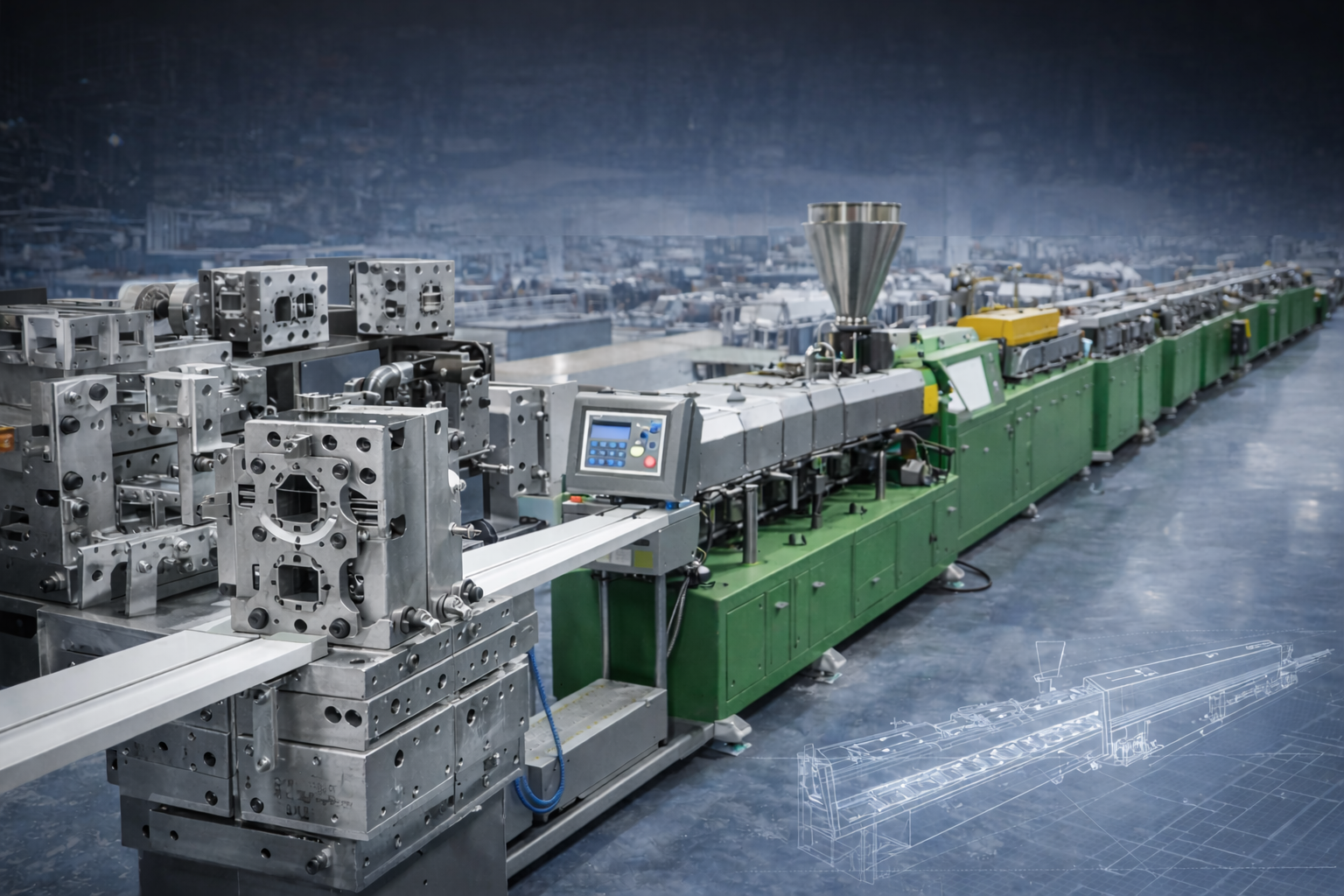
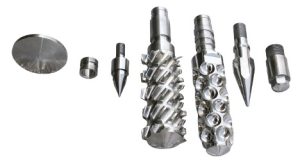
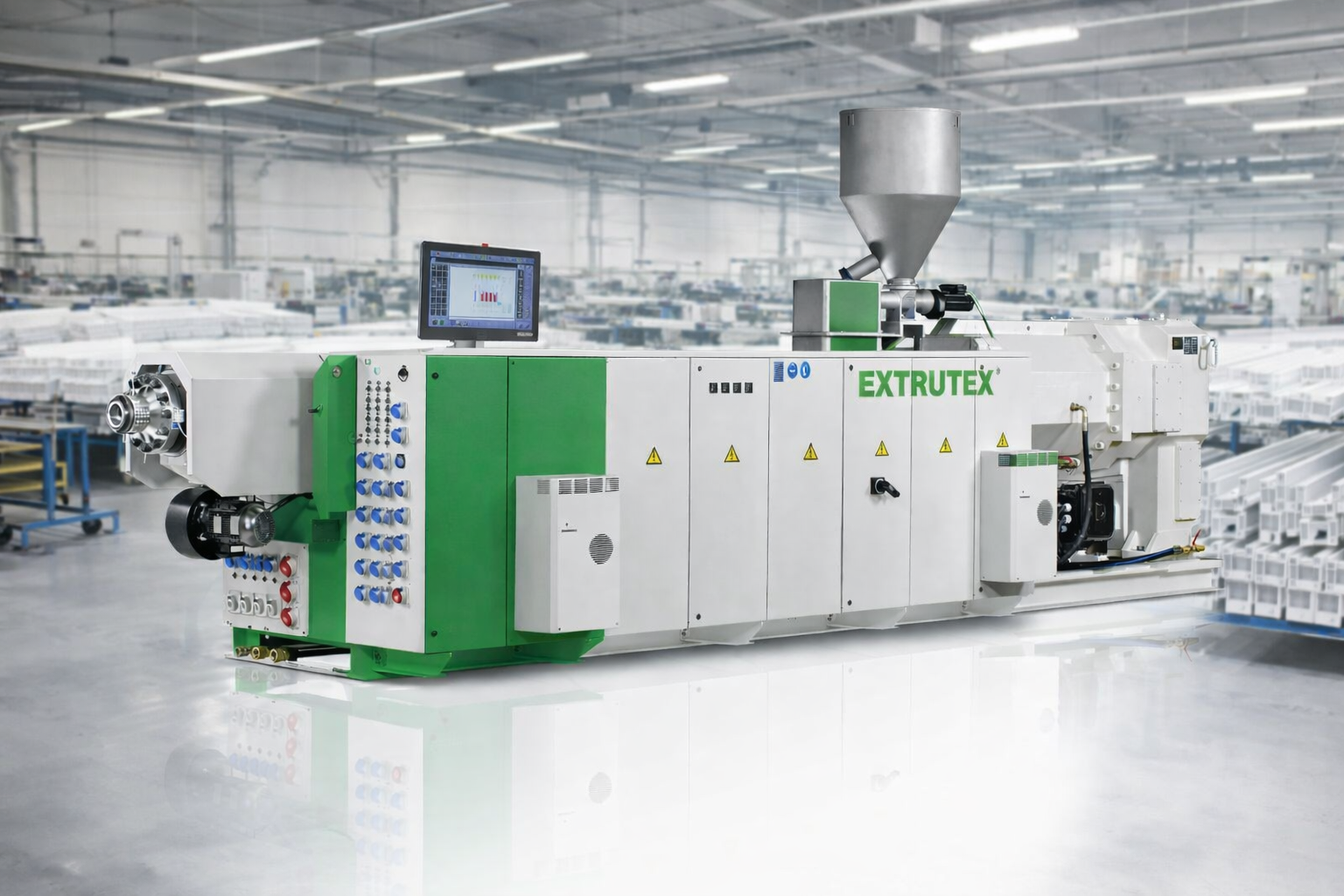
PLA filament manufacturing generally begins with suitable PLA resin or a prepared PLA compound. The material is inspected, dried when required and fed into an extrusion system. Inside the extruder, the polymer is heated and melted under controlled conditions before passing through a filtration system and filament die. The extruded strand is then cooled, calibrated and pulled through a downstream system that controls its final diameter. Online measuring equipment monitors dimensional consistency, while a winding unit places the finished filament onto spools. The production process also requires appropriate temperature management, stable output, clean material handling and packaging protection against moisture. Specialty products may require an upstream compounding process to disperse pigments, modifiers or fillers. EXTRUTEX offers filament extrusion technology, including the EX-45 production line and the compact 3DEX system for smaller-scale filament production.
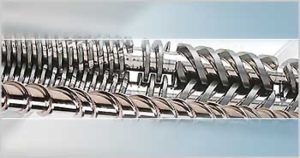
PLA filament manufacturers must control material preparation, formulation, melt processing, filtration, cooling, dimensional measurement and winding. Resin moisture and contamination should be managed because they can affect extrusion stability and final filament properties. Screw design, barrel configuration, temperature settings and output capacity must be matched to the selected PLA grade. The cooling and calibration system must maintain a stable filament diameter without creating excessive internal stress or deformation. Online diameter measurement helps identify variations and allows operators to adjust production conditions. Spool winding must also be controlled to prevent tangling, crossed loops and inconsistent tension. For specialty PLA, additional attention is needed for pigment dispersion, filler compatibility and thermal stability. EXTRUTEX EX-45 and 3DEX manufacturing solutions address different production scales, from industrial filament output to compact laboratory and small-scale production applications.
No matching questions found. Try another search term.
PETG, PCTG and Copolyester Filament
PETG, PCTG and Copolyester Filament FAQ
Practical answers about PETG and PCTG filament properties, printing settings, material selection, storage, troubleshooting and applications.
PETG is a glycol-modified version of polyethylene terephthalate, commonly used as a material for FDM and FFF 3D printing. The addition of glycol changes the polymer structure and helps reduce crystallization, making the material more suitable for extrusion-based printing. PETG is popular because it offers a useful balance of strength, toughness, chemical resistance and relatively straightforward processing. Typical applications include functional brackets, equipment housings, protective covers, storage containers, mechanical fixtures, prototypes and custom components. It is generally more impact-resistant than standard PLA, although exact performance depends on the filament formulation, printing orientation and processing conditions. PETG is available in many colors, transparent grades, reinforced formulations and specialty compounds. Users should select a grade according to the required mechanical, thermal and environmental performance rather than assuming all PETG products have identical properties.
PLA and PETG are two widely used 3D printing materials, but they behave differently during printing and in finished applications. PLA is often selected for decorative models, prototypes and general-purpose parts because it prints at relatively low temperatures and usually has limited warping. PETG generally offers greater toughness and better resistance to impact and many common chemicals, making it useful for functional components. However, PETG can produce stringing, may require more careful bed adhesion management and can be sensitive to moisture. PLA is often easier for beginners, while PETG is attractive when a printed component needs greater durability or temperature resistance than ordinary PLA can provide. Neither material is suitable for every environment. The correct choice depends on mechanical loads, operating temperature, chemical exposure, dimensional requirements and the printing equipment available.
PETG is often tougher and more impact-resistant than standard PLA, but saying that one material is always stronger would be misleading. Strength can refer to tensile strength, flexural strength, stiffness, impact resistance or resistance to repeated loading. PLA may have higher stiffness and can perform well in certain tensile or dimensional applications, while PETG commonly provides more flexibility before breaking. Printed part strength also depends on layer bonding, infill, wall thickness, nozzle temperature, cooling, print orientation and filament quality. A PETG component printed with poor layer adhesion may be weaker than a well-printed PLA component. For engineering applications, compare technical data for the specific filament grades and, where possible, test printed samples using the intended geometry and loading conditions. Select the material based on the failure mode that matters most.
PETG and ABS have different performance characteristics, so there is no universal winner. PETG is generally valued for toughness, layer adhesion, chemical resistance and relatively manageable printing behavior. ABS is widely used for functional components that need a combination of toughness, heat resistance and the ability to be post-processed, including with suitable solvent-based techniques. ABS can be more demanding to print because it is prone to warping and often benefits from an enclosed, temperature-controlled build environment. PETG can also deform under elevated temperatures and may not replace an engineering-grade ABS or other heat-resistant polymer in demanding service conditions. The specific grade, additives, printer settings and component design all influence the result. Before choosing either material, compare heat deflection temperature, tensile properties, impact performance and chemical compatibility from the relevant technical datasheets.
PETG printing temperature depends on the polymer grade, colorants, additives, filament diameter, nozzle design and printer speed. Many conventional PETG filaments are printed with nozzle temperatures somewhere around 220-250 degrees Celsius, but this is only a general starting range and not a universal specification. Some high-speed or modified PETG grades may require different settings. Begin with the manufacturer's recommended temperature and use a temperature tower to evaluate surface quality, bridging, stringing and layer bonding. If the temperature is too low, the extruder may struggle to melt the material consistently and layer adhesion can suffer. If it is too high, the print may show excessive stringing, oozing or surface defects. A stable hotend, accurate temperature control and consistent filament diameter are also important for repeatable printing results.
A heated bed is commonly used when printing PETG because it helps maintain first-layer adhesion and reduces temperature differences across the build surface. A typical starting range for many PETG grades is approximately 70-90 degrees Celsius, although the correct setting depends on the filament manufacturer and the printer's build plate. Some formulations work well at lower temperatures, while others need more heat for reliable adhesion. Bed surface selection is equally important. PETG can bond very strongly to smooth PEI and some glass surfaces, sometimes strongly enough to damage a coating or the printed part during removal. Follow the build plate manufacturer's instructions and use a suitable release layer when recommended. Correct first-layer height, clean surfaces and moderate first-layer speed can be just as important as bed temperature.
Stringing occurs when small strands of molten PETG are pulled between separate printed areas as the print head moves. PETG can be more prone to this problem than some other common filaments because its molten material may remain relatively fluid and continue to ooze from the nozzle during travel movements. Excessive nozzle temperature, wet filament, unsuitable retraction settings, slow travel movements and a dirty nozzle can all contribute. Start by drying the filament according to its manufacturer's instructions, then test a small temperature reduction. Adjust retraction distance and speed gradually because excessive retraction can cause other extrusion problems, especially on direct-drive systems. Increasing travel speed and enabling suitable travel settings may also help. The best solution is a controlled combination of dry material, stable temperature and retraction settings suited to the printer.
PETG can absorb moisture from the surrounding air, and moisture in the filament can affect printing quality. A spool that has absorbed too much moisture may produce popping sounds, bubbles, rough surfaces, inconsistent extrusion, stringing and reduced layer adhesion. A newly opened spool is not necessarily wet, but storage conditions and packaging quality can make a significant difference. If printing defects suggest moisture contamination, dry the filament using a suitable filament dryer and follow the temperature and time recommendations for that specific material. Avoid assuming that one drying setting is suitable for every PETG formulation. Excessive heat can deform the filament or spool, especially in equipment with poor temperature control. After drying, store the material in a sealed container or dry box with fresh desiccant to reduce moisture absorption before the next print.
PETG can form a strong bond with certain build plate materials, especially smooth PEI and some glass surfaces. This can make finished parts difficult to remove and may damage the build surface if excessive force is used. One common cause is an overly compressed first layer, which pushes molten PETG deeply against the plate and increases the contact area. The solution is not simply to reduce adhesion as much as possible, because the first layer must still remain stable during printing. Check the printer manufacturer's recommended build plate settings, first-layer height and surface preparation procedure. A suitable release layer or compatible textured surface may help. Allow the build plate and printed part to cool fully before removal. Never use sharp metal tools aggressively against a coated build plate, as this can permanently damage its surface.
PETG generally has less warping tendency than ABS, but it is not completely immune to dimensional distortion. Large flat parts, thin sections, sharp corners and prints with uneven cooling can still lift or bend during production. Poor bed adhesion, an unclean build surface, excessive cooling and unsuitable first-layer settings may increase the risk. PETG also behaves differently depending on its formulation and the size of the printed component. For larger parts, maintain consistent build plate temperature and avoid strong drafts or sudden changes in ambient conditions. Use a suitable brim when the geometry requires additional first-layer support. Check that the build plate is level and that the first layer is neither too high nor excessively compressed. Good thermal management, stable adhesion and appropriate part design help reduce warping and improve dimensional consistency.
PETG is generally resistant to water and is commonly used for containers, covers and components exposed to ordinary moisture. However, a PETG 3D printed object is not automatically waterproof. FDM and FFF printing create layers and interfaces where small gaps can allow water to pass through, especially when the part has thin walls, low infill or inconsistent extrusion. Print orientation, wall count, nozzle temperature, layer height and material quality all influence leak resistance. A properly designed and printed part may hold water under certain conditions, but it should be tested before being used in a critical application. For long-term liquid containment, consider suitable wall thickness, multiple perimeters, appropriate sealing methods and validation under the expected pressure and temperature. Water resistance of the base polymer should not be confused with guaranteed leak-tight performance of a printed component.
PETG can be suitable for some outdoor applications because it offers useful toughness and moisture resistance. It is often considered for brackets, housings, covers, garden accessories and equipment components that experience occasional exposure to rain or humidity. However, standard PETG should not automatically be treated as a UV-stabilized outdoor material. Long-term sunlight exposure can cause discoloration, changes in mechanical properties or gradual degradation, depending on the formulation and environmental conditions. Outdoor performance also depends on operating temperature, mechanical stress, chemical exposure and the design of the printed component. If a part must remain outdoors for extended periods, select a filament grade with documented weathering or UV-resistance data. ASA and other purpose-designed outdoor materials may be more suitable where long-term sunlight resistance is a major requirement.
PETG is sometimes considered for food-related prototypes and containers, but the name of the base polymer alone does not establish that a finished 3D printed object is food-safe. Food-contact suitability depends on the exact resin grade, colorants, additives, processing conditions and applicable regulatory requirements. FDM printing also creates layer lines and small surface features that can be difficult to clean thoroughly and may retain residues or microorganisms. Nozzle contamination, build plate residues and the condition of the printing equipment can introduce additional risks. If a product is intended to contact food, obtain suitable documentation for the exact material and validate the finished part for its intended use, cleaning procedure, temperature and contact duration. For commercial food-contact products, seek professional regulatory advice and consider manufacturing methods that provide a validated, cleanable surface.
Transparent PETG filament can produce parts that transmit light and appear clear or translucent, making it useful for display pieces, covers, lighting components and visual prototypes. However, a transparent filament does not automatically produce a completely clear printed object. The layer structure, surface roughness, air gaps, extrusion consistency and printing parameters can scatter light and make the finished part look cloudy. Clearer results may be achieved through suitable wall design, careful temperature control, slower printing in selected applications and post-processing methods compatible with the material. The best approach depends on whether the goal is light transmission, visual transparency or optical clarity. For demanding optical components, conventional FDM printing may not provide the surface quality or dimensional accuracy required. Test sample parts before committing to a final design.
PETG-CF is a PETG-based composite filament containing carbon fiber reinforcement, usually in the form of short fibers mixed into the polymer. The reinforcement can improve stiffness, dimensional stability and surface appearance, depending on the fiber content and formulation. PETG-CF often produces a matte finish that can hide some visible layer lines. However, it is not automatically stronger in every direction or more impact-resistant than standard PETG. The fibers can make the material more abrasive, so a hardened steel or other wear-resistant nozzle is generally recommended. Nozzle diameter may also need to be selected according to the manufacturer's guidance to reduce the risk of clogging. PETG-CF is useful for fixtures, brackets, housings and rigid functional parts where stiffness and appearance are important.
PCTG is a copolyester used in 3D printing and other plastic applications. Like PETG, it belongs to the broader family of modified polyester materials, but its polymer composition is different. Depending on the specific grade, PCTG can offer high impact resistance, good toughness and useful transparency. Some PCTG filaments are marketed as alternatives to PETG for parts that require additional durability or improved resistance to breakage. However, performance varies between manufacturers and formulations, so the material name alone is not enough to predict the exact result. Compare the technical datasheets for impact strength, tensile properties, heat deflection temperature, chemical resistance and processing recommendations. PCTG may be suitable for protective components, functional housings and demanding prototypes when its measured properties match the intended application.
Some PCTG grades offer higher impact resistance and greater toughness than comparable PETG grades, but this does not mean every PCTG filament is stronger in all mechanical tests. The word strength can describe several different properties, including tensile strength, stiffness, impact resistance and fatigue performance. A material that resists sudden impact may not necessarily have a higher tensile strength or better resistance to continuous heat. The exact polymer composition, molecular weight, additives, colorants and production process influence performance. Printing conditions also matter because layer adhesion and internal defects can determine how a finished part fails. When comparing PCTG and PETG, use technical data from the actual filament products rather than relying only on generic material descriptions. For important applications, print and test representative parts under realistic service conditions.
Whether PCTG is easier to print than PETG depends on the particular filament formulation and the printer. Some PCTG products are designed to offer stable extrusion, strong layer bonding and reduced printing problems, while others may need careful temperature and cooling adjustments. PETG is widely available and has a large user base, so many printers already have established profiles for it. PCTG may require a new temperature tower, retraction test and first-layer calibration rather than simply using a standard PETG profile. Filament moisture, nozzle condition, extruder design and print speed can also influence the result. Start with the manufacturer's recommended settings, then make controlled adjustments based on visible print quality. A good-quality spool with consistent diameter and moisture control is important for either material.
PCTG printing temperature is determined by the specific grade and the recommendations of the filament manufacturer. Many PCTG filaments are processed within a temperature range broadly similar to other copolyester materials, but it is not safe to assume that every product uses the same nozzle or bed temperature. Start with the supplied technical datasheet or product label and print a temperature tower if the recommended range allows adjustment. Observe layer bonding, surface quality, stringing and dimensional accuracy. A temperature that is too low may cause weak layer adhesion or inconsistent extrusion, while excessive heat can increase oozing and surface defects. Bed temperature and cooling settings should also be calibrated for the printer and part geometry. For repeatable production, record the tested settings for each material batch and machine combination.
Copolyester is a polyester material made by combining different monomer components in the polymer chain. By changing the chemical composition, manufacturers can adjust properties such as clarity, toughness, flexibility, impact resistance, chemical resistance and processing behavior. PETG and PCTG are examples of copolyester materials used in various plastic products and 3D printing filaments. The term copolyester describes a broad material family rather than one single standardized grade. Two filaments carrying a copolyester label may therefore have different performance characteristics and recommended printing settings. When selecting a copolyester filament, check the exact material designation, technical datasheet and intended application. Important factors include mechanical properties, thermal performance, moisture sensitivity, chemical compatibility and the consistency of the extrusion process used to manufacture the filament.
PET, PETG and PCTG are related polyester materials, but they have different compositions and processing characteristics. PET is widely used in packaging, bottles, fibers and many industrial products. Conventional PET can crystallize during processing, which affects its behavior and makes it less straightforward for ordinary desktop FDM printing. PETG is glycol-modified PET, developed to improve processing characteristics and reduce crystallization, making it a common choice for 3D printing filament. PCTG is another copolyester with a different comonomer composition and may offer high impact resistance or other grade-specific advantages. These materials should not be treated as interchangeable. Their mechanical properties, thermal performance, transparency, chemical resistance and processing requirements depend on the exact grade. Always compare technical documentation before choosing a material for production or functional use.
Cloudy transparent PETG prints are usually caused by light scattering from the printed structure rather than by the filament color alone. Visible layer boundaries, tiny gaps between extrusion lines, inconsistent flow and surface texture can all reduce transparency. Moisture in the filament may also create bubbles and irregular surfaces that affect appearance. If transparency is important, begin with dry filament and stable extrusion conditions. Use a suitable wall design and avoid unnecessary internal gaps. A smooth outer surface and consistent material flow can improve light transmission, although the best settings depend on the printer and the intended geometry. Some transparent PETG grades are formulated for improved clarity, but no filament can guarantee optical transparency in every printed shape. For demanding optical applications, evaluate whether another manufacturing process is more appropriate.
PETG and PCTG can be mechanically recycled under suitable conditions, but practical recycling depends on material identification, sorting, contamination, additives and the available processing equipment. Clean production scrap and rejected prints are generally easier to process than mixed waste containing several polymers, adhesives, coatings or metal inserts. Recycling typically involves collecting and sorting the material, size reduction, drying, controlled melting and reprocessing into pellets or filament. Repeated heat processing can change polymer properties, so recycled material may need testing or blending with suitable compatible material to achieve consistent performance. PETG and PCTG should not automatically be mixed together because their formulations and processing requirements may differ. For reliable recycled filament production, control moisture, filtration, melt temperature, extrusion stability and final filament diameter. Material testing is important before selling or using recycled filament in demanding applications.
PETG and PCTG filament should be stored in a dry environment to limit moisture absorption and maintain consistent printing performance. After opening a spool, place it in a sealed bag or airtight storage container with suitable desiccant. A dedicated dry box can provide additional protection when the material is used regularly. Avoid leaving filament exposed near humid areas, open windows or direct sources of heat. Keep the spool clean and protected from dust, which can enter the extruder and affect printing. If the material has been stored for a long time or shows signs of moisture-related defects, consider drying it according to the manufacturer's recommendations before use. Do not use an arbitrary high drying temperature, as the spool and filament may deform. Good storage practices help reduce printing defects and improve repeatability between production batches.
When purchasing PETG or PCTG filament, look beyond the material name and advertised color. Check the actual polymer grade, recommended nozzle and bed temperatures, filament diameter, diameter tolerance, ovality, spool weight and moisture protection. A reliable manufacturer should provide consistent product specifications and useful technical information for each grade. For functional applications, request data covering tensile properties, impact resistance, thermal performance and chemical compatibility where available. Also consider whether the filament has been tested on the type of printer and nozzle configuration you plan to use. For large-volume or industrial purchases, ask about batch consistency, quality inspection, packaging, production capacity and technical support. EXTRUTEX can support filament and extrusion-related discussions for businesses evaluating material selection, filament production and manufacturing equipment. The final choice should match the required application and verified material performance.
No matching questions found. Try another search term.
TPU, TPE and Flexible Filament FAQ
TPU, TPE and Flexible 3D Printing Filament FAQ
Learn about flexible filament materials, Shore hardness, printing settings, material selection, common problems and applications.
TPU stands for thermoplastic polyurethane. It is a flexible thermoplastic elastomer widely used in FDM and FFF 3D printing when a part needs elasticity, impact resistance and the ability to bend without immediately breaking. Unlike rigid materials such as PLA, TPU can deform under pressure and recover much of its original shape, depending on its formulation and hardness. Common applications include phone cases, protective covers, flexible hinges, vibration-damping components, seals, gaskets, footwear components and wearable accessories. TPU is available in different Shore hardness grades, colors and specialty formulations. Its printing behavior depends on material hardness, filament diameter, moisture content and extruder design. Flexible filament requires more controlled feeding than rigid filament, so printer compatibility should be checked before purchasing a particular TPU grade.
TPE stands for thermoplastic elastomer, which is a broad family of materials that combine rubber-like flexibility with thermoplastic processing characteristics. TPU is one specific type of thermoplastic elastomer based on polyurethane chemistry. Other TPE families include materials such as TPE-S, TPE-O and TPE-V, each with different polymer structures and performance characteristics. In 3D printing, the terms TPE and TPU are sometimes used loosely, but they should not be treated as identical materials. TPU commonly offers a useful balance of flexibility, abrasion resistance and mechanical strength, while other TPE grades may be softer or have different chemical and thermal properties. When choosing filament, check the exact polymer type, Shore hardness, tensile properties, elongation and recommended printing conditions rather than relying only on the general TPE label.
TPU and flexible PLA are different material systems, even when both are marketed for flexible 3D printing applications. TPU is a thermoplastic polyurethane elastomer designed to provide rubber-like flexibility, abrasion resistance and elastic recovery. Flexible PLA is generally a modified PLA-based formulation in which additives or polymer blending change the stiffness and flexibility of conventional PLA. Depending on the product, flexible PLA may be easier to print on some machines, but it does not necessarily provide the same elastic behavior or durability as TPU. TPU is often selected for protective cases, flexible joints, seals and parts that experience repeated bending. Flexible PLA may be suitable for decorative or lightly flexible components. Always compare hardness, elongation, tensile strength and fatigue performance for the specific grades being considered.
Shore hardness is a standardized way of measuring how resistant a material is to indentation. It is commonly used to describe the hardness of elastomers and flexible plastics. TPU filament is often available in Shore A grades, such as 85A, 90A, 95A and 98A. Lower Shore A values generally indicate softer and more flexible material, while higher values indicate firmer material. However, Shore hardness alone does not describe every mechanical property. Two TPU grades with the same Shore hardness may differ in tensile strength, tear resistance, elongation, abrasion resistance and recovery behavior. The printed part also feels different depending on wall thickness, infill, geometry and print orientation. When selecting TPU, consider both the material datasheet and the flexibility required in the finished component.
For many desktop 3D printers, TPU around 95A Shore hardness is a practical starting point. It is flexible enough for many protective and functional applications while being firmer and easier to feed than very soft TPU grades. Softer materials, such as some 85A products, can compress or buckle in the extruder path if the printer is not designed for flexible filament. Firmer TPU grades may print more easily but provide less rubber-like deformation in the finished part. The best hardness depends on the printer mechanism and the application. A phone case, vibration-damping foot, flexible connector and soft seal may each require a different level of flexibility. Start with a grade recommended for your extruder, then evaluate sample prints before moving to softer materials.
Direct-drive extruders are generally well suited to TPU because the drive gears are positioned close to the hotend. The short distance between the feeding mechanism and nozzle reduces the amount of flexible filament that can bend or compress inside the printer. This usually provides more controlled extrusion than a long Bowden tube, particularly when printing soft TPU. However, not every direct-drive system is automatically compatible with every flexible grade. The filament path should be well constrained, the drive gears should grip consistently and the extruder tension should not crush the material. Start with moderate print speed and conservative retraction settings. Check the printer manufacturer's guidance for flexible materials and test the selected TPU grade before printing large or complex components.
TPU can be printed on some Bowden-style 3D printers, but it is generally more difficult than printing with a direct-drive extruder. A Bowden system pushes filament through a longer tube between the extruder and hotend. Flexible TPU can compress, stretch or buckle inside this path, resulting in inconsistent extrusion or feeding failures. Firmer TPU grades are usually easier to handle than very soft materials. If the printer manufacturer supports flexible filament, use a compatible grade and reduce print speed. Minimize unnecessary retractions, check that the filament path is smooth and avoid excessive extruder tension. Some Bowden machines can produce good results with the correct settings, but very soft TPU may require a redesigned or more constrained feeding mechanism. Always test compatibility before starting a long print.
TPU nozzle temperature depends on its polyurethane formulation, hardness, colorants, additives and recommended extrusion speed. Many common desktop TPU filaments use nozzle temperatures in the approximate range of 210-240 degrees Celsius, but this is only a general starting point. Some specialty or high-speed TPU grades require different settings. Follow the filament manufacturer's datasheet and use a temperature tower to identify a stable operating range. If the temperature is too low, the extruder may struggle to maintain consistent flow and layer adhesion may be poor. If it is too high, the material may become excessively fluid, produce stringing or lose dimensional accuracy. The hotend must also be suitable for the selected temperature. For production use, record tested settings for each grade and printer configuration.
TPU is generally printed more slowly than rigid materials because flexible filament can compress and deform while passing through the extruder. A common starting speed for many standard desktop TPU grades is approximately 20-40 mm/s, although suitable settings depend on hardness, printer design, hotend capacity and filament formulation. Some modern high-speed TPU products can operate at higher speeds when paired with compatible hardware and validated profiles. If the print speed is too high, extrusion may become inconsistent, corners may be poorly formed and the filament may buckle in the feeding path. Begin with a conservative speed, then increase it gradually while checking surface quality and dimensional accuracy. Retraction, acceleration and volumetric flow should also be calibrated. The manufacturer's processing recommendations should take priority over generic speed ranges.
TPU jamming is often caused by the flexible filament bending or buckling between the extruder drive gears and hotend. An unsupported gap in the filament path, excessive extruder tension, unsuitable retraction settings or a partially blocked nozzle can make the problem worse. Soft TPU grades are particularly sensitive to poor feeding geometry. Check whether the filament path is properly constrained and whether the extruder is designed for flexible materials. Reduce retraction and print speed, and avoid sharp bends between the spool and extruder. Inspect the nozzle for contamination and verify that the hotend reaches a stable temperature. If the filament is being flattened by the drive gears, reduce the tension. Correcting the mechanical feeding path is often more effective than repeatedly changing slicer settings.
Yes, TPU can absorb moisture from the air, and wet filament can create noticeable printing defects. Moisture may cause popping sounds at the nozzle, bubbles, rough surfaces, inconsistent extrusion, stringing and reduced mechanical quality. The level of moisture absorption depends on the exact TPU formulation and storage conditions. A spool that has been exposed to humid air for an extended period may need drying before use. Use a filament dryer with reliable temperature control and follow the manufacturer's recommended drying temperature and duration. Do not apply a generic high-temperature setting without checking the material specification, because TPU can soften or deform. After drying, keep the spool in a sealed container or dry box with suitable desiccant. Consistent moisture management is especially important for production and repeatable printing.
Stringing happens when molten TPU continues to flow from the nozzle during travel movements and forms thin strands between separate parts of a print. Flexible materials can be particularly sensitive to retraction because pulling soft filament backward may compress or stretch it rather than cleanly retracting the molten material. Excessive nozzle temperature, moisture, slow travel movements and unsuitable slicer settings can also contribute. Start by checking that the filament is dry and that the nozzle temperature matches the manufacturer's recommendation. Reduce unnecessary retractions and test small adjustments to retraction distance and speed. Increasing travel speed may help in some cases, but it should not compromise machine stability. A clean nozzle and consistent filament feeding also improve results. Tune settings gradually instead of making several large changes at once.
Many TPU grades offer good resistance to water and moisture, but the exact performance depends on the polyurethane chemistry and formulation. TPU is used in products such as protective covers, flexible tubing, seals and footwear components where resistance to moisture can be useful. However, a printed TPU object is not automatically waterproof. FDM printing creates layer interfaces and possible gaps that may allow liquid to pass through. Wall thickness, extrusion consistency, print orientation, nozzle temperature and part geometry all influence leak resistance. Chemical compatibility must also be evaluated if the part will contact cleaning agents, oils or other liquids. For a component intended to contain liquid or operate under pressure, test the finished part under realistic conditions. Use suitable material data and application-specific validation rather than relying only on the general reputation of TPU.
Some TPU formulations provide good resistance to oils, greases and selected industrial chemicals, but chemical resistance varies considerably between polyurethane types. Polyester-based and polyether-based TPU can behave differently in water, oils, fuels and cleaning chemicals. Temperature, exposure duration and mechanical stress also affect long-term performance. A component that performs well in contact with one lubricant may swell, soften or degrade when exposed to another fluid. Do not assume that all TPU filament is suitable for automotive, hydraulic or industrial chemical environments. Check the manufacturer's chemical compatibility information for the exact grade and test the finished component when failure could cause damage or safety problems. For critical seals, hoses and protective components, use material specifications designed for the actual operating environment.
TPU is a popular material for phone cases and protective covers because it combines flexibility, impact absorption and resistance to repeated handling. A TPU case can deform slightly when dropped or pressed, helping distribute some impact energy rather than behaving like a completely rigid shell. Its flexibility also makes it easier to fit around devices with curved edges and openings. The best TPU hardness depends on the desired feel and level of protection. Softer grades may feel more rubber-like, while firmer grades can provide better shape retention. Wall thickness, internal geometry, layer bonding and printed orientation also influence the finished case. TPU printed parts should be tested for fit, button access, abrasion and repeated bending. Material selection alone does not guarantee certified drop protection.
TPU can be used to produce flexible hinge structures, especially when a design needs controlled bending rather than a conventional metal hinge. Its elasticity allows printed sections to deform and return toward their original shape. However, hinge durability depends on material grade, geometry, layer orientation, wall thickness and the amount of bending strain. A hinge that is too thin may tear, while one that is too thick may require excessive force to bend. Repeated cycling can cause fatigue, even when the polymer has good elongation properties. Design the hinge with smooth transitions and avoid sharp stress concentrations. Print sample parts and test them through the expected movement range and number of cycles. For products requiring long service life, validate the design under realistic operating temperatures and loads.
Polyester-based and polyether-based TPU are two important polyurethane material families. They share the general thermoplastic polyurethane structure but differ in the chemistry of their soft segments. Polyester-based TPU is often selected for its mechanical strength, abrasion resistance and performance in applications requiring resistance to oils and certain chemicals. Polyether-based TPU commonly offers better resistance to hydrolysis and can be suitable for applications exposed to moisture or water over extended periods. These are general tendencies rather than universal rules, because specific formulations can significantly change performance. Temperature, exposure conditions and mechanical stress also matter. When choosing a TPU grade for industrial use, identify the polymer type and compare the manufacturer's data for hydrolysis resistance, abrasion, tensile strength, chemical compatibility and long-term aging.
Industrial TPU applications include protective covers, flexible connectors, seals, gaskets, vibration-damping parts, cable protection, custom fixtures and components that need resistance to abrasion. TPU can be useful when a component must bend, absorb impact or maintain flexibility during repeated use. In 3D printing, engineers often use it for prototypes, custom tooling, equipment accessories and low-volume parts before moving to larger-scale manufacturing. The appropriate TPU grade depends on hardness, tensile properties, tear resistance, chemical exposure, operating temperature and expected service life. Some industrial parts require properties that standard desktop filament cannot provide, so the specific polymer formulation should be checked carefully. For demanding applications, prototype testing and engineering validation are essential before using a printed TPU component in production equipment.
TPU is widely used in footwear manufacturing and can also be processed as filament for 3D printed shoe components. Depending on its formulation and hardness, TPU can provide flexibility, abrasion resistance, elasticity and impact absorption. These properties make it useful for midsoles, cushioning structures, protective components, custom insoles and design prototypes. However, not every TPU filament is suitable for footwear that will experience continuous loading, sweat, outdoor exposure and repeated deformation. The required hardness, rebound behavior, tear strength and fatigue resistance depend on the product design. Printed layer interfaces may also influence durability and comfort. For commercial footwear production, select a grade with relevant mechanical data and validate it through wear testing. A filament advertised as flexible should not automatically be considered suitable for every footwear application.
Many standard TPU filaments can be printed through a 0.4 mm nozzle, which is a common nozzle size for desktop FDM printers. The correct nozzle size depends on the filament formulation, extrusion stability and desired print detail. A 0.4 mm nozzle can provide a useful balance between resolution and material flow for ordinary flexible parts. However, very soft TPU, heavily filled TPU or specialty formulations may require different hardware or manufacturer-recommended nozzle dimensions. Make sure the hotend is clean and the extruder can feed the material without buckling. Use a suitable layer height and moderate print speed, then inspect the first layers for consistent extrusion. If clogging occurs repeatedly, check the filament path, nozzle condition and compatibility of the material with the printer before changing several settings at once.
Poor first-layer adhesion can be caused by an unclean build plate, incorrect nozzle height, unsuitable bed temperature or excessive cooling during the first layer. TPU formulations also vary in their surface adhesion behavior, so a setting that works for one brand may not work for another. Start by cleaning the build plate using the method recommended by its manufacturer. Check bed leveling and make sure the first layer is deposited consistently without excessive compression. Use the manufacturer's recommended bed temperature and consider a slower first-layer speed. Some build surfaces provide better adhesion for TPU than others. Avoid applying random adhesives or solvents without checking compatibility with the build plate. Once the first layer is stable, adjust cooling and print speed to maintain part quality throughout the print.
TPU filament should be protected from moisture, dust and prolonged exposure to unsuitable storage conditions. Keep unused spools in sealed moisture-resistant packaging or an airtight storage box with suitable desiccant. A dry box is useful when the material is used regularly, especially in humid environments. Avoid leaving an open spool near windows, kitchens or other areas where humidity can fluctuate. Store the material away from direct sunlight and excessive heat, which may affect the spool or filament. If the spool has absorbed moisture, dry it according to the manufacturer's specified temperature and duration before printing. Check the filament for deformation, contamination or feeding damage before loading it into the printer. Consistent storage is important for reducing stringing, surface defects and inconsistent extrusion during repeat production.
Suitable TPU production scrap and clean rejected parts can potentially be recycled through mechanical processing and re-extruded into new filament. The process generally involves sorting, removing contamination, size reduction, drying and controlled melting before the material is filtered and extruded. TPU formulations differ, so mixed grades should not automatically be combined. Repeated heating and mechanical processing may change molecular structure and reduce some performance properties. Moisture control is particularly important because water can cause degradation during melt processing, depending on the polymer chemistry and conditions. Filament manufacturers should monitor extrusion stability, diameter tolerance, surface quality and mechanical performance after recycling. Recycled TPU may be suitable for selected applications when the output has been tested and qualified. It should not be assumed to match virgin material without proper quality control.
TPU filament manufacturing requires careful control of raw material preparation, moisture, extrusion temperature, screw design, melt pressure, cooling and take-up speed. The polymer should be dried according to the supplier's recommendations because excessive moisture can cause processing defects and material degradation. During extrusion, the melt must remain stable enough to produce a consistent filament diameter without bubbles, rough surfaces or irregular flow. Cooling must be controlled so the filament reaches the required dimensions without unwanted deformation. Online diameter measurement and automatic haul-off adjustment can improve production consistency. Winding tension should also be suitable for the flexible material to prevent stretching or spool deformation. Manufacturers should test diameter, ovality, surface quality, tensile behavior and hardness. Documented process settings and batch inspection help maintain repeatable quality across production runs.
Choosing TPU starts with identifying how the finished component will be used. Consider whether it needs to bend repeatedly, absorb impact, resist abrasion, maintain a seal, contact oils or chemicals, or operate outdoors. Shore hardness is an important starting point, but it should be considered together with tensile strength, elongation, tear resistance, abrasion performance and temperature limits. Check whether the printer can reliably feed the selected material, especially if it is a very soft grade. For desktop printing, a firmer TPU may be easier to process, while industrial applications may require a specialized formulation. Ask the filament supplier for technical data and recommended processing conditions. Print representative samples and test them under realistic conditions before choosing a grade for production. The best TPU is the one that meets the application requirements consistently.
No matching questions found. Try another search term.
ABS, ASA and Engineering Filament FAQ
ABS, ASA and Engineering 3D Printing Filament FAQ
Practical information about ABS and ASA materials, engineering applications, printing conditions, mechanical properties and troubleshooting.
ABS stands for acrylonitrile butadiene styrene. It is an engineering thermoplastic widely used in injection molding, consumer products, automotive components and industrial equipment. ABS filament is popular in FDM and FFF 3D printing because it offers a useful combination of toughness, impact resistance, stiffness and temperature performance. It is commonly used for functional prototypes, equipment housings, brackets, enclosures, fixtures and custom mechanical components. Compared with PLA, ABS generally requires higher printing temperatures and more careful thermal management. It can shrink during cooling and is therefore more likely to warp, especially when printing large parts. An enclosed printer is often recommended. ABS can also produce noticeable fumes during printing, so suitable ventilation and exposure control are important. The exact performance depends on the ABS grade and formulation.
ASA stands for acrylonitrile styrene acrylate. It is an engineering thermoplastic developed to provide properties similar to ABS while offering improved resistance to outdoor weathering and ultraviolet exposure in many formulations. ASA filament is commonly used for outdoor housings, vehicle accessories, protective covers, garden equipment, brackets and components exposed to sunlight. It combines useful toughness and dimensional stability with better weathering performance than standard ABS grades in many applications. ASA still requires suitable printing temperatures and careful control of cooling because it can warp during printing. An enclosure can help maintain a stable environment, especially for large parts. Although ASA is often selected for outdoor use, the exact UV resistance, heat performance and durability should be confirmed using the technical datasheet for the specific grade.
ABS and ASA are related engineering thermoplastics with similar processing characteristics, but their weathering performance differs. ABS is widely used for durable indoor components, housings and mechanical prototypes. ASA was developed to provide improved resistance to outdoor weathering and ultraviolet exposure, making it a common choice for parts that remain in sunlight. Both materials can offer useful toughness and heat resistance compared with many general-purpose filaments, but both can warp during printing and benefit from stable thermal conditions. Their printing temperatures and mechanical properties vary by formulation. ASA is often preferred for outdoor components, while ABS remains useful for indoor functional parts and applications where its properties meet the requirements. Always compare the specific grade's technical data rather than assuming every ASA product performs identically.
ABS and PLA have different mechanical characteristics, so the answer depends on what type of strength is required. PLA is often relatively stiff and can provide good tensile performance in certain printed configurations. ABS is generally valued for toughness and impact resistance, making it useful when a part may be knocked, flexed or exposed to mechanical handling. ABS also commonly has better temperature performance than ordinary PLA, although the exact comparison depends on the grades being tested. Printed strength is influenced by layer bonding, infill, wall thickness, orientation, nozzle temperature and cooling. A poorly printed ABS part may be weaker than a well-printed PLA part. For engineering applications, compare tensile strength, impact resistance, stiffness and heat deflection data from the actual filament grades and test representative printed components.
ASA is generally the more suitable choice when a printed component will be exposed to prolonged sunlight and outdoor weather conditions. Its formulation is designed to provide improved resistance to ultraviolet exposure and weathering compared with standard ABS. This can help reduce outdoor degradation, discoloration and changes in mechanical performance. ABS remains useful for many indoor applications and protected components, but ordinary ABS is not usually the first choice for long-term direct sunlight exposure. ASA is often used for outdoor equipment covers, vehicle accessories, mounting brackets and protective enclosures. However, performance depends on the specific polymer grade, stabilizer package, color, part thickness and environmental conditions. For long-term outdoor service, request weathering data from the filament supplier and test finished components under realistic conditions.
ABS printing temperature depends on the polymer grade, additives, filament manufacturer and hotend design. Many conventional ABS filaments use nozzle temperatures in the approximate range of 230-260 degrees Celsius. This is a general starting range rather than a universal setting. Some modified ABS and high-speed formulations may require different conditions. Follow the manufacturer's recommendations and use a temperature tower to evaluate extrusion quality, layer bonding and surface finish. If the nozzle temperature is too low, the material may not bond properly between layers. Excessive temperature can increase oozing, discoloration and other defects. Bed temperature, enclosure conditions and cooling settings are equally important because ABS can shrink significantly during cooling. For reliable results, calibrate the material on the actual printer and record the successful settings.
ABS commonly requires a heated build plate, with many filaments using bed temperatures around 90-110 degrees Celsius. The exact setting depends on the filament grade, printer surface and size of the printed component. A stable heated bed helps the first layer remain attached while reducing temperature differences between the part and build surface. However, bed temperature alone cannot eliminate warping. The surrounding air temperature, enclosure design, cooling fan settings and part geometry also influence shrinkage. Use the filament manufacturer's recommended bed temperature and verify that the build plate can safely operate at that setting. Select a compatible surface or adhesive according to the printer manufacturer's instructions. For large components, a heated enclosure may provide additional benefits by reducing uneven cooling throughout the print.
ABS warping occurs because the material contracts as it cools after extrusion. When different areas of a printed component cool at different rates, internal stresses develop. These stresses can pull corners away from the build plate, distort dimensions or cause cracks between layers. Large flat parts and sharp corners are especially vulnerable. Common contributing factors include insufficient bed adhesion, low enclosure temperature, strong cooling airflow, uneven bed heating and poor first-layer calibration. Reduce temperature fluctuations by using an enclosure where appropriate, limiting unnecessary cooling and maintaining a stable build plate temperature. A brim can increase first-layer contact area, while rounded corners and suitable part geometry can reduce stress concentration. Correct filament drying and stable extrusion also support consistent printing, although moisture is not the only cause of warping.
An enclosure is strongly recommended for many ABS printing applications, especially when producing large or geometrically complex parts. ABS contracts as it cools, and uneven cooling can cause warping, corner lifting and layer separation. An enclosure helps maintain a more stable temperature around the printed component and reduces drafts from the surrounding environment. It can improve dimensional consistency and make it easier to print larger parts successfully. However, an enclosure does not replace correct bed preparation, temperature calibration or good part design. It is also important to consider electronics, motors and other printer components that may not be rated for elevated ambient temperatures. Follow the printer manufacturer's operating limits and provide suitable ventilation or filtration for the printing environment. A controlled enclosure is a useful part of a complete ABS printing setup.
ABS printing can release volatile organic compounds and ultrafine particles as the polymer is heated and extruded. The type and quantity of emissions depend on the exact material formulation, temperature, printer design and ventilation conditions. This is one reason ABS should not be treated like an ordinary low-emission desktop printing material. Use a well-managed printing area with suitable ventilation and consider an enclosure with an appropriately designed filtration or exhaust system. Avoid placing an operating printer in an occupied room without considering exposure. Follow the filament manufacturer's safety documentation and the printer manufacturer's ventilation recommendations. A basic enclosure is not automatically an emission-control system, and filters require correct selection and maintenance. Good workplace practices are particularly important when printing ABS frequently or operating multiple machines.
Acetone can soften and dissolve the surface of many ABS formulations, which is why it is sometimes used for post-processing ABS 3D prints. A controlled smoothing process can reduce visible layer lines and create a more uniform surface appearance. However, acetone treatment can also change dimensions, remove fine details and weaken thin sections if applied excessively. The result depends on the ABS grade, exposure method, temperature and treatment duration. Acetone is highly flammable and requires appropriate chemical handling, ventilation and protective procedures. Do not use improvised heating or open-flame methods. Always consult the chemical safety documentation and use suitable equipment in a controlled environment. Test the process on a sample before treating a functional component, especially when dimensional accuracy or mechanical performance is important.
ASA is commonly considered for automotive accessories and prototype components because it offers useful weathering resistance and mechanical properties. Potential applications include exterior covers, mounting brackets, trim prototypes, sensor housings and protective components. However, automotive environments can involve high temperatures, vibration, sunlight, water, oils, cleaning chemicals and mechanical loads. A standard desktop ASA filament should not automatically be considered suitable for safety-critical or under-hood components. The selected grade must meet the actual temperature, chemical and mechanical requirements. Part geometry, print orientation, layer adhesion and manufacturing consistency also influence performance. For commercial automotive applications, use appropriate material documentation and validate the finished part under relevant environmental and mechanical tests. Some applications may require specialized automotive-approved materials rather than general-purpose ASA filament.
ABS+ is a commercial description commonly used for modified ABS filament formulations. The plus sign does not represent one universal polymer standard or a fixed set of performance improvements. Manufacturers may modify ABS with additives, impact modifiers, processing aids or other formulation changes to improve printing behavior, reduce warping or adjust mechanical properties. As a result, two ABS+ products from different suppliers may perform quite differently. Some grades are designed to offer easier printing, while others may focus on toughness, surface quality or dimensional stability. Before selecting ABS+, check the technical datasheet and compare it with conventional ABS. Pay attention to nozzle temperature, bed temperature, shrinkage, impact strength and heat performance. The actual measured properties are more useful than the product name alone.
ABS is a defined family of acrylonitrile butadiene styrene thermoplastics, while ABS+ is generally a commercial label for modified ABS filament. The modified formulation may be designed to improve printing characteristics, reduce warping, increase impact resistance or provide a better surface finish. There is no single international specification that guarantees identical properties across all products sold as ABS+. One supplier's ABS+ may print more easily, while another product may prioritize mechanical performance. Standard ABS can also vary considerably between manufacturers. Compare the technical information for the actual grades, including processing temperature, shrinkage, tensile strength, impact resistance and heat deflection behavior. For demanding components, print samples and evaluate them under real operating conditions rather than choosing based only on the ABS+ label.
ASA is generally resistant to ordinary moisture and outdoor weather exposure, making it useful for protective covers and equipment housings. However, a printed ASA component is not automatically waterproof. FDM printing creates layer boundaries and possible gaps that can allow water to pass through. The result depends on wall thickness, number of perimeters, extrusion consistency, layer bonding, part geometry and print orientation. Exposure to water under pressure or for long periods requires more careful validation than occasional rain exposure. Chemical additives, colorants and the exact ASA grade can also affect performance. If a component must protect electronics or contain liquid, test the finished design under realistic conditions. Use suitable sealing features or post-processing when necessary, and do not rely only on the material's general moisture resistance.
ABS and ASA can both be used for functional mechanical components when their properties match the application. Typical printed parts include brackets, housings, equipment covers, fixtures, protective guards and custom mounting components. ABS is often selected for indoor mechanical applications requiring toughness, while ASA can be more suitable when weathering and sunlight exposure are additional concerns. However, the mechanical performance of an FDM printed part differs from that of an injection-molded component because the printed structure contains layer interfaces. Print orientation, wall thickness, infill, temperature and cooling influence the strength of the final product. Consider creep, fatigue, impact, heat and chemical exposure when designing a component. For critical applications, validate printed parts through testing and use a material grade with documented properties appropriate to the operating environment.
Layer cracking in ABS often occurs when the bond between deposited layers is weaker than the internal stresses created during cooling. The polymer contracts as it cools, and uneven temperatures can pull the layers apart. Low nozzle temperature, excessive part cooling, drafts, insufficient enclosure temperature and unsuitable print speed can all contribute. Large or thin components may be particularly vulnerable because different areas cool at different rates. Begin by checking the manufacturer's nozzle temperature range and reducing unnecessary cooling. Maintain a stable printing environment and use an enclosure where appropriate. Also inspect the hotend for temperature fluctuations or partial blockages that could interrupt extrusion. If cracking continues, review the part geometry and print orientation. A controlled thermal environment and good layer bonding are essential for reliable ABS components.
ASA is generally less moisture-sensitive than some highly hygroscopic engineering polymers, but it can still absorb moisture during storage and handling. A damp spool may produce bubbles, popping sounds, rough surfaces, stringing and inconsistent extrusion. Whether drying is necessary depends on the filament grade, packaging and environmental exposure. If a spool has been left open in humid conditions or shows signs of moisture-related defects, drying may improve print quality. Follow the manufacturer's recommended drying temperature and duration rather than using an arbitrary setting. Excessive heat can deform filament or damage the spool. After drying, store the material in a sealed container with suitable desiccant. For production printing, controlled storage and consistent material handling help reduce batch variation and make process settings more repeatable.
PC stands for polycarbonate, an engineering thermoplastic known for its high impact resistance and useful heat performance. PC filament is often selected for demanding functional components that need greater toughness or temperature resistance than ordinary ABS can provide. However, PC usually requires higher nozzle temperatures and careful control of moisture and cooling. It can be more difficult to print than ABS and may require a printer with a high-temperature hotend and heated enclosure. ABS is generally easier to process on many enclosed desktop printers, while PC is selected when its specific mechanical and thermal properties justify the additional processing requirements. PC blends are also available and may offer different balances of printability, toughness and heat resistance. Always compare the actual material grades before choosing.
Engineering-grade filament refers to materials designed for functional or industrial applications rather than only decorative models and general-purpose prototypes. This broad category may include ABS, ASA, polycarbonate, nylon, selected polyesters, high-performance polymers and reinforced composite materials. These filaments may offer improved heat resistance, impact strength, chemical resistance, stiffness, abrasion performance or dimensional stability. The term engineering-grade does not describe one universal standard, so users must evaluate the technical data for each product. Printer capability is also important because many engineering materials require high nozzle temperatures, controlled enclosures, hardened nozzles or careful moisture management. The right material depends on the operating environment, loading conditions, service life and manufacturing process. A material should be selected and tested against actual engineering requirements rather than its marketing category.
Clean ABS and ASA waste can potentially be recycled through mechanical processing and converted into new pellets or filament. The process usually involves sorting, removing contaminants, shredding, drying, melting, filtration and controlled extrusion. ABS and ASA are related materials, but they should not automatically be mixed because their formulations and performance requirements may differ. Repeated heating can also affect polymer properties, especially when processing conditions are poorly controlled. Contaminated waste, mixed polymers, coatings and adhesives can reduce the quality of recycled output. A recycling operation should monitor melt stability, filtration, moisture, color consistency and final filament diameter. Recycled material should be tested for mechanical properties and printability before being used in demanding applications. Proper material identification and quality control are essential for reliable recycling.
A standard brass nozzle is suitable for many unfilled ABS and ASA filaments because these materials are not normally as abrasive as carbon-fiber or glass-fiber reinforced compounds. A 0.4 mm nozzle is a common starting choice for desktop printing and provides a useful balance between detail and extrusion flow. Larger nozzles may be helpful for thick walls, larger components or faster production, provided the hotend can supply the required material flow. If the filament contains abrasive reinforcement, a hardened or wear-resistant nozzle may be necessary. Nozzle condition and temperature stability also influence print quality. For functional parts, choose the nozzle diameter according to the required geometry, layer height and mechanical design. Always follow the filament manufacturer's recommendations for filled or specialty formulations.
Corner lifting is a common form of ABS warping. As the material cools, it contracts and creates stresses that can pull the corners away from the build plate. Poor surface preparation, an incorrect first-layer height, low bed temperature and drafts can make the problem worse. Start by cleaning the build plate using the recommended procedure and checking that the first layer is properly calibrated. Use a suitable build surface and bed temperature for the selected ABS grade. A brim can increase the contact area around the part and help resist lifting. An enclosure can reduce uneven cooling, especially for large prints. Avoid directing strong cooling air at the component unless the filament manufacturer specifically recommends it. Stable thermal conditions and good first-layer adhesion are the main priorities.
Neither ABS nor ASA should automatically be considered the best choice for every high-temperature application. Their thermal performance depends on the polymer grade, additives and test method used. Both materials can be suitable for certain warm environments, but their properties may change as operating temperature increases. Heat deflection temperature, glass transition temperature and long-term thermal aging are different measurements and should not be treated as interchangeable. A component under continuous mechanical load may deform at a temperature below its glass transition temperature. If the application involves heat near an engine, heater or industrial process, compare technical datasheets and test the actual printed part. Other materials, such as polycarbonate or specialized engineering polymers, may be more appropriate when higher thermal performance is required.
Start by identifying the operating conditions of the finished component. Consider temperature, sunlight exposure, impact loads, chemical contact, humidity, mechanical stress and required service life. ABS is often a practical choice for indoor functional parts that need toughness and useful heat performance. ASA is commonly preferred when outdoor weathering and UV exposure are important. PC may be suitable for applications requiring higher impact resistance or thermal performance, while nylon can be useful where wear resistance and mechanical toughness are priorities. These are general selection guidelines, not universal rules. Compare the technical datasheets for the actual filament grades, including tensile strength, impact resistance, heat deflection temperature and chemical compatibility. Finally, confirm that the printer can process the selected material and test representative components under realistic conditions before production use.
No matching questions found. Try another search term.
Nylon, PC, PVA and Advanced 3D Printing Materials
Nylon, PC, PVA and Advanced 3D Printing Materials
Find answers about engineering-grade 3D printer filaments, including nylon, polycarbonate, soluble support materials and high-temperature polymers.
Nylon filament is a family of polyamide-based engineering materials used when printed parts need a combination of toughness, flexibility, wear resistance and mechanical strength. Common grades include PA6, PA12 and several copolyamides. Nylon is used for functional prototypes, gears, brackets, housings, clips, fixtures and other components that may experience repeated mechanical stress. Compared with standard PLA, nylon can offer better impact resistance and durability, although its performance depends strongly on the particular grade and printing conditions. One important characteristic is moisture absorption. Nylon readily absorbs water from the surrounding air, which can cause poor surface quality, inconsistent extrusion and weaker printed parts. Proper drying, storage and material selection are essential for reliable nylon printing.
PA6 and PA12 are two widely used nylon types, but they have different material characteristics. PA6 is commonly selected for its mechanical strength, toughness and resistance to wear. It generally absorbs more moisture than PA12, so drying and storage require particular attention. PA12 usually has lower moisture absorption and can provide good dimensional stability, flexibility and chemical resistance, depending on the grade. These differences can influence printing consistency and the behavior of finished parts in humid environments. Neither material is automatically better for every application. The right choice depends on required stiffness, impact performance, dimensional accuracy, operating conditions and cost considerations. Always compare the technical data sheet for the exact filament formulation rather than relying only on the PA6 or PA12 designation.
Nylon can outperform PLA in toughness, impact resistance and resistance to repeated mechanical loading, making it useful for functional components that must bend slightly or withstand wear. However, strength is not a single measurement. PLA can provide high stiffness and good dimensional accuracy under suitable conditions, while some nylon grades offer greater flexibility and resistance to impact. The result also depends on print orientation, layer adhesion, moisture content, infill, wall thickness and the exact polymer formulation. A poorly dried nylon filament may produce parts with reduced or inconsistent properties. For a fair comparison, examine tensile strength, elongation at break, flexural properties and impact data from the manufacturers. Test printed samples under the actual conditions in which the component will operate.
Nylon contains chemical groups that attract and absorb water molecules from the surrounding atmosphere. This behavior is known as hygroscopicity. The amount of moisture absorbed depends on the nylon type, formulation, environmental humidity, temperature and exposure time. When wet nylon enters a hot printer nozzle, the moisture can turn into vapor and create bubbles during extrusion. Typical symptoms include popping sounds, rough surfaces, stringing, inconsistent flow and visible defects. Moisture can also influence the mechanical properties of the material itself. Keeping nylon in a sealed container with suitable desiccant helps reduce moisture exposure, but it does not necessarily remove water already absorbed by the filament. Drying before printing is often necessary for consistent results.
Nylon filament should be dried using a suitable filament dryer or controlled drying equipment that can maintain the temperature recommended for the exact material grade. Check the manufacturer's technical data sheet for the correct drying temperature and duration. Do not assume that every nylon spool can tolerate the same conditions. Excessive heat can deform the spool, damage the filament or affect additives in the formulation. A conventional food dehydrator may not provide sufficient temperature control or uniform airflow for every engineering material. After drying, keep the filament in a sealed dry box or moisture-controlled storage system. If the material remains exposed to humid air during printing, it may absorb moisture again. Good drying practice includes monitoring the spool condition and checking extrusion quality before starting a long production job.
Nylon printing temperatures vary considerably between PA6, PA12, copolyamides and reinforced nylon formulations. The correct nozzle temperature depends on the polymer grade, filament manufacturer, printer design, nozzle type and printing speed. Some nylon materials can be processed at moderate engineering-filament temperatures, while others require substantially higher temperatures. Begin with the temperature range stated in the filament technical data sheet and use a temperature tower or controlled test print to refine the setting. A temperature that is too low may cause poor layer bonding, under-extrusion and rough surfaces. Excessive temperature can increase stringing, discoloration or thermal degradation. A stable hotend, accurate temperature measurement and properly dried filament are all important for achieving repeatable nylon printing results.
Many nylon filaments benefit from a heated build plate because controlled bed temperature helps improve adhesion and reduce warping. An enclosure can also help maintain a more stable temperature around the printed part, particularly when printing larger components or materials with significant shrinkage. However, the exact requirements depend on the nylon grade and printer configuration. Some lower-warping formulations are easier to print without a fully heated chamber, while demanding engineering grades may require more controlled thermal conditions. Follow the material supplier's recommended bed and chamber settings. Also check that the printer's electronics, frame, hotend and other components are suitable for the intended operating temperatures. An enclosure should not compromise equipment cooling or operator safety.
Nylon warping is commonly associated with thermal shrinkage, uneven cooling, insufficient bed adhesion and unsuitable printing conditions. Start by drying the filament according to the manufacturer's instructions. Use the recommended heated-bed temperature and consider an enclosure to reduce sudden temperature changes around the part. A clean build surface and a compatible adhesion solution can improve first-layer reliability. Design choices also matter: large flat areas and sharp corners are more likely to lift from the bed. Rounded corners, suitable brim settings and balanced wall thickness can help reduce stress. Avoid strong drafts or direct cooling that causes uneven contraction. If warping continues, test a smaller model and adjust one setting at a time so that the actual cause can be identified.
Carbon fiber nylon is a composite filament made by combining a nylon base polymer with short carbon fibers. The fibers can increase stiffness and improve dimensional stability, making the material useful for brackets, fixtures, housings, tooling and functional components. Compared with unfilled nylon, carbon fiber reinforced grades often show reduced warping and less deformation under load, although the exact results depend on fiber content and polymer formulation. The fibers can make the filament abrasive, so a standard brass nozzle may wear quickly. A hardened steel or another wear-resistant nozzle is usually recommended. Carbon fiber reinforcement does not automatically make every printed part stronger in every direction. Layer bonding, print orientation, moisture control and the base nylon grade remain important factors.
Yes, a wear-resistant nozzle is generally recommended for carbon fiber reinforced nylon. The short fibers and other solid additives can gradually abrade softer nozzle materials, especially during extended printing. Brass nozzles are convenient for standard unfilled filaments, but their internal diameter may wear and change over time when processing abrasive composites. Hardened steel, carbide and other wear-resistant nozzle options are commonly used, depending on the printer and material requirements. Check the nozzle manufacturer's temperature rating and compatibility before installation. Some hardened nozzles transfer heat differently from brass, so the temperature and flow settings may need adjustment. Also verify that the nozzle diameter is suitable for the fiber formulation and that the extruder can feed the material consistently.
Glass fiber reinforced nylon is an engineering composite made by adding short glass fibers to a nylon polymer. The reinforcement can increase stiffness, reduce deformation and improve dimensional stability compared with some unfilled nylon grades. It is used for functional housings, mechanical fixtures, brackets, equipment components and other parts where rigidity is important. The exact properties depend on the nylon base resin, fiber content, fiber length and compounding process. Glass fiber can also make the filament abrasive, so a wear-resistant nozzle is usually advisable. Reinforcement may reduce elongation and impact performance in certain formulations, meaning the material is not automatically tougher than standard nylon. Review the technical data sheet and test the printed component under realistic service conditions before selecting it for a critical application.
Polycarbonate, commonly abbreviated as PC, is an engineering thermoplastic known for its high impact resistance, toughness and ability to retain useful properties at elevated temperatures compared with many general-purpose printing plastics. PC filament is used for protective housings, mechanical components, functional prototypes, brackets, enclosures and parts that need a combination of strength and heat performance. Some PC formulations are transparent, while others are modified with blends or additives to improve printability, stiffness or dimensional stability. Printing PC can be demanding because it often requires a high-temperature hotend, a heated build plate and controlled cooling conditions. Moisture can also cause extrusion defects. Always check the exact grade specifications and confirm that the printer is capable of meeting the material's processing requirements.
Many polycarbonate grades offer higher impact resistance and better heat performance than standard ABS, but the comparison depends on the exact formulations and test conditions. ABS remains popular because it offers a useful balance of toughness, machinability and relatively accessible processing requirements. PC can be a better choice when a component needs greater impact resistance or must operate at higher temperatures, provided the printer can process it correctly. Some PC blends are designed to reduce warping or improve printability, so their properties may differ from pure polycarbonate. It is important to compare mechanical data, heat deflection temperature, chemical resistance and dimensional behavior rather than relying on a general material ranking. The best filament is the one that meets the actual component requirements.
Polycarbonate usually requires a higher nozzle temperature than common materials such as PLA and PETG. The required range varies by grade, including pure PC, PC blends and reinforced PC formulations. The build plate may also need elevated temperatures to support adhesion and reduce warping. Consult the filament manufacturer's technical data sheet before choosing settings, and make sure the printer's hotend is rated for continuous operation at the required temperature. PTFE-lined hotends may not be suitable for some high-temperature materials, depending on their design and temperature rating. A controlled enclosure can help reduce thermal stress on larger parts. Start with the supplier's recommended settings, then adjust temperature and cooling through small test prints rather than applying one universal profile to every PC filament.
Yes. Polycarbonate filament can absorb moisture from the air, and wet material may produce visible printing defects. Common symptoms include popping noises at the nozzle, bubbles, rough surfaces, stringing and inconsistent extrusion. Moisture can also affect the quality and mechanical performance of the finished component. Drying should follow the temperature and duration recommended by the specific filament manufacturer because different PC blends and spool materials may have different limits. Use equipment that can maintain stable temperature and provide suitable airflow. Once dry, store the spool in a sealed container or dry box with appropriate desiccant. If the filament is left exposed in a humid workshop, it may absorb moisture again. Good moisture management is an important part of reliable PC printing.
PVA, or polyvinyl alcohol, is a water-soluble support material used in multi-material and dual-extrusion 3D printing. It allows a printer to create temporary support structures beneath overhangs, inside cavities and around complex geometries. After printing, the support material can be dissolved in water, making it easier to remove supports from areas that are difficult to reach mechanically. PVA is commonly paired with compatible materials such as certain PLA formulations, but compatibility should always be confirmed with the filament supplier. It is highly sensitive to moisture, so storage and drying are important. PVA is not suitable for every printer or application. It requires compatible extrusion hardware, appropriate slicer settings and a support-removal process that does not damage the main printed component.
PVA support structures are generally removed by placing the printed part in water until the support material dissolves. The required time depends on the geometry, support thickness, water temperature, water movement and the exact PVA formulation. Thin support sections may dissolve relatively quickly, while thick or enclosed structures can take much longer. Gentle agitation and replacing saturated water can help improve the process, provided the main printed material is compatible with those conditions. Do not use excessive heat or aggressive treatment without checking the main part's material limits. After dissolution, rinse the component if necessary and allow it to dry fully. Follow the filament manufacturer's disposal guidance, especially if the water contains additives, pigments or other processing residues.
PVA is very sensitive to moisture, and exposure to humid air can change how it behaves during storage and extrusion. Depending on the formulation and moisture level, the filament may become difficult to feed, soften, swell or produce inconsistent extrusion. A spool that has been stored incorrectly may also become brittle or break more easily during handling. Keep PVA in a sealed moisture-resistant container with suitable desiccant, and use a filament dryer only according to the manufacturer's specified conditions. Avoid leaving the spool exposed near the printer for long periods. A dry storage system that feeds filament directly to the extruder can help maintain consistency. If printing problems continue, inspect the spool for tangles, damaged sections and incorrect feed-path tension.
PVA and BVOH are both water-soluble support materials used in multi-material 3D printing. PVA is widely recognized for dissolvable support structures, while BVOH is another support polymer often developed to provide useful solubility and printing characteristics. Depending on the product formulation, BVOH may offer different dissolution behavior, extrusion stability or compatibility with specific model materials. However, there is no universal rule that one is always better. Both materials can be sensitive to moisture and need suitable storage. The choice should consider the main filament being printed, support geometry, printer compatibility, required dissolution time and the manufacturer's technical data. Test the support material with the intended model filament before using it for complex or production-critical parts.
Water-soluble support filaments should be protected from humidity because absorbed moisture can cause feeding and extrusion problems. Store the spool in a sealed moisture-resistant bag or dry box with fresh desiccant. Keep the container closed whenever the material is not being used, and avoid leaving the filament exposed on the printer for extended periods. For demanding applications, a dry storage feeder can help maintain a controlled environment during printing. If the material has absorbed moisture, follow the manufacturer's drying instructions rather than guessing at temperature or duration. Some formulations and spool materials have specific heat limitations. Check the filament for brittleness, tangles and surface defects before use. Correct storage helps preserve material quality and reduces failed support structures.
HIPS stands for high-impact polystyrene. It is a thermoplastic that can be used as a model material or as a removable support material in compatible multi-material printing systems. HIPS is commonly associated with ABS because suitable HIPS grades can be dissolved using limonene-based solutions, allowing support structures to be removed from complex parts. The main model material must be compatible with the selected removal process. Limonene is a chemical solvent and should be handled according to its safety instructions, including suitable ventilation, protective equipment and responsible disposal. HIPS printing settings vary by product, and good adhesion between the support and model materials must be controlled. Check the printer, slicer and filament supplier recommendations before using HIPS for support applications.
High-temperature 3D printing filaments are engineering polymers designed for applications that require greater thermal performance than common materials such as PLA. Examples include certain grades of polycarbonate, PEI, PEEK and PEKK. These materials can be used for demanding industrial components, electrical housings, fixtures and parts exposed to elevated operating temperatures. Their processing requirements vary significantly. Some PC formulations can be printed on suitable high-temperature desktop or professional machines, while PEEK, PEKK and many PEI grades require specialized equipment with high-temperature hotends and carefully controlled thermal environments. Material selection must consider more than the advertised heat resistance. Mechanical properties, chemical exposure, dimensional stability, processing conditions and applicable certification requirements should all be reviewed before selecting a high-temperature polymer.
Most standard desktop 3D printers are not designed to process PEEK, PEKK or high-performance PEI materials. These polymers generally require much higher extrusion temperatures than ordinary consumer filaments. They may also need a high-temperature build chamber, specialized hotend components, suitable build surfaces and carefully controlled cooling conditions. Without the correct equipment, the material may fail to extrude properly, warp, delaminate or produce parts with inadequate properties. Some specialized machines are engineered specifically for these polymers, but their capabilities differ by model and material grade. Before purchasing a filament, verify the required nozzle temperature, chamber temperature, bed conditions and hardware compatibility. Do not assume that a printer advertised for engineering materials can process every high-performance polymer.
Start with the working conditions of the finished component rather than choosing a filament based only on its name or advertised strength. Nylon may be suitable when toughness, wear resistance and some flexibility are important. Polycarbonate can be considered when high impact resistance and heat performance are priorities. Carbon fiber or glass fiber reinforced grades may improve stiffness and dimensional stability, but they can be more abrasive and may reduce elongation. PVA and BVOH are support materials rather than general-purpose structural choices. High-performance polymers such as PEEK, PEKK and PEI are intended for specialized applications and require compatible equipment. Compare technical data sheets for tensile properties, impact resistance, heat deflection, chemical resistance and moisture behavior. Then test printed samples under realistic conditions.
Engineering filaments can be suitable for industrial parts when the material, printer, part design and manufacturing process are matched to the application. Nylon, polycarbonate and reinforced composites are used for functional prototypes, jigs, fixtures, housings and selected end-use components. However, a filament's technical data sheet does not guarantee that a printed part will achieve the same properties as an injection-molded component. Layer orientation, voids, moisture, print temperature and post-processing can all influence performance. Parts exposed to heat, chemicals, repeated loading or safety-critical conditions need appropriate validation. For regulated uses, check the relevant certifications and test requirements rather than assuming that a polymer name establishes compliance. Industrial suitability should be demonstrated through application-specific testing and documented process control.
No matching questions found. Try another search term.
3D Printing Problems and Troubleshooting
3D Printing Problems and Troubleshooting
Practical answers to common filament and FDM 3D printing problems, including stringing, nozzle clogging, warping, poor layer adhesion and inconsistent extrusion.
Stringing occurs when small strands of molten filament are left between separate areas of a printed model while the print head travels from one location to another. Common causes include excessive nozzle temperature, unsuitable retraction settings, slow travel movement and moisture in the filament. Start by checking the recommended temperature range for the material and testing a slightly lower setting if the print remains properly bonded. Adjust retraction distance and speed gradually because excessive retraction can create other problems, including clogs or inconsistent extrusion. Make sure the filament is dry, particularly when printing nylon, PETG or other moisture-sensitive materials. Clean the nozzle and review the slicer's travel settings. A small stringing test model can help identify the most effective adjustments.
A nozzle can clog because of foreign particles, degraded filament, incorrect printing temperature, excessive retraction or material that is not compatible with the nozzle diameter. Abrasive composite filaments may also cause wear that changes the nozzle opening over time. First, check whether the filament diameter and material match the printer's specifications. Inspect the spool for contamination and make sure the filament path is free from obstructions. A cold pull or manufacturer-approved cleaning procedure may remove residue from the hotend. If the material contains fibers, wood particles or other additives, check the recommended minimum nozzle diameter. Avoid forcing filament through a blocked nozzle with excessive pressure. If clogging continues, inspect the heat break, extruder gears and hotend assembly.
Under-extrusion occurs when the printer deposits less material than the slicer expects. It can appear as gaps between printed lines, weak walls, missing layers or rough surfaces. Possible causes include a partially blocked nozzle, incorrect filament diameter settings, low nozzle temperature, excessive printing speed, poor extruder grip or an unsuitable flow-rate setting. Begin by checking the filament spool and confirming that the diameter entered in the slicer matches the actual filament specification. Inspect the extruder gear for debris or slipping, and check the nozzle for restrictions. Make sure the hotend can maintain its set temperature at the selected printing speed. Change one variable at a time and run a controlled test so that the underlying problem can be identified instead of compensating with unnecessary flow adjustments.
Filament breakage can result from moisture exposure, material aging, excessive bending, poor spool handling or an unsuitable feed path. Some materials become more brittle after prolonged exposure to environmental conditions, while others can be damaged by repeated sharp bends near the extruder. Check whether the spool rotates freely and whether the filament is catching on the spool edge or guide system. Inspect the filament for cracks, flattened sections and damaged areas. Moisture-sensitive materials should be dried and stored according to the manufacturer's instructions. Avoid leaving filament under unnecessary tension and make sure the printer's feed path does not contain sharp bends. If breakage happens repeatedly with a new spool, compare the material's condition and diameter consistency with the supplier's specifications.
Poor layer adhesion means that successive printed layers do not bond strongly enough. The finished part may split along layer lines, show visible gaps or fail under relatively low mechanical loads. Common causes include insufficient nozzle temperature, excessive cooling, printing too quickly and inconsistent extrusion. Moisture in the filament can also affect the quality of the deposited material. Check the recommended temperature range and confirm that the hotend can maintain a stable temperature during printing. Reduce excessive part cooling if the material requires slower cooling, and review the print speed. For engineering materials, follow the manufacturer's recommendations for chamber temperature and drying. Print orientation also matters because FDM parts are usually weaker across layer interfaces than within the deposited lines.
Warping happens when different areas of a printed part cool and shrink unevenly. The corners or edges may lift from the build plate, causing dimensional errors or a failed print. Materials with greater thermal shrinkage, including ABS and many nylon grades, can be particularly sensitive. Start by cleaning the build surface and checking first-layer height and bed temperature. Use the build plate surface and adhesion method recommended for the filament. A brim can increase the contact area around the part, while an enclosure can reduce temperature fluctuations and drafts. Review the cooling settings and avoid aggressive cooling when the material requires controlled temperature conditions. Large flat parts may also benefit from rounded corners and design changes that reduce concentrated shrinkage stress.
A first layer that does not stick can be caused by an incorrect nozzle-to-bed distance, an unclean build surface, unsuitable bed temperature or incorrect material settings. If the nozzle is too far from the plate, the filament may be laid down as a rounded line without enough contact area. If it is too close, the material may be excessively compressed and restrict extrusion. Level the build plate using the printer's recommended procedure, then check the first-layer height and flow. Remove oils, dust and old adhesive using a cleaning method suitable for the build surface. Confirm that the bed temperature matches the filament manufacturer's guidance. A slow first-layer speed can also improve consistency, especially with materials that require careful adhesion control.
Blobs and small raised marks, sometimes called zits, often appear where the printer starts or stops an extrusion line. They can be caused by pressure changes inside the nozzle, excessive temperature, unsuitable retraction, inconsistent filament feeding or incorrect pressure-advance settings. Moisture can also create small defects when it turns into vapor during extrusion. Inspect whether the marks occur at the same point on every layer or appear randomly. Repeated marks at a seam may require slicer seam-position adjustments or pressure tuning. Random defects may indicate moisture, contamination or inconsistent extrusion. Check the filament condition, nozzle cleanliness and hotend temperature stability before changing advanced slicer settings. Use a small test print to evaluate adjustments without wasting material on a large model.
Popping or crackling sounds during extrusion can indicate that moisture in the filament is turning into vapor inside the hotend. The vapor may escape through the molten material and create bubbles, rough surfaces or inconsistent extrusion. This is particularly important with hygroscopic materials such as nylon, PVA and some PETG or polycarbonate formulations. Stop the print if the sound is accompanied by visible bubbles or poor surface quality. Check the material's drying recommendations and use suitable drying equipment if necessary. Also inspect the nozzle and extruder because mechanical clicking can have a different cause, such as a blocked nozzle or excessive feed resistance. Identifying whether the sound comes from the hotend or the extruder helps avoid treating the wrong problem.
Rough surfaces can result from inconsistent extrusion, incorrect temperature, excessive printing speed, moisture, mechanical vibration or poor slicer settings. Begin by checking the filament condition and confirming that the nozzle is clean. If the surface contains small bubbles or irregular marks, moisture may be involved. If the roughness appears as repeated patterns, inspect the printer's belts, wheels, frame and motion components for looseness or vibration. Review the layer height, line width and flow settings to ensure they are appropriate for the nozzle diameter and material. Temperature changes can also affect surface finish, particularly with engineering filaments. Print a small calibration object and adjust one setting at a time. A consistent filament diameter and stable extrusion system are important foundations for smooth surfaces.
Gaps between printed lines may indicate under-extrusion, incorrect line width, unsuitable flow settings or poor overlap between adjacent toolpaths. First, check whether the nozzle is partially blocked or whether the extruder gear is slipping. Confirm that the filament diameter entered in the slicer matches the actual material specification. The nozzle diameter and selected line width should also be compatible with the printer's configuration. If gaps appear mainly between walls and infill, review the slicer's infill overlap and wall settings. Printing too quickly can exceed the hotend's ability to melt and deliver material consistently. Avoid increasing flow blindly, because this may create over-extrusion elsewhere. A calibration cube or wall test can help distinguish extrusion problems from slicer configuration issues.
Over-extrusion occurs when more filament is deposited than the print settings require. It can create rough surfaces, oversized dimensions, raised corners and excess material around holes or seams. Possible causes include an incorrect filament diameter setting, excessive flow multiplier, inaccurate extruder calibration or a slicer profile that does not match the material and nozzle. Measure the filament at several points to check its diameter and enter the correct nominal value in the slicer. Review the extrusion multiplier and calibrate the extruder using the printer manufacturer's procedure. Do not compensate for mechanical problems by making large software adjustments. Temperature can influence flow behavior, but it should not be changed without checking the material's recommended processing range. Confirm the result with a controlled single-wall or dimensional test.
Skipped steps and grinding noises can come from excessive movement resistance, incorrect motor settings, loose belts, mechanical obstruction or an overloaded extruder. If the sound comes from the extruder, the nozzle may be partially blocked or the printing temperature may be too low for the selected speed. If it comes from the motion system, inspect belts, pulleys, guide rails and moving parts for damage or excessive friction. Check that the spool turns freely and does not pull against the feed system. Do not increase motor current without understanding the printer's electrical and thermal limits. Start with a mechanical inspection and a slower test print. If the problem continues, consult the printer manufacturer's maintenance instructions before replacing components or changing firmware settings.
Elephant's foot is a printing defect where the bottom layers spread outward, making the base of a part wider than the dimensions specified in the model. It is commonly associated with excessive build-plate temperature, too much first-layer compression or insufficient cooling of the lower layers. Check the bed temperature against the filament manufacturer's recommended range and make sure the nozzle is not positioned too close to the build surface. Review the first-layer flow and height settings. Some slicers provide an elephant's-foot compensation feature that can reduce the effect, but it should not replace correct printer calibration. If dimensional accuracy is important, measure a test part and compare the base with the upper sections. Material shrinkage and part geometry should also be considered.
Upward-curling corners are usually caused by thermal contraction and uneven cooling. As the printed material cools, it shrinks and creates stress that can pull the corners away from the build plate or distort upper layers. The problem is common with larger parts and materials that have significant shrinkage. Check bed adhesion, bed temperature and first-layer calibration before changing other settings. An enclosure can help maintain a more stable environment, while a brim can increase the contact area around the model. Reduce excessive part cooling when the material requires controlled cooling. Rounded corners and less abrupt changes in wall thickness may also reduce stress in the design. If the problem persists, test a smaller version of the model to isolate the material and printer settings.
Weak or separated walls may indicate poor layer bonding, insufficient extrusion, incorrect wall settings or unsuitable print orientation. Check that the nozzle temperature is appropriate for the material and that the hotend can maintain stable heat during printing. Make sure the filament is dry and the nozzle is not partially blocked. In the slicer, confirm that the number of wall lines and wall thickness are suitable for the part's intended use. Increasing wall count may improve strength more effectively than relying only on high infill, depending on the geometry. For parts exposed to mechanical loads, consider the direction of those loads relative to the printed layers. A test specimen should be printed and evaluated before using the same settings for a functional or safety-related component.
Inconsistent filament feeding can be caused by tangled winding, spool friction, damaged filament, a restricted guide tube or excessive tension in the feed path. Check whether the spool rotates smoothly and whether the filament crosses underneath another loop. Do not allow loose filament to unwind and become tangled around the spool. Inspect the filament guide and extruder inlet for sharp bends or obstructions. The spool holder should support the spool without excessive resistance, while still keeping it secure. Some flexible materials require a carefully designed feed path because they can buckle under excessive pushing force. If the filament repeatedly slips or breaks, inspect the extruder gear tension and check that the material diameter is compatible with the printer. Consistent feeding is essential for stable extrusion and accurate printed dimensions.
PETG can produce fine strings between printed sections because of its melt behavior and tendency to leave small amounts of material at the nozzle during travel movements. Begin by checking whether the filament has absorbed moisture. Dry it according to the supplier's instructions if necessary. Next, review nozzle temperature and test a modest reduction while maintaining good layer adhesion. Adjust retraction settings gradually, because too much retraction can cause clogs or inconsistent feeding. Increasing travel speed may reduce the time available for unwanted oozing, provided the printer can move reliably. Keep the nozzle clean and check for material residue around the hotend. Use a stringing test model to compare settings systematically rather than changing temperature, retraction and speed all at once.
ABS parts can crack or split when layers cool too quickly or shrink unevenly. The temperature difference between the hot printed area and surrounding air can create internal stress, particularly in tall or large components. An enclosure helps reduce drafts and maintain a more stable environment. Check the nozzle and bed temperatures against the filament manufacturer's recommendations, and avoid excessive part cooling unless the material supplier specifies it. Poor layer adhesion can also contribute to splitting, so confirm that the nozzle temperature and extrusion rate are suitable. Moisture and inconsistent filament feeding may create additional weaknesses. Review the part orientation and wall thickness if cracking repeatedly occurs in the same location. For demanding components, test smaller samples before committing to a large print.
If extrusion suddenly stops, first check whether the printer is still moving while no material comes out. A blocked nozzle, broken filament, empty spool, extruder gear problem or loose connection can interrupt material delivery. Pause the print safely and inspect the spool and feed path. If the filament is broken, remove the damaged section and reload it according to the printer's instructions. If the extruder motor is clicking, the nozzle may be blocked or the material may not be melting properly. Check the hotend temperature and inspect for a jam using an approved cleaning method. Also verify that the extruder motor cable and drive gear are secure. Avoid forcing material through the hotend, because excessive pressure can damage components or make the blockage worse.
Visible layer lines are a normal characteristic of FDM printing because the printer builds a part from successive deposited layers. Their appearance depends on layer height, nozzle diameter, material flow, printer calibration and surface geometry. Smaller layer heights can reduce the visual prominence of the lines, although they increase printing time. A consistent extrusion rate and properly calibrated motion system help prevent irregular bands or uneven layers. Check the printer frame, belts and guide components if the lines vary unexpectedly. Material temperature and cooling also influence how each layer bonds and solidifies. For a smoother finish, consider suitable post-processing methods, but confirm that the material can tolerate sanding, coating or chemical treatment. Layer lines should not automatically be treated as a defect if they are consistent and within the intended design requirements.
Dimensional accuracy depends on the printer's mechanical calibration, material behavior, extrusion consistency and slicer settings. Start by checking belt tension, frame stability, motion components and build-plate alignment. Measure the filament diameter at several points and confirm that the slicer uses the correct value. Calibrate extrusion and flow using appropriate test objects, then compare printed dimensions with the original CAD model. Material shrinkage must also be considered, especially when printing nylon, ABS and other engineering polymers. Temperature, cooling and enclosure conditions can influence the final dimensions. Avoid changing horizontal expansion or dimensional compensation settings until the mechanical and extrusion systems have been checked. For precision components, print several test samples and record the results so that the process can be repeated consistently.
Different results from the same filament can be caused by changes in storage conditions, moisture content, ambient temperature, printer calibration or material handling. A spool that has absorbed moisture may behave differently from one that was kept sealed and dry. Small variations in nozzle condition, bed cleanliness, belt tension and extruder pressure can also influence print quality. Check that the same slicer profile, nozzle, build surface and printer settings are being used for each test. Record environmental conditions when comparing results, especially with materials sensitive to humidity or temperature. If a new spool behaves differently, measure its diameter and inspect it for visible defects. Consistent storage, machine maintenance and documented printing parameters help reduce variation between production batches.
Changing filament brands can require profile adjustments even when the material is described by the same polymer name. Different formulations may have different melt behavior, additives, pigments, moisture sensitivity and recommended processing ranges. Start by reading the new supplier's technical data sheet and checking the recommended nozzle and bed temperatures. Confirm the filament diameter and spool dimensions are suitable for the printer. Dry the material if the supplier recommends it, particularly for hygroscopic polymers. Run a temperature test, followed by a retraction or flow test if needed. Do not assume that settings for one PLA, PETG or nylon product will work perfectly with another. Keep a separate slicer profile for each material and record the settings that produce reliable results.
The most effective troubleshooting method is to identify the failure pattern before changing settings. Check whether the problem occurs during the first layer, during extrusion, at a particular height or near the end of the print. Inspect the filament for moisture, tangles and physical damage. Confirm that the nozzle is clean, the build plate is prepared and the printer is mechanically sound. Review the slicer profile and compare it with the material manufacturer's recommendations. Change only one or two related settings at a time, then run a small test print to evaluate the result. Keep notes about material type, spool condition, nozzle temperature, bed temperature and other important parameters. This approach makes troubleshooting repeatable and helps distinguish filament problems from printer or software problems.
No matching questions found. Try another search term.
Filament Quality, Diameter and Testing
Filament Quality, Diameter and Testing
Learn how 3D printer filament quality is measured, how diameter consistency affects printing, and which inspection and testing methods help ensure reliable material performance.
Filament diameter tolerance describes how much the actual diameter of a filament is allowed to vary from its specified nominal size. Common nominal diameters include 1.75 mm and 2.85 mm, although other sizes are used in specialized systems. A tolerance specification may be expressed as plus or minus a certain measurement, such as 1.75 mm with a tolerance of plus or minus 0.03 mm. Consistent diameter helps the printer deliver a predictable volume of material. Significant variations can cause changes in extrusion flow, surface finish and dimensional accuracy. Buyers should check both the nominal diameter and the stated tolerance, as well as the manufacturer's measurement method. A tolerance figure is meaningful only when it is supported by consistent production controls and inspection.
The main difference between 1.75 mm and 2.85 mm filament is the nominal diameter and the printer hardware designed to feed it. Both sizes are used in FDM and FFF 3D printing, but they are not interchangeable in a standard extruder without suitable hardware changes. The filament diameter affects the amount of material entering the hotend for a given feed distance, so the printer and slicer must be configured for the correct size. Many desktop printers use 1.75 mm filament, while some professional and older systems use 2.85 mm material. Neither diameter is automatically more accurate or higher quality. Select the size specified by the printer manufacturer and use a compatible spool, extruder, hotend and slicer profile.
Consistent filament diameter helps maintain predictable extrusion throughout a print. The printer estimates material delivery using the configured filament diameter, extrusion distance and other motion parameters. If the actual diameter changes significantly along the spool, the volume of polymer entering the hotend can vary even when the printer feeds the same length of filament. This may contribute to uneven walls, surface defects, dimensional variation or inconsistent infill. Stable diameter is especially important for long prints and applications where repeatability matters. However, diameter is only one part of filament quality. Roundness, surface condition, moisture, material composition and winding quality also influence printing performance. A reliable supplier should control these properties through suitable process monitoring and quality inspection.
Filament diameter can be measured using calibrated contact gauges, micrometers, laser measurement systems or other suitable dimensional inspection equipment. A simple manual measurement uses a micrometer to check the filament at several points, but care is needed because excessive measuring pressure can deform some materials. Measuring in more than one direction helps identify whether the filament is round or oval. Automated production lines may use laser micrometers to monitor diameter continuously or at frequent intervals during extrusion. The measurement system should be calibrated and suitable for the required tolerance. Manufacturers should also define how readings are recorded, evaluated and linked to production batches. A single measurement from one short section cannot represent the consistency of an entire spool.
Filament ovality describes the difference between measurements taken across different directions of the same filament cross-section. A perfectly round filament would have the same diameter in every direction, while an oval filament has a longer and a shorter measurement. Excessive ovality can affect how the material passes through the extruder, drive gears and hotend. It may also make diameter readings misleading if inspection is performed in only one direction. Ovality can be influenced by cooling conditions, pulling force, calibration, die design and handling during production. Manufacturers should monitor both diameter and roundness rather than relying on one measurement alone. For buyers, a clear specification and documented inspection method provide a better indication of dimensional quality than a nominal diameter printed on the package.
The suitable diameter tolerance for 1.75 mm filament depends on the printer, application and supplier's quality specification. A specification such as 1.75 mm plus or minus 0.03 mm is commonly used in filament product descriptions, while some products advertise tighter tolerances. A smaller tolerance can help reduce variation in material feed, but the number alone does not prove overall filament quality. Measurement accuracy, roundness, sampling frequency and process stability also matter. Buyers should check whether the stated tolerance is maintained across the production spool or represents only selected measurements. For precision applications, request the supplier's inspection records and test samples on the intended printer. Consistent printing performance should be evaluated alongside the dimensional specification.
Yes. Filament diameter variation can contribute to under-extrusion or over-extrusion because the printer calculates material volume using the configured nominal diameter. If a section is thinner than expected, the extruder may deliver less polymer volume than the slicer anticipates. If a section is thicker, the delivered volume may be higher. The visible effect depends on the size and frequency of the variation, the extruder design and the printer's control system. However, extrusion problems can also come from nozzle restrictions, incorrect flow settings, temperature instability or mechanical issues. Before changing the slicer flow multiplier, measure the filament at several locations and check the printer. A consistent material supply makes calibration easier and improves repeatability across long prints.
Begin by inspecting the packaging, spool condition and visible filament surface. Check whether the spool is sealed as specified by the supplier and whether a desiccant pack or moisture indicator is included when appropriate. Look for tangled winding, crushed sections, discoloration, contamination or visible changes in filament diameter. Measure the diameter at several points and in more than one direction using suitable measuring equipment. Confirm that the material type, nominal diameter, color and batch information match the order. A small test print can help identify feeding, adhesion, stringing or extrusion issues before the spool is used for a long job. For production purchasing, request technical data, batch traceability and quality inspection records rather than relying only on appearance or packaging claims.
Filament quality testing can include dimensional measurement, roundness inspection, moisture measurement, visual inspection, mechanical testing and print-performance evaluation. Diameter and ovality checks help assess dimensional consistency, while moisture testing is important for hygroscopic materials such as nylon and PVA. Visual inspection can identify contamination, bubbles, color variation and surface defects. Mechanical testing may evaluate tensile strength, elongation, impact behavior or other properties relevant to the polymer and application. A controlled print test can assess extrusion stability, layer adhesion, surface finish and dimensional results. Not every filament needs every test, and the correct method depends on the material and intended use. A documented quality plan should define sampling, test conditions, acceptance criteria and batch records.
Filament diameter is controlled through a combination of extrusion stability, cooling, haul-off speed and dimensional measurement. The extruder melts and delivers polymer through a die, after which the material passes through a controlled cooling section. A haul-off unit pulls the solidifying filament at a regulated speed. Changes in melt output or pulling speed can influence the final diameter, so these variables must be coordinated. Laser diameter measurement systems can monitor the product and provide feedback to the control system when automatic adjustment is available. Screw design, melt temperature, material formulation and production-line stability also influence consistency. A manufacturer should establish suitable operating parameters for each material and diameter, then maintain inspection records to verify that the finished filament meets its specification.
Laser diameter measurement is a non-contact inspection method used to measure the dimensions of filament as it moves through a production line. The system detects the position of the filament edges using an optical measurement principle and calculates its diameter. Depending on the equipment, measurements can be taken in one or more directions to evaluate diameter and ovality. Non-contact measurement avoids compressing or marking the hot or finished filament. In automated extrusion systems, measurement data can be displayed, recorded or connected to control functions that adjust production parameters. The accuracy of the complete system depends on calibration, alignment, measurement range and operating conditions. Manufacturers should verify the equipment against appropriate reference standards and define how the data is used for quality control.
Moisture content can strongly influence the processing behavior and print quality of many 3D printing materials. Some polymers absorb water from the surrounding air, while others are less sensitive under normal storage conditions. When moisture reaches the hotend, it can create vapor during melting and lead to bubbles, popping sounds, rough surfaces and inconsistent extrusion. In certain polymers, moisture can also contribute to chemical degradation during processing, depending on the material and temperature. Nylon, PVA and polycarbonate require particular attention, although exact sensitivity varies by grade. Manufacturers can monitor moisture in raw materials and finished products using suitable testing methods. Filament users should follow drying and storage instructions for the specific polymer instead of assuming that all materials require identical treatment.
After opening a filament spool, protect it from dust, direct sunlight and environmental conditions that may affect the polymer. Place the spool in a sealed moisture-resistant bag or dry storage container, ideally with suitable desiccant. Materials that absorb moisture quickly should be returned to controlled storage promptly after printing. For frequent use, a dry box that feeds filament directly to the printer can help reduce exposure during operation. Keep spools away from excessive heat because high storage temperatures may deform the material or spool. Follow the manufacturer's storage recommendations, as different polymers have different moisture sensitivities and temperature limits. Label opened spools with the material type and opening date if they are used in a workshop or production environment.
Color variation can result from differences in pigment concentration, raw material batches, mixing conditions, processing temperature and production stability. Some pigments may behave differently during polymer processing, while recycled feedstock can introduce additional variation if its composition is not carefully controlled. Excessive heat or long residence time in the extruder may also affect color in sensitive formulations. Manufacturers can reduce variation through controlled raw material selection, accurate dosing, suitable mixing equipment and defined production parameters. Color measurement systems and visual reference standards can help assess batch consistency. Buyers ordering large quantities should specify the required color reference and ask how the supplier manages color matching between production batches. A physical approved sample is often useful when appearance is important to the final application.
Bubbles and surface defects can be caused by moisture in the raw material, trapped air, contamination, unstable extrusion or unsuitable processing temperatures. If moisture vaporizes during melting, it can create voids or irregularities in the extruded filament. Poor material feeding, inadequate drying or inconsistent melt conditions may also affect the surface. During production, manufacturers should follow suitable raw material preparation procedures and monitor temperature, pressure, output and cooling conditions. Filament inspection can identify visible defects, but some internal voids may require additional testing. For users, bubbles or rough extrusion during printing may indicate that the spool needs drying or that the printer has a separate feeding or hotend issue. Compare the material's appearance with the supplier's quality specification before rejecting an entire batch.
Yes. Poor spool winding can cause filament loops to overlap, cross or become trapped, creating excessive tension during printing. If the extruder cannot pull material smoothly, the printer may under-extrude, skip steps or stop feeding altogether. Consistent winding helps the filament unwind in an orderly way and reduces the risk of tangles during long print jobs. The spool should also rotate freely on the printer holder and remain compatible with the feeder system. Winding quality is separate from polymer quality, but it is an important part of the complete product. Manufacturers can use controlled winding equipment and suitable tension settings to improve spool consistency. Buyers should inspect the winding pattern when evaluating a new supplier or testing a new filament product.
Tensile strength is the maximum tensile stress a material specimen withstands during a specified test before failure. It is commonly used to compare the mechanical behavior of polymers and filament formulations. However, the tensile strength of raw filament is not the same as the strength of a finished 3D printed component. Printed parts contain layer interfaces and may have different properties depending on orientation, infill, temperature and manufacturing conditions. Standardized test methods help make comparisons more meaningful by defining specimen geometry, preparation and test conditions. Buyers should check whether published values relate to raw material, molded test specimens or printed samples. For functional parts, printed-component testing under the intended conditions is more useful than relying on a single raw-material value.
Filament testing evaluates the material before it enters the 3D printer. It may include diameter, roundness, moisture, surface condition, tensile properties and other characteristics of the supplied polymer. Printed-part testing evaluates the component after the material has been processed through a specific printer and set of parameters. It can include dimensional inspection, tensile testing, impact testing, flexural testing and functional evaluation. The results may differ because printing introduces layer interfaces, voids, thermal history and orientation effects. A filament that meets its dimensional specification does not automatically produce a part with a particular mechanical strength. For demanding applications, both types of testing are valuable. Material inspection checks incoming consistency, while printed-part testing verifies performance in the intended manufacturing process.
Compare suppliers using documented specifications, representative samples and repeatable testing rather than relying only on marketing descriptions. Check nominal diameter, tolerance, roundness, material grade, color consistency, moisture-control procedures and spool winding. Ask whether the supplier provides technical data sheets, safety information, batch identification and inspection records. Print the same test model on the same machine using controlled settings to compare extrusion stability, surface finish, dimensional accuracy and layer adhesion. For engineering materials, evaluate the relevant mechanical and thermal properties using comparable test methods. Also consider consistency between separate spools and production batches. A supplier that can explain its quality-control process and traceability system provides more useful information than one that offers only a general statement that its filament is premium quality.
A useful filament label should identify the material type, nominal diameter, net filament weight, color and manufacturer or supplier. It should also provide batch or lot identification so that the spool can be traced to production records if a quality issue occurs. Recommended nozzle and bed temperature ranges may be included when supported by the product specification. Storage or drying guidance is especially useful for moisture-sensitive materials. Some products may also include a barcode, QR code or product reference for technical documentation. The exact label requirements depend on the market, product category and applicable regulations. For wholesale and OEM orders, buyers should agree on label content before production. Clear identification reduces confusion between similar materials and helps workshops maintain accurate inventory and process records.
Batch consistency is important because users expect the same material to behave predictably when they replace one spool with another. Differences in raw material, additives, pigment concentration, moisture, extrusion conditions or cooling can affect diameter, color and printing behavior. A controlled manufacturing process should define raw material specifications, production parameters, inspection points and acceptance criteria. Batch records help manufacturers investigate problems and identify whether a variation is related to a specific production run. Buyers who use filament for repeated production jobs should evaluate more than one spool and, where possible, more than one batch. Consistent results reduce the need to recalibrate printers and help maintain product quality. Traceability also makes it easier to manage complaints and corrective actions.
A filament technical data sheet provides information about the material's composition or polymer family, recommended processing conditions and selected physical or mechanical properties. Depending on the product, it may include density, tensile strength, elongation, flexural properties, impact resistance, heat deflection temperature and printing recommendations. The document should also identify the test methods and conditions used to generate the published values. Buyers should check whether the data describes raw resin, molded specimens or printed samples because these results are not directly interchangeable. A technical data sheet is useful for comparing materials and checking whether a grade may suit an application, but it is not a guarantee of performance in every printer. Real printing trials and application-specific validation may still be required.
A certificate of analysis, often called a COA, is a document that reports selected test results for a specific production batch or lot. Depending on the manufacturer's quality system, it may include measurements such as filament diameter, moisture content, color or other agreed inspection characteristics. The document should identify the product, batch number, test methods and results, and it should make clear which specification limits apply. A COA is different from a general technical data sheet because it is intended to describe actual test results for an identified batch rather than typical material properties. Buyers should confirm which tests are included and whether the results are relevant to their application. A certificate is useful only when its information is accurate, traceable and supported by suitable inspection procedures.
High-speed printing suitability depends on more than the filament's nominal polymer type. The material must melt and flow consistently at the required volumetric rate, while maintaining acceptable layer bonding, surface finish and dimensional accuracy. Start by checking whether the supplier provides recommended speed or flow information for the specific grade. Test the material on a printer with a suitable hotend, extruder and motion system, then increase speed gradually while monitoring extrusion quality. Look for under-extrusion, rough surfaces, weak layer adhesion and temperature instability. A maximum advertised speed is not necessarily achievable on every printer or model geometry. Record nozzle size, layer height, temperature, volumetric flow and cooling conditions during testing. This makes comparisons repeatable and helps establish a realistic operating window.
A professional filament quality-control process should cover incoming raw materials, production conditions, in-process inspection, finished-spool checks and batch traceability. Raw materials should be verified against purchasing specifications and prepared according to their drying and handling requirements. During extrusion, manufacturers should monitor relevant process variables such as melt temperature, output stability, cooling and haul-off speed. Dimensional checks should evaluate diameter and, where required, roundness. Finished spools should be inspected for winding quality, surface defects, contamination, packaging and correct product identification. Additional tests may include moisture measurement, color comparison and mechanical testing, depending on the material and intended market. The quality plan should define sampling frequency, measurement equipment, calibration, acceptance limits and corrective actions. Documented procedures help maintain repeatability and provide buyers with evidence of production control.
No matching questions found. Try another search term.
Filament Manufacturing and Extrusion Technology.
Filament Manufacturing and Extrusion Technology
Learn how 3D printer filament is produced, cooled, measured and wound. These FAQs cover the main equipment and process controls used in professional filament extrusion.
Filament extrusion is a continuous manufacturing process used to convert thermoplastic raw materials into long, consistent strands of plastic for 3D printing. Plastic pellets, granules or suitable recycled material are fed into an extruder, where a rotating screw conveys, compresses, mixes and melts the polymer. The molten material passes through a forming die to create a continuous strand. It is then cooled, pulled through a controlled haul-off system, measured and wound onto spools. The finished filament must maintain suitable diameter, roundness, surface quality and material consistency. Process settings depend on the polymer, formulation, target diameter and production-line configuration. A stable extrusion process is essential for producing filament that feeds reliably through a 3D printer.
Manufacturing 3D printer filament generally involves material preparation, feeding, melting, extrusion, cooling, diameter measurement, pulling and winding. First, the selected polymer is inspected and dried when its material properties require moisture removal. Color masterbatch and approved additives may be blended with the base resin using controlled dosing. The mixture enters the extruder, where heat and mechanical energy produce a uniform melt. The melt passes through a die that forms the filament strand. Cooling equipment stabilizes the strand before a haul-off unit controls its movement and line speed. A diameter gauge monitors dimensional consistency, while the winding system places the finished filament onto spools. Final inspection and packaging complete the process. Exact equipment and process stages vary with the material and production requirements.
3D printer filament is manufactured from thermoplastic polymers selected for their printing characteristics and intended applications. Common materials include PLA, ABS, PETG, TPU, ASA, PA nylon and polycarbonate. Some formulations use copolymers, impact modifiers, processing aids, stabilizers, pigments or other additives to achieve specific properties. The raw material is usually supplied as pellets or granules, although suitable reprocessed material may also be used in controlled formulations. Material selection affects drying requirements, melt temperature, screw design, cooling conditions and final filament performance. Manufacturers must consider the polymer grade, supplier specifications, moisture sensitivity, thermal stability and compatibility of all ingredients. A suitable formulation is important because inconsistent raw materials can cause processing problems and variations in finished filament quality.
A single-screw extruder is commonly used to melt and convey thermoplastic material during filament production. Its main components include a heated barrel, rotating screw, drive system, feeding section and extrusion head. As the screw rotates, it transports polymer from the feed zone toward the die. The material is gradually heated, compressed and melted through a combination of barrel heating and mechanical energy. The screw also helps establish a continuous and controlled flow of molten polymer. The extruder must be matched to the material, target output and required processing stability. Twin-screw extruders may also be appropriate for compounding, blending or specialized formulations, but a single-screw design is a common choice for straightforward filament extrusion.
A filament extrusion line coordinates several machines to produce a continuous strand with controlled dimensions. Raw material is first prepared and delivered to the extruder through a feeding system. Inside the extruder, the polymer is melted and pushed through a die. The hot strand then enters a cooling or sizing section, where its shape and temperature are stabilized. A haul-off unit pulls the filament at a controlled speed, while a laser or other diameter gauge monitors its dimensions. Depending on the line design, measurement data may be used to adjust pulling speed or other process settings. Finally, an automatic winder collects the filament onto spools. The equipment must operate together because changes in one stage can affect the final product.
The extrusion screw is the central working component inside a filament extruder. It transports polymer from the feeding area toward the extrusion die while helping to compress, melt and mix the material. Different screw sections perform different functions. The feed section receives and conveys solid pellets, the compression or transition section helps the polymer melt, and the metering section helps deliver a more consistent melt flow. Screw geometry influences material residence time, shear, mixing, pressure development and output. The correct screw must be selected according to the polymer's flow characteristics, thermal sensitivity and production requirements. An unsuitable screw can contribute to unstable output, poor mixing, excessive heat generation or inconsistent filament dimensions.
Screw design has a direct influence on melting performance, material mixing, pressure stability and production output. Important design considerations include screw diameter, length-to-diameter ratio, channel depth, compression ratio, pitch and the arrangement of mixing sections. Different polymers behave differently when heated and sheared, so one screw configuration may not be suitable for every filament material. A design intended for PLA, for example, may require different processing considerations from one used for flexible TPU or moisture-sensitive nylon. The screw must also work with the selected barrel, motor, die and cooling system. Proper engineering helps maintain a stable melt flow while avoiding unnecessary thermal or mechanical stress that could affect polymer quality.
The barrel heating zones regulate the temperature of the polymer as it travels through the extruder. A typical machine has several independently controlled zones along the barrel, allowing the operator to establish a temperature profile suited to the material and screw design. The feeding area may use a different setting from the melting and metering sections. Electric heaters provide heat, while thermocouples or other temperature sensors monitor conditions for the control system. The goal is not simply to make the barrel as hot as possible. The polymer must melt sufficiently and flow consistently without unnecessary thermal degradation. Actual settings depend on the resin grade, screw speed, output, machine design and supplier recommendations. Operators should validate the complete temperature profile during production trials.
Polymer melting is controlled through a combination of barrel temperature, screw rotation, material feed rate and the mechanical energy generated inside the extruder. The heating system establishes the required temperature profile, while the screw conveys and works the material. As pellets move through the barrel, they gradually soften and form a continuous melt. Operators monitor temperature, screw speed, motor load and melt pressure where suitable sensors are installed. A stable process requires enough energy to melt and homogenize the polymer without exposing it to excessive heat or shear. Different resins have different processing windows, so settings must be established using material specifications and production testing. Consistent feeding and suitable screw design also help prevent fluctuations in melt flow.
A melt filter is used in some filament extrusion lines to capture suitable solid contaminants and unwanted particles from molten polymer before it reaches the die. It commonly uses one or more metal screens with a selected mesh size. A screen changer allows the operator to replace a loaded screen, and some designs permit screen changes while production continues. Filtration can help reduce visible defects caused by certain contaminants, but it cannot correct every material problem or remove all types of gels and degradation products. Screen selection must consider polymer type, contamination level, melt viscosity and pressure limits. Operators should monitor pressure changes across the filter and replace screens when required. Excessive pressure can reduce output stability and create additional operating problems.
A cooling tank removes heat from the extruded filament so the strand can stabilize before it reaches the haul-off and winding equipment. In many production lines, the filament passes through a controlled water bath, although cooling arrangements vary according to the polymer and machine design. Cooling conditions influence the filament's final diameter, roundness, surface condition and internal stress. Water temperature, tank length, strand position and line speed must work together to provide consistent cooling. If cooling is too aggressive or uneven, the strand may develop dimensional variations or residual stress. Insufficient cooling can allow the filament to deform during pulling or winding. The correct arrangement is therefore established through material-specific trials rather than using one universal cooling setting.
The haul-off unit pulls the cooled or partially cooled filament through the production line at a controlled speed. Its pulling speed works together with the extruder's melt output to determine the strand's dimensions. If the material output remains stable and pulling speed increases, the filament generally becomes thinner. If pulling speed decreases, the filament generally becomes thicker. This relationship is affected by polymer behavior, cooling, die dimensions and process stability. A haul-off unit usually uses driven rollers or belts designed to grip the filament without damaging or deforming it. In an automated line, diameter measurement may provide feedback for speed adjustment. Smooth pulling and stable traction are important for maintaining consistent filament dimensions throughout a production run.
A laser diameter gauge measures filament dimensions without normally touching the moving strand. The filament passes through a measurement area where the instrument detects its size using an optical or laser-based method. Depending on the model, the gauge may measure one axis or two perpendicular axes. Two-axis measurement can help identify ovality as well as diameter variation. The measurement data can be displayed for the operator, recorded for quality control or connected to an automatic process-control system. Reliable readings depend on correct alignment, calibration, cleanliness, measurement range and stable filament movement. The gauge should be positioned according to the equipment manufacturer's instructions. It is an important inspection tool, but it does not replace material testing or final product checks.
A filament winder collects the continuous extruded strand and arranges it onto a spool for storage, packaging and later use in a 3D printer. It must maintain suitable winding tension and spool movement without stretching, crushing or tangling the filament. Poor winding can create crossed loops, loose sections, excessive tension or knots that interrupt printing. A suitable winder coordinates spool rotation with the line speed and may use a traversing mechanism to distribute filament evenly across the spool width. Different spool sizes and filament materials may require different winding settings. The winder is therefore more than a packaging accessory: it is an important part of the production process because winding quality affects how easily the customer can feed filament into a printer.
An automatic spool winder uses a drive system and a filament distribution mechanism to collect filament in an organized pattern. The drive rotates the spool while a traversing guide moves the filament from side to side across the spool width. The system must coordinate spool speed with the incoming filament speed as the spool diameter gradually increases. Depending on the design, sensors or control logic can help manage winding tension, rotation and traverse movement. Some systems also support automatic spool changes or coordinated operation with diameter measurement equipment. Correct settings depend on filament flexibility, diameter, spool dimensions and production speed. The goal is to create a neat, stable winding pattern that prevents tangling and allows the finished spool to unwind smoothly during printing.
Air cooling and water cooling remove heat from the extruded filament in different ways. Air cooling uses fans or controlled airflow to reduce strand temperature, while water cooling passes the filament through or alongside a water-based cooling section. Water can provide efficient and relatively uniform heat removal, but it requires suitable tank design, water management and downstream drying where necessary. Air cooling avoids direct water contact and may be useful for particular materials or specialized line configurations, but it can require more space or carefully controlled airflow. Neither method is automatically better for every polymer. Cooling choice depends on material behavior, production speed, target diameter, line layout and surface-quality requirements. Some production systems combine different cooling methods to achieve stable results.
Filament color is commonly introduced by blending the base polymer with a compatible color masterbatch before extrusion. Masterbatch consists of concentrated pigment or colorant dispersed in a carrier resin selected for compatibility with the base material. A dosing system adds a controlled proportion to the polymer feed, and mixing during processing helps distribute the color. Some manufacturers use pre-colored compound pellets instead of adding masterbatch directly on the filament line. Color consistency depends on pigment quality, dosage accuracy, dispersion, material compatibility and stable processing conditions. A new color may require purging and cleaning before production begins. The correct formulation should also consider opacity, heat stability and the effect of pigments on the polymer's processing and finished filament properties.
Masterbatch and additives are materials used to modify the appearance or processing characteristics of a polymer formulation. Color masterbatch provides concentrated pigments, while functional masterbatches may contain ingredients intended to influence properties such as UV resistance, impact behavior, antistatic performance or other specified characteristics. Additives can also include stabilizers, processing aids, lubricants and modifiers, depending on the application. Each ingredient must be compatible with the base polymer and suitable for the intended processing temperature. Accurate dosing and adequate dispersion are important because excessive or poorly distributed additives can cause defects, inconsistent color or changes in mechanical performance. Manufacturers should use supplier documentation and formulation trials rather than adding materials without checking compatibility and recommended dosage.
Moisture control begins with selecting suitable raw-material storage and handling procedures. Some polymers absorb moisture from the surrounding air and must be dried before extrusion to reduce the risk of processing defects. Nylon and certain other moisture-sensitive materials can require particularly careful drying, while the requirements for PLA, PETG and other polymers depend on their grade and supplier instructions. Dryers may use heated air, desiccant systems or other suitable technologies to achieve the specified moisture level. Operators should follow the material supplier's recommended drying temperature, duration and handling conditions rather than applying one setting to every resin. After drying, material should be protected from reabsorbing moisture during transfer and storage. Moisture control helps reduce bubbles, surface defects and polymer degradation.
Vacuum calibration or vacuum sizing uses controlled equipment to help guide and stabilize an extruded strand during forming or cooling. In some specialized filament-line designs, vacuum may be applied around a sizing or guiding component to help maintain a defined shape. However, vacuum calibration is not a standard requirement for every 3D printer filament extrusion line. Many systems rely on a suitable die, controlled cooling, guiding components and stable haul-off speed to achieve the required diameter. Whether vacuum sizing is useful depends on the material, line configuration and dimensional requirements. It should be evaluated as part of the complete process rather than treated as a universal feature. Equipment design must also account for strand temperature, polymer behavior and the risk of deformation during calibration.
Filament extrusion output is commonly expressed in kilograms per hour, which describes the mass of material produced over a period of time. A basic production measurement can be made by weighing the finished filament collected during a known operating interval and converting the result into an hourly rate. For example, if a line produces 20 kilograms during one hour of stable operation, its measured output for that period is 20 kg/h. Manufacturers should distinguish between the extruder's theoretical capacity, the line's practical operating output and saleable finished-product output. Startup waste, material changes, downtime, quality rejects and winding limitations can reduce the amount of usable filament. Production records should identify the material, diameter, operating conditions and measurement period for meaningful comparisons.
Filament extrusion line capacity depends on the extruder, polymer, screw design, motor power, die, cooling system and downstream equipment. Material viscosity and thermal sensitivity influence how quickly the polymer can be processed while maintaining acceptable quality. Filament diameter also matters because producing a larger strand generally requires more material per unit length than producing a smaller one at the same line speed. The haul-off, measuring system and winder must operate reliably at the intended production rate. Cooling capacity and dimensional stability can become limiting factors even when the extruder is capable of delivering more melt. Manufacturers should therefore evaluate the complete line rather than using extruder output alone to estimate finished filament capacity. Actual performance should be confirmed through production trials.
Changing filament diameter requires coordinated adjustments to the extrusion and downstream equipment. Depending on the machine design, the operator may need to change the die or sizing components and adjust cooling conditions, haul-off speed, measurement settings and winding parameters. The relationship between melt output and pulling speed must be re-established for the new diameter. After adjustments, the line needs time to stabilize while operators monitor diameter, ovality, surface quality and winding behavior. A change from one material to another may also require purging and cleaning to prevent contamination or color carryover. The exact changeover procedure depends on the extruder and line configuration. Production should resume only after the new filament meets the required dimensional and quality specifications.
Regular maintenance helps keep a filament extrusion line safe, stable and productive. Operators should inspect the screw, barrel, die and feeding system for wear, contamination or material buildup according to the manufacturer's maintenance schedule. Heating elements, thermocouples, electrical connections and temperature controllers should be checked for correct operation. Cooling tanks, pumps, filters and water circuits need cleaning and inspection where fitted. Haul-off belts or rollers should be checked for wear and correct alignment. Diameter gauges require suitable cleaning and periodic calibration, while the winder needs inspection of its drive, traverse mechanism and tension control. Safety guards, emergency stops and other protective devices must also be tested. Maintenance intervals should reflect operating hours, material type and actual machine conditions.
A filament production line should include quality controls that monitor both the manufacturing process and the finished product. Important equipment may include accurate temperature controllers, stable feeding and dosing systems, melt-pressure monitoring where appropriate, and an online diameter gauge. Two-axis measurement can help identify ovality as well as diameter variation. Operators should also inspect surface appearance, color consistency, spool winding and packaging. Additional laboratory checks may include filament mass per length, tensile behavior, moisture content and printing performance, depending on the product specification. Production records should connect inspection results with material batches and operating conditions so that problems can be traced. No single sensor guarantees filament quality; reliable results come from combining process control, measurement, material management and final-product testing.
No matching questions found. Try another search term.
EXTRUTEX EX-45 and 3DEX Filament Machines
EXTRUTEX EX-45 and 3DEX Filament Machines
Explore two EXTRUTEX filament extrusion solutions: the EX-45 production line for industrial filament manufacturing and the compact 3DEX system for laboratory work, material development and recycled-filament production.
The EXTRUTEX EX-45 is a filament extrusion line designed for manufacturing plastic filament for 3D printing. It uses a 45 mm extruder with a 28:1 length-to-diameter ratio and is configured for filament diameters from 1.75 mm to 3.0 mm, with a stated diameter tolerance of plus or minus 0.03 mm. Its production capacity is approximately 25-30 kg/h, depending on the polymer, formulation and operating conditions. A complete line can include material feeding, extrusion, cooling, haul-off, diameter measurement and automatic winding equipment. The system is intended for manufacturers that need a dedicated filament production solution rather than a small desktop filament-making device. Final configuration should be matched to the required materials, output and product specifications.
The EXTRUTEX EX-45 is specified for producing filament in diameters from 1.75 mm to 3.0 mm. Its stated dimensional tolerance is plus or minus 0.03 mm. The selected diameter affects the die configuration, cooling arrangement, haul-off speed, measurement settings and winding parameters. Moving between diameters requires the production line to be adjusted and stabilized before finished material is accepted. The actual achievable tolerance depends on polymer behavior, process stability, measurement equipment and operating conditions. Manufacturers should define their target diameter and quality requirements before finalizing the line configuration. For applications requiring a tighter dimensional specification, the complete measurement and process-control arrangement should be reviewed and validated during production trials.
The stated production capacity of the EXTRUTEX EX-45 filament extrusion line is approximately 25-30 kg/h. This figure is a reference capacity, not a guaranteed output for every material or operating condition. Actual production depends on polymer grade, formulation, filament diameter, screw speed, melt stability, cooling performance and the capabilities of the downstream equipment. Flexible materials and engineering polymers may require different processing conditions from standard PLA or ABS formulations. Production planning should also distinguish between material passing through the extruder and finished filament that meets the required quality specification. A production trial using the intended resin and target diameter is the appropriate way to confirm practical output for a particular manufacturing application.
The 45 mm specification refers to the nominal diameter of the extrusion screw used in the EXTRUTEX EX-45 extruder. Screw diameter is one of the important mechanical parameters that influences the machine's material-conveying capability, processing volume and potential output. It must be considered together with screw geometry, motor and gearbox characteristics, screw speed, barrel design and polymer properties. A larger screw does not automatically guarantee better filament quality or higher practical production under every condition. The complete extrusion system must be designed around the target material and product range. For buyers comparing filament production machines, screw diameter is useful technical information, but it should always be evaluated alongside the line's actual production specifications and downstream equipment.
The L/D ratio describes the relationship between the working length of an extrusion screw and its diameter. On the EXTRUTEX EX-45, the stated ratio is 28:1. This means the screw's effective length is 28 times its nominal diameter. The ratio is one factor in determining how the extruder conveys, melts and processes polymer. It works together with channel depth, compression ratio, screw geometry, heating zones and material characteristics. A longer screw is not automatically better for every polymer, because the required processing conditions depend on melt behavior and thermal stability. When evaluating an extruder, buyers should consider the L/D ratio as part of the overall screw and barrel design rather than using it as the only measure of machine performance.
Diameter measurement is used to monitor the size of the filament while it is being produced. The EXTRUTEX EX-45 specification includes measurement accuracy of 0.001 mm for its measurement system. This figure describes the stated measurement capability and should not be confused with the finished filament's production tolerance. The actual dimensional result depends on the gauge, calibration, alignment, material stability and the control of the complete extrusion line. Online measurement allows operators to observe changes during production instead of relying only on manual checks after winding. Where integrated process control is provided, measurement data can support adjustments to line speed or other settings. Regular calibration and verification remain important for dependable measurement results.
Yes. The EXTRUTEX EX-45 is specified for filament diameters beginning at 1.75 mm, making it suitable for production planning around this widely used 3D printer filament size. Consistent 1.75 mm filament requires more than selecting the correct die. Material feeding, melt flow, cooling, haul-off speed and measurement must work together to maintain dimensional stability. The target tolerance should be established according to the manufacturer's product specification and the intended customer requirements. Production settings will also differ between polymers because PLA, ABS, PETG, TPU and other materials have different processing characteristics. Before commercial production, manufacturers should validate the selected formulation and line settings through a controlled trial and inspect the finished filament across the production run.
The specified EXTRUTEX EX-45 diameter range extends from 1.75 mm to 3.0 mm, so production planning can include larger filament sizes within that range. A 2.85 mm or 3.0 mm product requires suitable die and downstream settings, including cooling, pulling, measurement and winding adjustments. The operator must establish the correct balance between extruder output and haul-off speed to maintain the target dimensions. A change in diameter can also affect line speed and the amount of polymer consumed per metre of filament. The practical output should be checked with the selected resin and production conditions. Buyers should confirm the required diameter options and changeover arrangements when specifying the machine configuration.
Filament extrusion equipment can be configured for different thermoplastic materials, but each polymer requires suitable processing conditions. Common 3D printing filament materials include PLA, ABS, PETG, ASA, TPU and selected engineering polymers. Their differences in melt viscosity, moisture sensitivity, thermal stability and cooling behavior affect screw design, temperature settings and downstream configuration. Some materials may also require drying equipment, special feeding arrangements or adjustments to the die and cooling section. The EX-45 should therefore be specified according to the customer's intended material portfolio rather than assuming every resin can be processed with identical settings. Material trials and supplier processing recommendations help establish a suitable operating window and confirm the quality of the finished filament.
A filament production line is made up of coordinated equipment that prepares the polymer, forms the strand and collects the finished product. Depending on the selected EX-45 configuration, the system can include a feeding unit, extruder, extrusion die, cooling section, haul-off unit, online diameter measurement equipment and automatic winder. Additional options may be considered according to the material and factory requirements, such as drying, dosing, mixing, filtration or specialized cooling equipment. The exact supply scope should be confirmed in the technical proposal because line configurations can differ. Buyers should review the complete process layout, electrical requirements, control system, measurement arrangement and downstream capabilities. A properly matched line is more important than selecting individual machines without considering how they operate together.
The EXTRUTEX 3DEX is a compact filament extrusion system developed for laboratory work, small-scale production and recycled-filament development. Its stated output is approximately 500 g/h, making it a different type of solution from an industrial production line. The system combines a mini granulator, filament extrusion equipment, an automatic winder and a vacuum tank within a compact workflow. It is intended for users who want to process suitable plastic waste or prepared polymer material into filament for testing and development. The final result depends on the input material, preparation, formulation and operating conditions. The 3DEX can support material experiments and small-batch production, but it should not be treated as a direct replacement for a high-output industrial filament line.
The stated production capacity of the EXTRUTEX 3DEX is approximately 500 g/h, or 0.5 kg per hour. This capacity positions the machine for compact production, material research and development rather than large industrial output. Actual production depends on the polymer, input material quality, preparation, filament diameter and process settings. Recycled feedstock may require additional sorting, cleaning, drying or size preparation before extrusion. The amount of finished filament that meets a required quality specification may be lower than the total amount of material processed. For a realistic production plan, users should evaluate the complete workflow, including granulation, extrusion, cooling, diameter checks and winding. The stated capacity should be treated as a reference specification, not a guaranteed output for every material.
The EXTRUTEX 3DEX concept combines several stages of small-scale filament production in one compact system. Its stated configuration includes a mini granulator for preparing suitable plastic waste, an extrusion line for melting and forming the polymer, a vacuum tank and an automatic winder for collecting the finished filament. These components support a workflow from prepared feedstock to wound filament. The mini granulator helps reduce suitable input material into smaller pieces, while the extruder converts the prepared material into a continuous strand. The cooling and guiding arrangement supports dimensional stabilization before winding. Users should confirm the exact supplied accessories, control features and material compatibility in the machine specification. Input preparation remains important because unsuitable waste can affect processing and filament quality.
The mini granulator prepares suitable plastic waste by reducing it into smaller pieces that can be handled more easily during material preparation and feeding. This is useful when users want to experiment with clean production offcuts, failed prints or other compatible thermoplastic waste. The size and consistency of the granulated material can influence feeding behavior, so the input should be prepared according to the extrusion system's requirements. Material should also be sorted by polymer type and checked for contamination before processing. Different plastics should not be mixed casually because incompatible polymers can create poor melt behavior and weak or inconsistent filament. Granulation is only one preparation stage; drying, blending or additional treatment may also be necessary depending on the material.
The EXTRUTEX 3DEX specification includes a 300 W German motor as part of its compact equipment configuration. The motor provides mechanical drive for the relevant machine function, with the exact role depending on the system arrangement. Motor power is one specification to consider, but it does not by itself determine the output or processing capability of the complete filament system. Screw geometry, gearbox arrangement, polymer properties, heating, feeding and cooling all influence actual performance. Buyers should review the full drive specification and understand which component the motor operates. The 300 W figure should be considered within the intended compact, approximately 500 g/h production concept rather than compared directly with the motor power of a larger industrial extrusion line.
The EXTRUTEX 3DEX configuration includes a vacuum tank as part of its filament-forming and cooling arrangement. Depending on the equipment design, vacuum can help guide or stabilize the extruded strand as it passes through the sizing section. The surrounding cooling arrangement helps the filament lose heat and maintain its intended shape before it reaches the downstream equipment. The effectiveness of this process depends on the material, strand temperature, cooling conditions and line speed. Vacuum settings must be established for the specific process rather than assumed to be the same for every polymer. Users should follow the machine operating procedure and confirm the intended function of the vacuum tank in the supplied configuration. Proper adjustment supports dimensional stability during filament production.
The EXTRUTEX 3DEX is intended to support small-scale filament development using suitable prepared plastic waste. Potential feedstock can include clean production offcuts, compatible failed prints and selected discarded thermoplastic parts. However, recycling success depends on knowing the polymer type, separating materials correctly and controlling contamination. Different polymers should not be mixed unless the formulation has been specifically designed and tested for compatibility. Repeated heating can also change polymer properties, so recycled material should be evaluated before it is used for demanding applications. Input preparation may include sorting, granulation, cleaning and drying. The 3DEX provides a compact route for experimentation, but users still need to test the resulting filament for diameter consistency, printability and relevant material properties.
The 3DEX is designed to support filament development using recycled plastic feedstock, including projects that aim to use 100% suitable waste material without adding virgin pellets. This is the intended direction behind the concept of 100% waste and 0% virgin pellets. It is not a guarantee that every type of plastic waste can be converted directly into usable filament. The input must be correctly identified, sorted and prepared, and its condition must be suitable for extrusion. Recycled polymers may have different flow characteristics or reduced properties after previous processing. Users should carry out material trials and check filament diameter, surface quality and printing behavior. A recycled-only formulation should be validated for its intended application before being treated as a production-grade material.
The materials suitable for the EXTRUTEX 3DEX depend on the machine configuration and the processing characteristics of the selected polymer. Small-scale filament development may involve suitable thermoplastics such as PLA or other compatible materials, provided the feedstock can be prepared and processed within the equipment's operating range. Recycled material requires particular attention because its polymer identity, contamination level and previous thermal history can vary. Material should be separated by type, and moisture-sensitive polymers should receive appropriate drying before extrusion. Users should not assume that all plastics, mixed packaging or unknown waste can be processed successfully. Before selecting a material, confirm compatibility with the machine and conduct controlled trials to establish suitable temperatures, feeding conditions and finished-filament quality.
The EXTRUTEX EX-45 and 3DEX are designed for different production needs. The EX-45 is an industrial filament extrusion line with a stated capacity of approximately 25-30 kg/h, a 45 mm screw diameter and a 28:1 L/D ratio. It is specified for filament diameters from 1.75 mm to 3.0 mm. The 3DEX is a compact system with a stated output of approximately 500 g/h and includes a mini granulator, extrusion line, vacuum tank and automatic winder. It is intended for laboratory work, small-scale production and recycled-filament development. The choice depends on the required output, available factory space, material workflow and purpose. A manufacturer planning commercial volume production will have different requirements from a laboratory developing new recycled formulations.
The EXTRUTEX EX-45 is positioned as an industrial filament extrusion solution, with a stated production capacity of approximately 25-30 kg/h. Its suitability for a continuous production operation depends on the complete line configuration and the manufacturer's production requirements. Material feeding, temperature control, melt stability, cooling, haul-off, diameter measurement and winding must all be matched to the intended operating rate. A factory should also consider raw-material storage, drying where required, operator access, maintenance planning and quality inspection. Continuous operation requires stable process conditions and a clear procedure for startup, shutdown, material changes and troubleshooting. Production trials using the intended polymer and diameter range help establish realistic operating parameters and confirm that the line meets the required quality targets.
Filament made on an EXTRUTEX production system should be checked against the product specification established for the intended application. Important inspections include diameter consistency, ovality, surface appearance, color uniformity and winding quality. The operator should also verify that the filament feeds and prints reliably using suitable test conditions. Depending on the material and customer requirements, additional tests may include moisture measurement, tensile testing, melt-flow evaluation or other material checks. Online diameter measurement can help monitor the process, while offline inspection provides independent verification of finished product. Production records should identify the raw-material batch, formulation, machine settings and inspection results. This information helps manufacturers investigate defects and maintain consistency between production batches.
Maintenance requirements depend on the machine configuration, operating hours and the polymers being processed. Regular checks should cover the feeding system, screw and barrel, die, heaters, temperature sensors, electrical connections and drive components. Cooling equipment should be inspected for leaks, deposits, blocked filters or reduced flow. Haul-off belts and rollers need checking for wear and correct alignment, while the diameter gauge should be kept clean and calibrated according to its manufacturer's instructions. The automatic winder should be inspected for smooth spool rotation and reliable traverse movement. For the 3DEX, users should also maintain the mini granulator and vacuum equipment included in the system. Always follow the machine manual and isolate power before carrying out maintenance work.
EXTRUTEX follows a production model in which design, laboratory work and research and development are based in Austria, while machine manufacturing takes place in China. This arrangement combines Austrian engineering and development work with Chinese manufacturing capabilities. For customers evaluating filament extrusion equipment, the important details are the machine specification, process design, manufacturing quality, technical documentation and the support available for installation and operation. Buyers should review the proposed configuration carefully, including the extruder, screw and barrel, cooling equipment, measurement system, haul-off and winder. They should also confirm the scope of commissioning, operator training, spare parts and after-sales support as part of the project specification.
Choose the EXTRUTEX EX-45 if your objective is industrial filament manufacturing with a stated capacity of approximately 25-30 kg/h and a production diameter range of 1.75-3.0 mm. It is intended for manufacturers planning regular production and a complete downstream line. Choose the 3DEX if your priority is compact laboratory work, small-batch production, material experiments or recycled-filament development at a stated capacity of approximately 500 g/h. Its configuration includes a mini granulator, extrusion line, vacuum tank and automatic winder. Before making a decision, consider the material portfolio, target output, factory space, operator experience and quality requirements. EXTRUTEX can use these requirements to help identify a suitable machine configuration and production workflow.
No matching questions found. Try another search term.
Recycled Filament and Sustainable Production
Recycled Filament and Sustainable Production
Explore how suitable plastic waste can be prepared and converted into 3D printer filament. These FAQs cover recycling workflows, material selection, quality control, production equipment and sustainable filament manufacturing.
Recycled 3D printer filament is filament manufactured using recovered thermoplastic material instead of relying entirely on newly produced virgin polymer. Suitable feedstock can include clean production offcuts, rejected plastic parts, failed 3D prints and selected post-consumer plastic waste. The material is sorted, prepared and processed through an extrusion system to form a continuous filament strand. Depending on its condition, the feedstock may require cleaning, granulation, drying and formulation adjustments before extrusion. Recycled filament can help reduce the amount of suitable plastic waste sent for disposal and create another use for recoverable material. However, its quality depends heavily on polymer identification, contamination control and processing history. Not every plastic waste stream is suitable for filament production.
Potential feedstock includes clean, known thermoplastic waste such as failed PLA prints, PLA production offcuts, selected ABS parts, PET-based materials and other compatible polymers. The most important requirement is knowing what plastic the waste contains. Different polymers have different melting behavior and processing requirements, so mixing unknown materials can result in poor extrusion and inconsistent filament. Waste should also be checked for coatings, adhesives, labels, metal pieces, dirt and other contaminants. Material from a controlled manufacturing process is often easier to evaluate than mixed household waste because its composition and processing history are more predictable. Before using a waste stream, manufacturers should identify the polymer, assess its condition and confirm that it is suitable for the intended extrusion process.
Suitable failed 3D prints can be recycled into new filament if their polymer type is known and the material has not been contaminated with incompatible plastics or foreign substances. The prints are usually sorted by material and color, then reduced into smaller pieces using a suitable granulator. The resulting material may need cleaning and drying before it enters the extrusion process. Repeated heating can change polymer properties, so recycled prints should not automatically be treated as equivalent to virgin pellets. The resulting filament should be checked for diameter consistency, surface appearance and printing behavior. A controlled recycling workflow is especially useful for laboratories, educational facilities and production sites that generate a regular quantity of clean, identifiable printing waste.
Clean PLA waste can be processed into new PLA filament when the material is correctly identified, sorted and prepared. Suitable sources may include failed PLA prints, unused production offcuts and other known PLA parts without incompatible coatings or contamination. The material is typically granulated and dried when required before being fed into a filament extruder. PLA can be sensitive to moisture and processing conditions, so temperature control and material handling are important. Previous heating and use may also affect the polymer's properties. Manufacturers should test the recycled formulation instead of assuming that it will behave exactly like virgin PLA. Dimensional checks, visual inspection and printing trials help determine whether the recycled filament meets the intended quality requirements.
PET bottles should not normally be fed directly into a filament extruder without appropriate preparation. Bottle material must be separated from caps, labels, adhesives and other unwanted components. It also needs to be cleaned, reduced into suitable flakes or granules and dried according to the requirements of the PET material and processing system. Bottle-grade PET can have different characteristics from filament-grade PET-based formulations, so the final processing route must be validated. Moisture control is particularly important because moisture can cause polymer degradation during melting. Some recycling workflows use additional treatment or formulation steps before filament extrusion. A suitable system and material specification are essential for obtaining consistent filament rather than simply melting bottle pieces and expecting a reliable result.
Sorting is essential because different plastic polymers do not necessarily melt, flow or bond together in a compatible way. A mixed batch may contain PLA, PETG, ABS, nylon, polypropylene or other materials with different processing requirements. If incompatible polymers enter the same extrusion process, they can create unstable melt behavior, poor surface quality, weak material properties and inconsistent filament. Sorting also helps separate colors and identify waste that may contain coatings, adhesives or other contaminants. Manufacturers should use clear material identification procedures and keep each polymer stream separate unless a tested formulation specifically permits blending. Good sorting improves process control, reduces rejected output and makes recycled filament quality easier to evaluate from one production batch to another.
Plastic waste should be inspected and cleaned according to its source and contamination level. The preparation process may include removing labels, adhesives, metal pieces, dust, oil, dirt and other foreign materials. Some waste streams may require washing, followed by thorough drying before extrusion. Others, such as clean production offcuts, may only need inspection and size reduction. The cleaning method must be compatible with the polymer and should not introduce additional contamination or damage the material. Washing water and cleaning residues also need appropriate handling. Once prepared, the material should be stored in clean containers to prevent recontamination. A documented cleaning procedure helps manufacturers maintain consistent feedstock quality and reduces the risk of defects during extrusion.
Granulation reduces larger plastic waste into smaller pieces that can be handled and fed more consistently into an extrusion system. Failed prints, production offcuts and recovered plastic parts are often too large or irregular to feed directly into a compact filament extruder. A suitable granulator cuts the material into flakes or granules with a more manageable size distribution. Consistent feed size can help improve material handling and reduce feeding interruptions, although it does not guarantee uniform melting by itself. The granulator must be suitable for the type and thickness of plastic being processed. Operators should inspect the output for excessive dust, metal contamination and unwanted mixed materials. Granulated material may still require cleaning, drying and sorting before extrusion.
Recycled plastic may need drying before extrusion, depending on the polymer, storage conditions and preparation method. Materials such as nylon and PET-based polymers can be particularly sensitive to moisture, while other plastics have different drying requirements. Washing, humid storage or exposure to air can increase moisture in recovered feedstock. When moisture-sensitive polymer is processed while too wet, it may produce bubbles, surface defects or molecular degradation. Drying temperature and duration should follow the resin supplier's recommendations and the requirements of the actual material. Operators should avoid using one universal drying recipe for every polymer. After drying, material should be protected from moisture absorption during transfer and storage. Moisture control is a key part of reliable recycled filament production.
Recycled filament can achieve useful and consistent performance when the feedstock is well controlled and the extrusion process is properly managed. However, it should not automatically be assumed to have identical properties to filament made from virgin resin. Recycled material may have experienced previous heating, mechanical stress, moisture exposure or contamination. These factors can influence melt behavior, strength, flexibility and color consistency. Sorting, cleaning, drying, controlled formulation and appropriate processing can improve the quality of the finished product. Some manufacturers may blend recycled material with virgin polymer or approved additives when their product specification requires it. Others may develop a recycled-only formulation for a defined application. Testing is necessary to confirm that the resulting filament meets the intended performance requirements.
Repeated processing can change the properties of thermoplastic materials. Each heating and processing cycle may expose the polymer to heat, shear and oxygen, and some materials can also be affected by moisture. Depending on the polymer and processing history, these factors may cause molecular degradation, changes in melt flow, reduced mechanical performance or color changes. The extent of the effect is not identical for every resin or recycling process. Proper temperature control, drying, material selection and limited contamination help reduce unnecessary damage. Manufacturers should evaluate recycled material through suitable tests rather than relying only on its appearance. Where consistent properties are important, formulation adjustments or controlled blending may be considered after technical validation.
Different colors of the same compatible polymer may sometimes be processed together, but the resulting filament color can be difficult to predict. Mixing colored waste can produce grey, brown, dark or uneven shades depending on the pigments and their proportions. The materials must still be sorted by polymer type because matching color does not mean that two plastics are chemically compatible. If a consistent commercial color is required, manufacturers may need to separate waste by color or use a tested formulation with suitable color masterbatch. Pigments and additives must be compatible with the base resin and processing temperature. A small trial batch is a practical way to evaluate appearance and printability before committing larger quantities of material to production.
It is possible to develop filament using 100% suitable recycled feedstock without adding virgin pellets, provided the recovered material can be processed to meet the intended product requirements. This approach requires careful sorting, cleaning, drying and control of the polymer's previous processing history. Recycled-only production may be more challenging when the waste stream contains mixed colors, variable material grades or inconsistent contamination levels. The extrusion process must be adjusted to the actual feedstock, and finished filament should be checked for dimensional stability, surface appearance and printing performance. Some applications may accept a wider range of properties than others. The correct decision depends on the required quality level and whether the recycled formulation can consistently meet that specification.
A recycled filament production workflow may require sorting and inspection equipment, a granulator, cleaning and drying equipment, material feeding and dosing systems, an extruder, cooling equipment, a haul-off unit, diameter measurement and a filament winder. The exact configuration depends on the waste source and production scale. Clean manufacturing offcuts may need a simpler preparation process than mixed post-consumer plastic waste. Material testing and quality-control equipment are also important when the recycled filament must meet defined dimensional or mechanical specifications. A compact laboratory system can combine several stages for small-batch development, while industrial recycling operations may use separate machines for preparation and extrusion. The equipment should be selected as a complete process rather than as unrelated individual machines.
A recycled filament line starts with prepared plastic feedstock that has been sorted, cleaned and reduced to a suitable size. The material is dried when required and transferred into the feeding system. Inside the extruder, heat and mechanical energy melt and convey the polymer through the extrusion die. The emerging strand is cooled and guided through downstream equipment, where pulling speed helps control its dimensions. A diameter gauge can monitor the strand, while an automatic winder collects the finished filament onto a spool. Process settings must be adjusted for the specific recycled material because its flow characteristics may differ from those of virgin resin. Operators should monitor material consistency and inspect finished filament before approving it for printing or sale.
Bubbles in recycled filament can be caused by moisture, trapped air, contamination or unstable extrusion conditions. Moisture-sensitive polymers may release vapor during melting if the feedstock has not been dried correctly. Washing residues, oils or other contaminants can also contribute to defects. Inconsistent feeding and poor melt preparation may create additional problems. The correct troubleshooting process begins by checking the polymer identity, storage conditions and drying procedure. Operators should also inspect the granulated material for dirt and foreign substances and verify the extruder's temperature and feeding stability. Increasing temperature without identifying the cause is not a reliable solution and may damage the polymer. Controlled material preparation and process testing are more effective ways to reduce bubble formation.
Diameter variation can be reduced by improving feedstock consistency and stabilizing the complete extrusion process. Recycled material should be sorted, prepared and dried appropriately before entering the extruder. The feeding system should deliver material consistently, while screw speed, temperature and melt flow should remain stable. Cooling conditions must also be controlled because uneven cooling can affect strand dimensions and roundness. The haul-off unit should pull the filament smoothly without slipping or changing speed unexpectedly. Online diameter measurement helps operators identify deviations during production and may support automatic correction where the control system allows it. Manufacturers should also check die condition, gauge alignment and calibration. A consistent recycled formulation makes it easier to maintain repeatable filament dimensions.
Recycled filament should be tested according to its intended application and quality specification. Basic checks include filament diameter, ovality, surface appearance, color consistency and spool winding. A sample should also be printed to evaluate feeding behavior, extrusion stability, layer bonding and the appearance of the finished part. Depending on the material and application, manufacturers may conduct additional tests for moisture, tensile properties, impact behavior or melt flow. Testing should cover more than one location along the spool because a short sample may not reveal variation across an entire production run. Batch records should identify the feedstock source and processing conditions. This allows manufacturers to compare results, identify recurring problems and improve the recycled formulation over time.
Recycled filament can be used in ordinary desktop 3D printers when it has been manufactured to a suitable specification for the printer and material type. The filament must have an appropriate diameter, consistent roundness, suitable winding and predictable printing behavior. The printer's hotend, build surface and temperature settings must also match the polymer being used. Recycled PLA, for example, should be treated according to its actual formulation rather than assumed to behave exactly like every virgin PLA grade. Users should follow the filament supplier's recommendations and test a small print before starting a long job. Poorly sorted or inconsistent recycled filament can cause feeding problems, nozzle blockages or uneven extrusion, so quality control is essential.
Recycled filament production can help extend the useful life of suitable thermoplastic materials by converting selected plastic waste into a new product. This can reduce the amount of recoverable material sent for disposal and create a practical use for production offcuts or failed 3D prints. It may also reduce demand for virgin resin when recycled feedstock successfully replaces part or all of the original material in a formulation. However, environmental benefits depend on the complete process, including collection, sorting, cleaning, drying, electricity use, transport and rejected material. Recycling is not automatically impact-free, and not every plastic can be recycled efficiently into filament. A well-managed process should measure material recovery, production waste and energy use to understand its actual environmental performance.
Recycling suitable production offcuts and rejected parts can reduce the amount of thermoplastic waste leaving a manufacturing facility. A factory that produces filament, printed components or other plastic products may be able to collect clean waste by polymer type and return some of it to a controlled recycling process. This creates an opportunity to recover material that might otherwise be discarded. The recovered plastic still needs sorting, preparation and quality checks before it can be reused. Some material may be unsuitable because of contamination, mixed polymers or changes in its properties. Manufacturers should track the amount of waste collected, the quantity successfully reprocessed and the proportion rejected during preparation. This provides a realistic picture of waste reduction rather than relying on theoretical recovery figures.
Post-industrial recycled plastic comes from manufacturing processes, such as clean production offcuts, rejected parts and unused material generated before a product reaches the consumer. Its polymer type and processing history may be easier to identify because it comes from a controlled production environment. Post-consumer recycled plastic is recovered after a product has been used by a consumer or end user. It may contain more varied contamination, mixed materials, labels and unknown processing history. Both sources can provide feedstock for recycled filament, but they require different levels of inspection and preparation. Post-industrial material can often be easier to control, while post-consumer material may require more extensive sorting and cleaning. Suitability must always be assessed for the specific polymer and application.
Selected additives or modifiers may help address specific processing or performance requirements in recycled filament formulations. Depending on the polymer and application, manufacturers may evaluate stabilizers, processing aids, impact modifiers, compatibilizers or color masterbatch. However, additives are not a universal solution for poor-quality feedstock. They cannot reliably correct unknown polymer mixtures, severe contamination or unsuitable material degradation. Each ingredient must be compatible with the base polymer and added at a controlled dosage. Formulation changes should be evaluated through laboratory testing and extrusion trials. The resulting filament should be checked for processing stability, dimensional consistency and the required mechanical or printing properties. A clear understanding of the original waste material is essential before deciding whether an additive is appropriate.
Recycled filament should be stored in a clean, dry environment and protected from dust, moisture and direct sources of heat. Moisture-sensitive materials may need sealed packaging with a suitable desiccant, depending on their polymer type and storage conditions. Each spool should be identified with its material, batch and relevant production information so that users can trace its origin. Filament should also be protected from crushing or excessive bending during storage and transport. If a spool has absorbed moisture, drying may be necessary before printing, but the correct procedure depends on the polymer and its supplier recommendations. Good storage practices help preserve filament quality after production and reduce problems caused by moisture or contamination during later use.
The EXTRUTEX 3DEX is designed to support compact filament production, laboratory work and recycled-material development. Its stated output is approximately 500 g/h, and its configuration includes a mini granulator, extrusion line, vacuum tank and automatic winder. This arrangement provides a practical workflow for preparing suitable plastic waste and converting it into filament for testing and small-scale production. The system is particularly relevant to users who want to experiment with controlled recycling processes rather than operate a high-output industrial line. The success of each project still depends on polymer identification, sorting, cleaning, drying and process validation. Users should evaluate the resulting filament through dimensional checks and printing trials before deciding whether it is suitable for a particular application.
No matching questions found. Try another search term.
Wholesale, OEM, Private Label and Purchasing
Wholesale, OEM, Private Label and Purchasing
Find answers about sourcing 3D printer filament, developing custom products, arranging OEM production and working with EXTRUTEX as a manufacturing and supply partner.
EXTRUTEX can discuss wholesale supply requirements for customers purchasing 3D printer filament for distribution, retail, manufacturing or institutional use. Wholesale projects should begin with a clear description of the required materials, filament diameters, colors, spool sizes and expected order quantities. Buyers should also explain their target market and any requirements for packaging, labeling or product documentation. These details help determine whether an existing product specification is suitable or whether a customized supply arrangement needs to be developed. Product availability and production planning depend on the selected materials and configuration. Before confirming an order, customers should review the agreed specifications, quality requirements, packaging details, delivery arrangements and applicable commercial terms in the formal quotation.
OEM filament manufacturing is a supply arrangement in which filament is produced according to an agreed customer specification and may be supplied under the customer's brand. A project can involve selecting an existing polymer grade, defining filament dimensions, choosing colors and establishing packaging requirements. The exact scope depends on the product, production capability and agreed technical requirements. Customers should provide their target specifications, expected volumes and intended market so that the manufacturing arrangement can be evaluated. Any OEM project should define responsibilities for material approval, quality inspection, labeling, packaging and product documentation. EXTRUTEX can discuss the technical and manufacturing requirements with customers to determine a suitable project scope before production begins.
Private-label supply allows a distributor or business to market filament using its own brand identity, subject to an agreed manufacturing and labeling arrangement. A private-label project may include custom spool labels, outer packaging, product names, color identification and selected technical information. The customer should provide its logo files, packaging artwork, required language versions and any market-specific labeling requirements. The product specification must also be agreed so that the label accurately describes the filament being supplied. Brand ownership, artwork approval, packaging responsibilities and permitted use of product information should be documented before production. Customers should confirm which customization options are available for the selected product and order plan rather than assuming every packaging format can be supplied without technical review.
A useful quotation request should identify the material, filament diameter, dimensional tolerance, color, spool weight and required packaging. Buyers should also state the expected order quantity, delivery destination and whether they need standard products or customized formulations. If the filament is intended for a particular printer or application, provide the relevant technical requirements and any existing product specification. OEM and private-label customers should include their branding and packaging needs. For larger projects, an estimated annual requirement and expected delivery schedule can help with production planning. Providing complete information at the beginning reduces unnecessary clarification and helps the supplier prepare a more accurate technical proposal. Final commercial terms should be confirmed in the formal quotation.
Custom filament colors can be developed by defining the target color and selecting a suitable polymer and color formulation. Customers can provide a physical color sample, a recognized color reference or an approved digital color specification. A physical sample is particularly useful because screen appearance does not always represent the final color of an extruded plastic filament. The selected pigment or masterbatch must be compatible with the base polymer and its processing conditions. Color consistency should be evaluated under agreed lighting and inspection conditions. Customers should also clarify whether the color is required for a single production batch or repeated orders. A sample approval process helps establish a reference before larger-scale manufacturing is scheduled.
3D printer filament is available in a wide range of thermoplastic materials, including PLA, ABS, PETG, TPU, ASA, nylon and selected engineering polymers. Each material has different processing characteristics and application requirements. Flexible TPU, for example, requires different handling and printing considerations from rigid PLA, while nylon and other moisture-sensitive materials may require more careful drying and storage. Customers should identify the material grades and properties they need rather than selecting a polymer name alone. Color, diameter, tolerance, spool configuration and intended printing conditions should also be considered. EXTRUTEX can review the required material and technical specification to determine a suitable supply or development route, subject to product availability and manufacturing capability.
Filament diameter and dimensional tolerance should be defined as part of the product specification. Common desktop 3D printer filament sizes include 1.75 mm and approximately 2.85 mm, although other sizes may be required for specialized equipment. The tolerance describes the permitted variation around the target diameter and should be agreed before production. A tighter tolerance generally requires careful control of melt output, cooling, haul-off speed and measurement. Customers should also clarify whether they require one-axis or two-axis diameter measurement and how ovality will be evaluated. Custom dimensions must be checked against the intended printer and feeding system. The final specification should state the target diameter, tolerance, measurement method and inspection requirements to avoid uncertainty between supplier and buyer.
Spool weight and packaging requirements should be discussed when the filament product is specified. Customers may require different net filament weights, spool dimensions, carton quantities or retail packaging formats depending on their distribution model. The spool itself must be suitable for the filament diameter, winding arrangement and intended printer system. Packaging may also need to include moisture protection, desiccant, product labels and protective outer cartons. Custom packaging should be reviewed for material compatibility, transport protection and practical handling. Buyers should provide the desired net filament weight and clarify whether the spool weight is included or excluded from the stated quantity. Artwork, label content and carton markings should be approved before production to reduce errors during packing and shipment.
A custom filament formulation may be required when a standard polymer grade does not meet the customer's color, flexibility, strength, processing or application requirements. Formulation development can involve selecting the base resin and evaluating compatible pigments, modifiers, stabilizers or processing additives. The intended 3D printing application should be described clearly because a material designed for decorative models may have different requirements from one intended for functional components. Development work should include formulation trials, extrusion evaluation and printing tests. Changes to additives can influence melt behavior, filament dimensions and mechanical performance, so each formulation needs validation. Customers should provide measurable target properties where possible, along with relevant test methods and acceptable performance ranges.
Requesting a sample is a useful way to evaluate filament before committing to a larger order. A sample allows the buyer to inspect color, spool presentation, diameter consistency and general product condition. It can also be used for printing trials on the intended 3D printer. Customers should test the filament using suitable settings for the material rather than assuming that one temperature profile will work for every formulation. Sample evaluation should cover feeding behavior, surface appearance, layer bonding and the quality of the printed part. If the product is being developed for OEM or private-label supply, the approved sample can become a reference for subsequent production. Any important differences between the sample and final specification should be resolved before order confirmation.
Quality documentation should match the product and the customer's purchasing requirements. Useful documents may include a technical data sheet, safety data sheet where applicable, product specification, batch identification and inspection records. Depending on the material, additional information may be available for moisture content, melt flow, mechanical properties or other relevant characteristics. Buyers should check that the documents refer to the actual polymer grade and product being supplied. A general document for a different resin should not be treated as proof of the finished filament's performance. Customers with regulated or specialized applications should identify their documentation requirements before ordering. It is also useful to agree how batch traceability, non-conformance reporting and changes to the material specification will be handled.
Incoming filament inspection should follow an agreed acceptance specification rather than relying only on visual appearance. Buyers can check packaging condition, spool labels, batch information, net weight and visible signs of damage or contamination. Filament samples can be measured for diameter and ovality using suitable instruments, while surface inspection can identify bubbles, discoloration or other visible defects. A printing trial may provide additional information about feeding, extrusion stability and the appearance of printed parts. For larger supply programs, customers should agree the sampling method, inspection frequency and acceptable limits before production. If a shipment does not meet the agreed specification, photographs, measurements, batch details and sample records can help both parties investigate the issue systematically.
Standard filament is generally supplied using an existing product specification and established packaging format. It is suitable for buyers who want to purchase a defined material without developing their own branding or product presentation. Private-label filament is supplied under the customer's brand according to an agreed arrangement. This may involve custom spool labels, packaging artwork, product names, language versions and selected technical information. The polymer and manufacturing specification may be based on an existing product or may require customization. Private-label projects need additional coordination because the customer must approve branding, label content and packaging details before production. Both supply models require clear product specifications and quality expectations. The main difference is the level of brand and packaging customization involved.
Distributors and resellers often need a reliable product specification, consistent packaging, technical information and a clear supply arrangement. EXTRUTEX can discuss distribution requirements for filament products and related extrusion equipment, depending on the proposed market and product scope. A distributor should explain the countries or regions it serves, the customer groups it targets and the types of filament it plans to offer. Product documentation, labeling languages, packaging formats and local compliance requirements should be considered before a distribution arrangement is established. Buyers should also clarify expected order patterns and the level of technical support their customers may require. Clear communication about product specifications and responsibilities helps create a more dependable relationship between manufacturer, distributor and end user.
Importing filament requires attention to product specifications, packaging, shipping arrangements and the import rules of the destination country. Buyers should confirm the polymer type, diameter, tolerance, spool weight, labeling and agreed quality requirements before production. They should also establish the delivery term, shipping method, required commercial documents and responsibility for transport and import formalities. Customs classification and documentation should be checked with the relevant customs broker or authority because requirements can vary by country and product. Packaging should protect the spools from impact and moisture during transit. For repeat orders, buyers should also consider lead-time planning and batch traceability. A clear purchase specification and confirmed shipping arrangement help reduce misunderstandings during international procurement.
A filament purchase specification should describe the product in enough detail for the supplier and buyer to understand exactly what is being ordered. Important items include polymer type and grade, filament diameter, dimensional tolerance, color, net spool weight and packaging format. The specification should also identify any required surface-quality criteria, moisture requirements, test methods and documentation. For customized filament, it may include formulation targets or agreed mechanical properties. OEM and private-label projects should define label artwork, packaging responsibilities and approval procedures. The document should state how samples are evaluated and how non-conforming products will be handled. A clear specification reduces the risk of receiving a product that meets a general description but does not meet the customer's actual application requirements.
Repeat-order planning should be based on sales forecasts, stock levels, production lead time and the expected delivery schedule. Distributors should identify their most frequently sold materials, colors and spool formats so that replenishment can be planned around actual demand. For OEM products, the approved formulation, packaging artwork and product specification should be kept consistent between orders unless a change is formally agreed. Buyers should also consider seasonal demand, shipping time and the possibility of production delays when setting reorder points. Maintaining batch and inventory records makes it easier to trace products and manage stock rotation. A rolling forecast can help the supplier understand expected demand, while confirmed purchase orders should define the exact quantities and delivery requirements.
Technical discussions can help customers identify a suitable filament material and product specification for their intended application. Buyers should explain what they plan to print, the required mechanical or appearance properties, the type of printer and any operating limitations. Material selection involves more than choosing a familiar polymer name. Flexibility, heat resistance, impact behavior, moisture sensitivity, dimensional stability and printability may all influence the decision. Customers should also provide details about the printer's hotend, build surface and feeding arrangement where relevant. EXTRUTEX can review the technical requirements and discuss suitable material options within its product scope. Final material selection should be supported by the relevant technical data and, where necessary, sample printing and application testing.
EXTRUTEX works across both filament products and plastics extrusion technology, so customers can discuss filament supply as well as equipment requirements for manufacturing filament. These are different project types and should be specified separately. A filament supply project focuses on material, diameter, tolerance, color, spool format and packaging. An extrusion-line project involves equipment selection, raw-material preparation, extrusion capacity, cooling, diameter measurement, haul-off, winding and factory requirements. Customers planning to manufacture their own filament should provide the intended polymer range, target diameters, output requirements and available production space. This information helps establish the appropriate equipment scope. Technical and commercial details should be confirmed in a project proposal before equipment procurement or production planning begins.
EXTRUTEX follows a manufacturing and engineering structure in which design, laboratory work and research and development are based in Austria, while manufacturing takes place in China. This distinction is important when customers evaluate the company's engineering approach and production arrangements. Austrian design and development work supports product engineering and technical development, while Chinese manufacturing provides the production base for the equipment. Customers considering a filament machine or extrusion project should review the actual technical specification, manufacturing scope, inspection procedures and documentation for the proposed system. They should also clarify installation, commissioning, operator training and after-sales support as part of the project discussion. The relevant responsibilities and project arrangements should be stated clearly in the final agreement.
A custom filament sample should be evaluated against the specification that will be used for production. Check the polymer identification, color, diameter, dimensional consistency, spool weight and packaging presentation. If the product is intended for printing, test it on a suitable printer and record the material settings and results. Look for feeding problems, inconsistent extrusion, surface defects and differences in printed-part appearance. For specialized applications, additional mechanical or thermal testing may be necessary. The sample approval should be documented so that both parties have the same reference for the final product. If the customer requests changes to color, flexibility, dimensions or packaging after approval, the revised sample should be reviewed before production proceeds.
Changes to an approved filament specification should be documented and reviewed before they are introduced into production. A change may involve polymer grade, formulation, pigment, diameter tolerance, spool design, packaging artwork or labeling information. Even a small formulation change can influence extrusion behavior, color or finished-product properties. The customer and supplier should identify the reason for the change, determine whether new testing is required and agree on the effective production batch. Where a change affects the approved sample or product performance, a new sample may need to be produced and accepted. Keeping revision-controlled specifications helps prevent different versions from being used by purchasing, production and quality teams. Clear change management is especially important for repeat orders and private-label products.
After-sales support for filament extrusion equipment should be defined before the machine is purchased. Important areas include technical documentation, installation guidance, commissioning, operator training, troubleshooting and spare-parts arrangements. Customers should confirm the warranty scope, exclusions, response process and the availability of technical assistance. EXTRUTEX's stated service commitment includes a one-to-three-year warranty range and up to fifteen years of after-sales support, subject to the applicable product and agreement. Buyers should confirm the exact warranty period and support conditions for their machine. It is also useful to identify recommended spare parts and maintenance intervals before production begins. Clear support arrangements help customers plan equipment operation and reduce uncertainty when maintenance or technical issues arise.
Start by preparing a clear project brief describing the product, target market and expected supply requirements. For filament, include the polymer, diameter, tolerance, colors, spool weight and packaging format. For OEM or private-label projects, provide the brand name, logo artwork, label language and any packaging design requirements. If you need a custom formulation, explain the target properties and intended printing application. Include expected order quantities and an estimated purchasing schedule so that the project can be evaluated realistically. EXTRUTEX can then review the technical requirements and discuss the available supply or development route. Before placing an order, confirm the approved specification, sample status, production plan, inspection requirements, shipping arrangements and commercial terms in writing.
EXTRUTEX combines plastics extrusion technology, filament product development and manufacturing experience within one business offering. Customers can discuss filament supply, customized product requirements, OEM projects and equipment for filament production. The company's operating model places design, laboratory work and research and development in Austria, with manufacturing in China. This provides a basis for combining engineering development with manufacturing operations. Buyers should evaluate each project using its actual technical specification, product samples, quality requirements and agreed support arrangements. For equipment projects, the complete line configuration and production objectives should be reviewed. For filament supply, material, dimensions, color, spool format and packaging should be confirmed. A clear specification and practical technical discussion are the best starting points for a successful cooperation.
No matching questions found. Try another search term.